Swiss law
Swiss surname reform will let couples use double names, but not children
Switzerland will again allow married couples to use double-barrelled surnames from January 1, 2027, but the change does not extend to children. The reform follows years of restrictions on the use of double surnames.
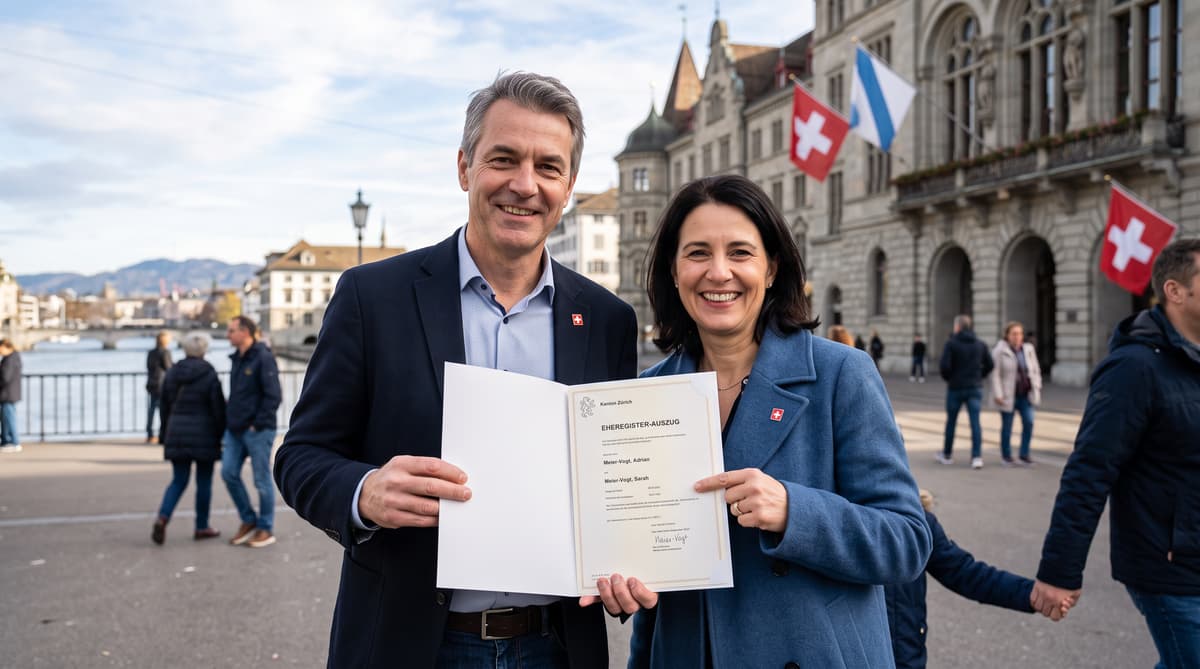
From January 1, 2027, couples registering a marriage in Switzerland can once again choose a double-barrelled surname. The change restores a naming option that had been barred since 2013, after the Federal Council announced the new ordinance on October 21, 2026. Couples who want a double name will declare that choice when they register their marriage.
The reform gives spouses more room to keep family names visible after marriage. Before the ban, women especially used double surnames to retain a maiden name alongside a married name, with or without a hyphen. The new rules broadly return to that earlier approach.
The change follows a decision by the Federal Council and MPs in 2024 to bring double surnames back and give married couples greater freedom of choice. It took two years for the measure to pass through the legislative process and be redrafted. The restored choice applies to adults, while the rules for children remain separate.
Choose a name within the two-surname limit
Spouses will be able to choose a double name with or without a hyphen, but the combined surname cannot exceed two names. One option allows a woman to keep her maiden name and add her husband's surname. A couple can also both take a double surname, hyphenated or not.
The limit matters when someone marrying already has a double surname. The new rules cap the resulting name at two surnames, ruling out a four-name combination. That draws a clear boundary around the restored choice: spouses can combine names, but cannot keep adding names to a shared surname.
The reform also reaches couples who are already married. A spouse with a single surname can ask the civil registry office to change it to a double-barrelled one under the new rules. The option is therefore not confined to people marrying after the change takes effect. It brings the naming choice back for both new marriages and existing couples who want to adopt it.
Keep children to one surname
Swiss-citizen children will continue to receive one surname, either their mother's or their father's. The adult reform does not extend double-barrelled names to children, a distinction the rules make to prevent surnames accumulating across generations.
The concern is that a child with a double surname could later marry someone with another double surname and pass an even longer combination to their own child. The example given is a person named Schweizer-Meyer marrying someone named Favre-Sutter. If both double names were passed on, their child could carry four surnames.
That prospect informs the single-name rule for Swiss children, even as spouses regain the ability to combine names. Parents must choose which one surname their child will bear. The rule preserves a simpler naming line for children while permitting adults to keep or combine family names at marriage. The split between adult and child naming rights is central to how the reform has been designed.