housing
Zurich implements income caps for affordable housing
City parliament introduces new restrictions limiting access to affordable housing based on income levels and minimum occupancy requirements.
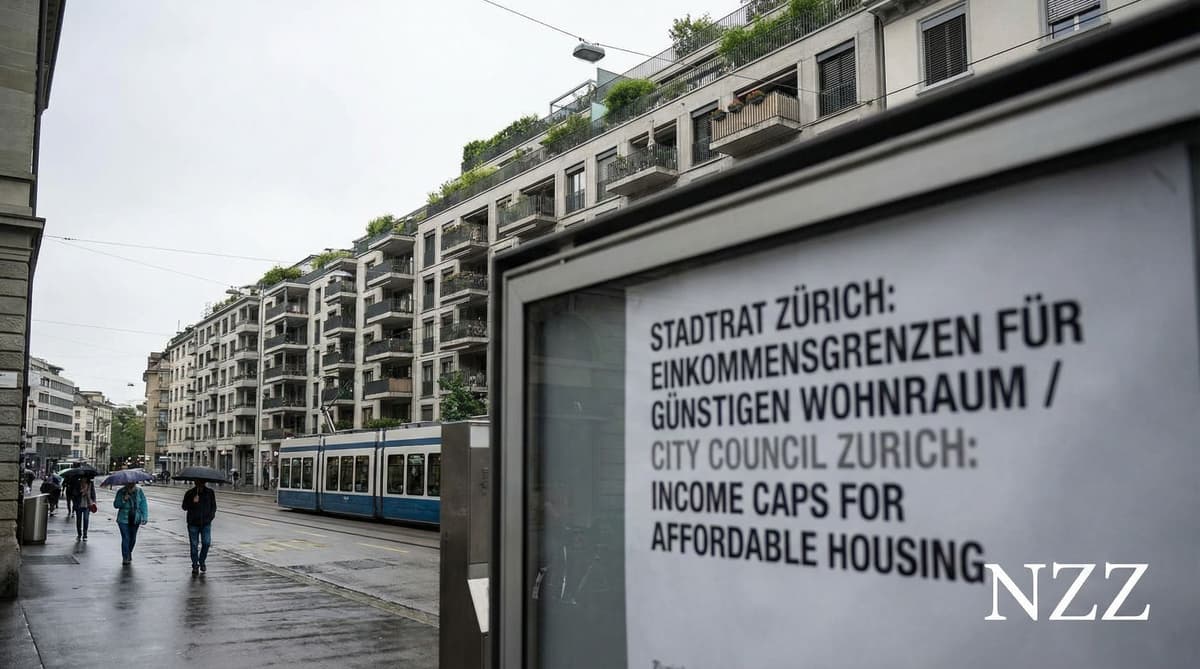
The era of unchecked access to Zurich’s coveted affordable housing stock is coming to an abrupt end. In a decisive move that overturns the leniency of previous years, the Zurich city parliament has aggressively pushed forward with income caps for private, affordable flats. This isn't just a minor adjustment; it is a fundamental restructuring of who gets to live in the city's most competitively priced units.
Just one year after a proposal lacking these restrictions was overturned in 2024, the political winds have shifted dramatically. The council’s left-wing and center parties have successfully rallied to impose barriers that prioritize financial need over first-come, first-served availability. This legislative pivot signals that the city is no longer willing to tolerate high-income earners occupying low-cost spaces while the broader population grapples with a housing crisis. The message is clear: affordable housing is a finite resource, and Zurich is now prepared to police it with unprecedented rigor.
The 'Four Times' Rule: A Financial Guillotine
At the heart of this new policy lies a strict mathematical ceiling: the "Four Times" rule. Under the new mandate, prospective tenants are barred from entering a low-cost flat if their income exceeds four times the rental price. This is a sharp, non-negotiable cutoff designed to filter out the middle-to-upper class from the affordable sector immediately. For a flat costing CHF 2,000, a household earning more than CHF 8,000 is now effectively locked out.
While the entry requirements are stringent, the parliament stopped short of imposing a continuous income cap. A proposal to limit income to six times the rent during the tenancy was rejected by the majority. This critical distinction means that while getting in requires a modest income, tenants who subsequently climb the career ladder won't face immediate eviction. However, the initial barrier remains a formidable gatekeeper, ensuring that the subsidised advantage of these private flats is exclusively reserved for those currently on the lower rungs of Zurich's economic ladder.
Mandatory Density: Filling Rooms by Decree
Zurich is declaring war on under-occupied apartments. In a move that prioritizes efficiency over personal luxury, the local parliament has aligned private affordable housing rules with those of municipal flats, enforcing strict minimum occupancy requirements. The days of a single person or a couple sprawling out in a large, subsidized apartment are numbered.
Under the new regulations, a 4-room flat must house at least three people. This "n-minus-1" approach forces a density that maximizes the utility of every square meter in a city where space is at a premium. It is a pragmatic, albeit intrusive, solution to the housing shortage. By mandating that bedrooms are actually used for sleeping rather than as home offices or guest rooms, the city aims to house more citizens within the existing footprint. This policy shift underscores a new reality for Zurich residents: in the affordable sector, living space is now treated as a collective asset, not a private indulgence.
The Watchful Eye: Biennial Inspections Loom
Regulations are toothless without enforcement, and Zurich has authorized a robust mechanism to ensure compliance. The parliament has agreed to a mandatory inspection of housing conditions every two years. This is not a one-off check; it is a recurring audit of residents' lives to verify they still meet the occupancy and usage criteria.
This biennial review introduces a layer of bureaucratic oversight that transforms the landlord-tenant relationship. It signals a shift toward a more managed housing economy where privacy is weighed against public benefit. While the final vote is pending at an upcoming meeting, the direction of travel is undeniable. Zurich is moving toward a system where affordable housing comes with strings attached, and the city is not afraid to pull them to ensure the system works for the many, rather than the lucky few.