Business
Stadler expands rail production in Kazakhstan
Stadler Rail has begun putting locally made sleeper carriages into service in Kazakhstan under a contract for 557 trains and 20 years of maintenance. The Swiss manufacturer is also investing in expanded production facilities in Astana.
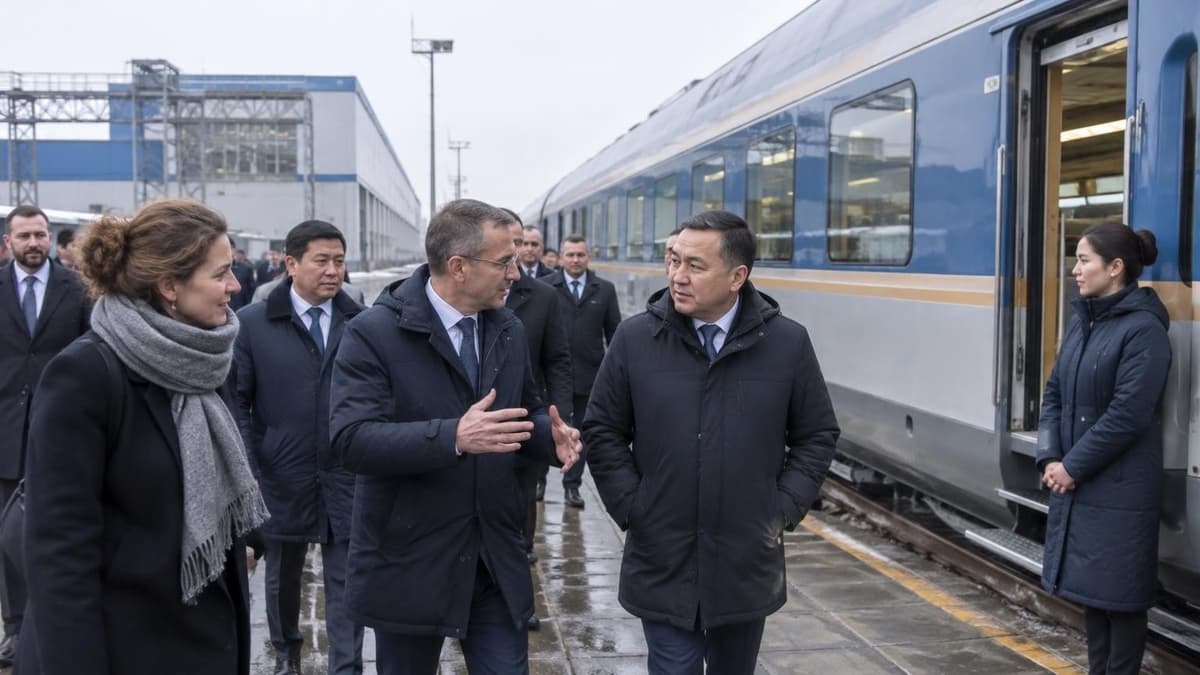
The first locally built Stadler sleeper carriages are now carrying passengers in Kazakhstan, marking a new phase in the Swiss manufacturer’s expansion in the country. Kazakhstan Railways, known as KTZ, has begun operating the “Charme” carriages produced at Stadler’s factory in Astana. More than 100 locally made carriages had been delivered by October.
The rollout reaches beyond the capital. The carriages are due to serve routes including the 1,300-kilometre line between Astana and Almaty, linking Kazakhstan’s political centre with its largest city. Stadler’s production base in the country gives the company a role in both supplying the trains and maintaining them over the long term.
The start of service comes as the Swiss company increases its industrial capacity in Astana. Its work there now combines a major carriage order with further investment in production facilities, extending Stadler’s presence in a market where it already employs hundreds of local specialists.
Deliver a 20-year rail commitment
The KTZ contract covers 557 sleeper carriages and 20 years of maintenance. Commissioning is scheduled to continue until the end of 2030, giving Stadler a long-running delivery programme as well as an ongoing service commitment. The first locally made trains are already entering operation, while the wider order is still being fulfilled.
The scale of the order is visible on the Astana to Almaty route, where the carriages will be used in particular. At 1,300 kilometres, it is a long-distance connection between two of the country’s principal cities. Stadler’s carriages are designed for overnight travel, and their deployment ties the company’s manufacturing activity in Astana to passenger rail service across the country.
For the Swiss manufacturer, the agreement extends its work beyond producing rolling stock. Maintenance over two decades makes the contract a continuing operational commitment to KTZ, while the phased commissioning keeps local production connected to the delivery schedule through 2030.
Build more capacity in Astana
Stadler is putting a further CHF 25 million into aluminium-carriage production in Astana. The investment will fund welding and painting workshops for aluminium carriage bodies. The company describes the planned facilities as the first highly automated workshops of their kind in Central Asia.
The new spending builds on a factory modernisation that cost more than CHF 9 million. Together, the projects expand the site’s industrial capabilities as Stadler works through the KTZ carriage order. The investment is focused on production processes for the bodies of the carriages, adding dedicated workshop capacity to the Astana operation.
The planned facilities are expected to create around 100 additional jobs. Stadler’s site already employs more than 700 local specialists, making the factory a substantial part of the company’s operations in Kazakhstan. The workshops will add to that local workforce as the manufacturer develops its production base alongside the delivery programme.
Anchor Stadler’s Kazakhstan investment
Stadler expects its Kazakhstan investments to reach at least CHF 53 million between 2023 and 2031. The figure combines the company’s wider commitment in the country, including the Astana factory modernisation and the planned workshops. That spending accompanies a contract that links locally produced carriages with long-term maintenance for KTZ.
The expected addition of around 100 jobs would grow a site that already employs more than 700 local specialists. The new workshops are intended to support manufacturing of aluminium carriage bodies, while the carriages themselves are being introduced on Kazakhstan’s rail network. Stadler is therefore expanding both the production operation and its service relationship with the national railway.
For the Swiss company, the programme gives its Kazakhstan business a defined runway: deliveries are due to continue through 2030, and the investment plan runs to 2031. The next phase will be shaped by the commissioning of the remaining carriages and the development of the additional Astana facilities.