labour
Swiss security firm accused of thousands of labour-law breaches
An SRF Investigativ analysis of internal data alleges around 20,000 labour-law breaches at Swiss security company Securitas between 2023 and 2025, affecting about 900 employees. Reported concerns include excessively long shifts and inadequate rest periods.
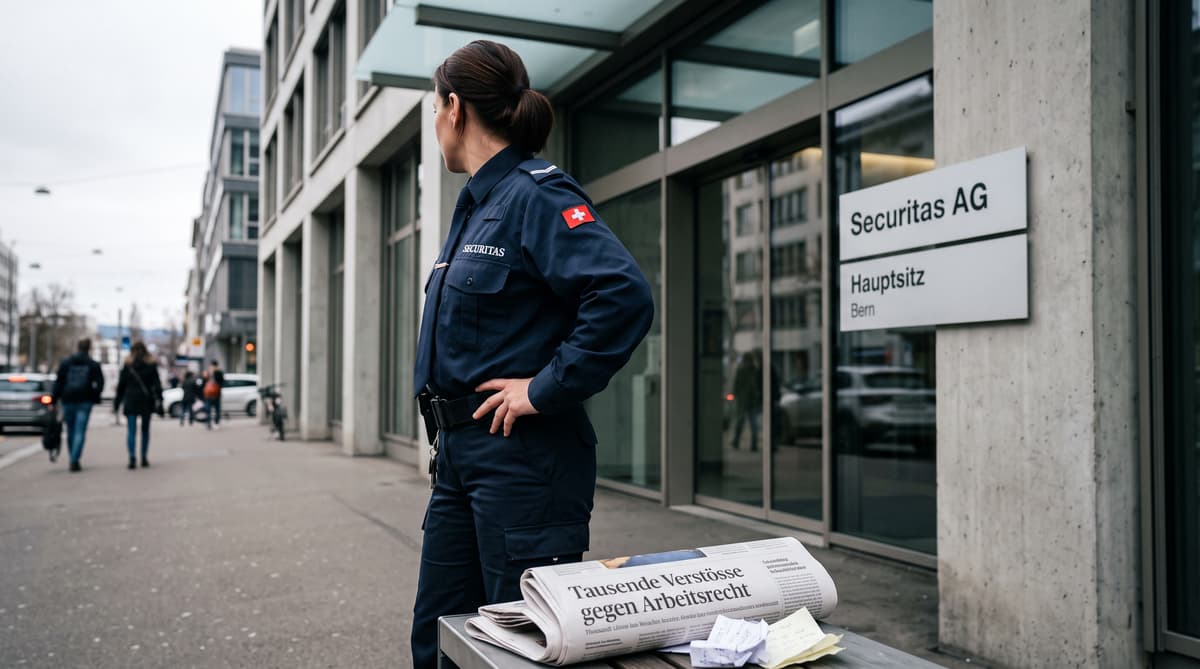
Around 20,000 alleged breaches of Switzerland’s Labour Act have put security company Securitas under scrutiny. An analysis of internal company data by SRF Investigativ says the breaches occurred between 2023 and 2025 and affected about 900 employees.
The reported problems centred on excessively long shifts and insufficient rest periods. Staff who were said to have faced these conditions worked in prisons, hospitals and asylum seeker centres, where Securitas provides security services.
The allegations have prompted public criticism from two legal experts interviewed by SRF. Labour lawyer Denis G. Humbert described the reported pattern as systematic and called for the authorities to intervene. Kurt Pärli, a professor of law at the University of Basel, said the situation could not be dismissed as a simple planning error.
Securitas has acknowledged that some practices did not comply with labour-law principles or its own values. The company disputes SRF’s total and says there was no general, systematic breach of the Labour Act.
Trace the Alleged Pattern
The alleged breaches span three years, according to SRF Investigativ’s analysis of Securitas internal data. The broadcaster’s investigation counted around 20,000 Labour Act breaches from 2023 through 2025, with about 900 employees said to have been affected.
The figures point to two recurring issues: shifts that were too long and rest periods that were too short. The reported cases involved employees assigned to prisons, hospitals and asylum seeker centres. Those settings place security staff in institutions that operate around the clock, although the investigation’s findings, as reported by Keystone-SDA, focus on working hours and rest.
The reported total is contested. Securitas said measures taken in recent years had reduced problematic cases and disputed the figure of 20,000. It also said errors could not be ruled out, while rejecting the claim that the company had committed a general and systematic breach of the Labour Act.
The dispute centres on both the scale of the cases and whether they reflect isolated errors or a broader practice.
Hear the Experts’ Warning
Two legal experts say the reported pattern warrants serious scrutiny. Denis G. Humbert, a lawyer specialising in labour law, told SRF that the alleged breaches were a sign of systematic practice and urged the authorities to intervene.
“It is not permissible, it is unacceptable. This constitutes the exploitation of staff and is not allowed,” Humbert said. His assessment challenges the idea that the reported cases can be treated simply as scheduling mistakes.
Kurt Pärli, a professor of law at the University of Basel, made a similar point. He said what had come to light “cannot be explained away as a simple planning error” and added that the problem went further than that.
Their comments address the distinction at the heart of the dispute: whether the cases represent individual errors or point to a wider problem in how shifts and rest periods were managed. Securitas rejects the latter characterisation, saying there has been no general and systematic breach of the Labour Act.