Brienz
Debris delayed Brienz rockslide by weeks, study finds
Researchers say debris at the foot of the unstable slope slowed the 2023 Brienz rockslide, delaying it by several weeks and complicating forecasts of when the collapse would happen. The findings highlight limits in current methods for predicting such events.
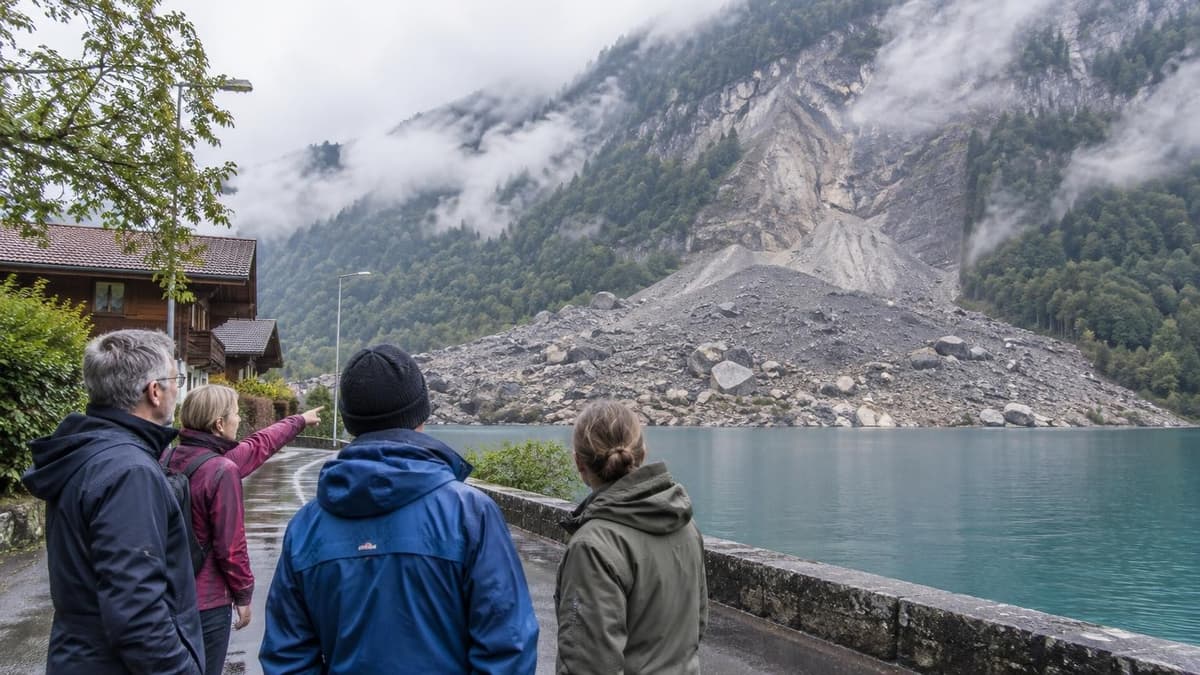
The rockslide came weeks after experts expected a collapse. An unstable section above Brienz had been moving faster since March 2023, prompting authorities to evacuate the village on May 12. Yet the slope held until the night of June 15 to 16, when around 1.2 million cubic metres of rock and debris broke loose and narrowly missed the village.
A study by researchers at the WSL Institute for Snow and Avalanche Research (SLF) points to material already piled at the foot of the unstable slope. That debris slowed the moving rock, delaying the collapse and making its timing harder to forecast. The findings, published in the journal Engineering Geology, examine why an accelerating slope did not fail when experts initially expected. For Brienz, the delay was not a sign that the danger had passed. The movement continued, while the forces acting on the slope changed.
See how debris slowed the slope
Debris at the slope’s base acted as a brake. As the unstable rock mass pushed into the loose material below it, the debris initially slowed its movement. That resistance helped explain why the collapse arrived several weeks later than anticipated, despite the accelerating movement recorded earlier in 2023.
The braking effect did not remain constant. New slip planes formed inside the debris pile, allowing the rock mass to move faster again. Stronger and weaker acceleration followed in turn, making the slope’s behaviour difficult to read. Study leader Robert Kenner said the shifting movement made it “virtually impossible” to make accurate predictions about when failure would occur. The research shows how material beneath an unstable slope can influence its movement, adding complexity to the task of forecasting a collapse. In Brienz, the debris was part of the process, not simply material left behind by it.
Track the slope’s final hours
The final hours brought a sharp change in the slope’s movement. On the morning of June 15, the western part of the unstable rock mass broke away. The eastern part then stopped moving, while the remaining mass accelerated sharply. Late that evening, it flowed down the valley as a debris flow.
The sequence followed weeks in which the debris pile alternately slowed and released the moving rock. That shifting pattern helps explain why forecasts based on the slope’s earlier acceleration could not identify the precise moment of collapse. Around 1.2 million cubic metres of rock and debris came loose, narrowly missing Brienz. The evacuation had begun more than a month earlier, on May 12, as the unstable section gathered speed. The study reconstructs how the changing behaviour of the slope and the debris beneath it shaped the event’s timing.
Reassess how slope failures are forecast
Brienz has become a case study in the limits of forecasting. Kenner said the event highlighted the limitations of current approaches to predicting when a slope will fail. The study’s account links that uncertainty to a changing physical process: debris first resisted the descending rock, then developed new slip planes that allowed it to accelerate again.
The situation in Brienz has since eased considerably. After more than a year of evacuation, residents were allowed to return to their homes at the end of January 2026. The findings offer a detailed account of why the 2023 collapse arrived later than expected, while underscoring how the changing movement of rock and debris can complicate forecasts. For communities below unstable slopes in Switzerland, the Brienz event shows the challenge facing experts who must interpret movement while conditions continue to evolve.