Housing
Why Swiss mortgage rates are rising faster in some regions than others
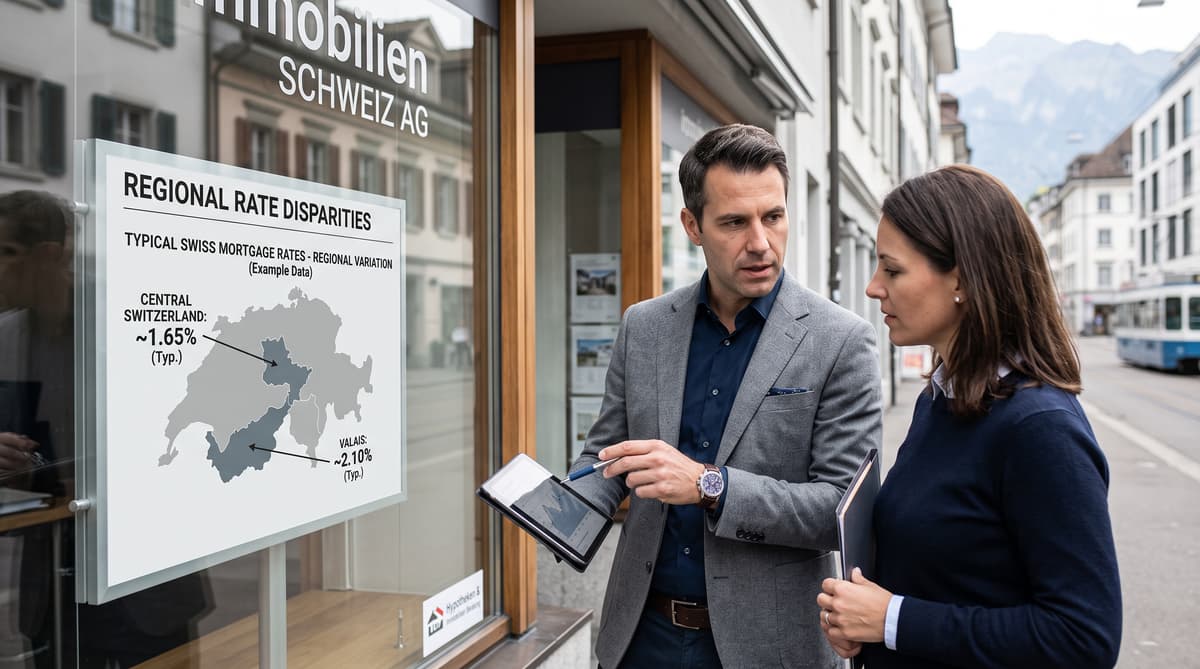
Swiss mortgage rates are rising unevenly, with ten-year fixed rates varying sharply between regions. Recent market data shows median rates ranging from 1. 62% in Central Switzerland to 2. 15% in Valais.
The national median reached 1.84% in the third quarter of 2026, after rising 14 basis points during the period. The increase has reached borrowers across Switzerland, yet the size of the increase depends heavily on the local market where a property sits.
Resolve’s quarterly mortgage report puts the median ten year fixed rate at 1.62% in Central Switzerland and 2.15% in Valais. That 53 basis point gap matters for households committing to a long repayment schedule, particularly as fixed mortgages lock in borrowing costs for a decade.
The pressure began in the wider financial market. The swap rate, a key benchmark for pricing fixed mortgages, climbed 19 basis points in the quarter. Expectations of tighter monetary policy, including the possibility of a Swiss National Bank rate increase before the end of 2026, pushed the benchmark higher.
Lenders absorbed part of the increase by accepting narrower margins. That protection was strongest in areas where banks compete aggressively for borrowers. The result is a Swiss mortgage market with one currency and markedly different local prices.
Follow the Lenders
Central Switzerland posted the lowest median rate at 1.62%, while Valais reached 2.15%. The regional spread reflects how many lenders are willing to compete for a particular mortgage and how far those institutions operate beyond their home territory.
German speaking Switzerland has a denser lender network. Cantonal banks from the region can compete beyond their traditional borders, while cooperative banks, regional institutions and pension funds add further choice. Zurich’s median ten year rate stood at 1.65%, only three basis points above Central Switzerland.
The French speaking market offers fewer competing institutions in many areas. Its cantonal banks generally remain closer to home, reducing the number of lenders contesting the same customer. Geneva recorded a median rate of 1.78%, and Neuchâtel reached 1.90%.
The quarterly movement followed the same pattern. German speaking Switzerland saw increases of only 5 to 7 basis points. French speaking Switzerland recorded increases of 10 to 13 basis points. In Ticino, where fewer lenders compete, rates rose 15 basis points.
Price the Difference
The gap between the best and least competitive ten year offers widened to 98 basis points. In the second quarter, the equivalent spread was 80 basis points. The change shows that borrowers now face a broader range of prices even when they seek the same type of owner occupied mortgage.
On a mortgage of CHF 900,000, a 98 basis point difference represents about CHF 8,820 in annual interest, before considering amortisation, fees or other conditions. The difference can influence whether a household chooses a fixed rate, refinances an existing loan or delays a purchase.
Some banks have held rates down to win market share or meet lending targets before the end of the year. Other lenders have faced less pressure to attract new business and have passed more of the higher funding cost to customers.
The cheapest advertised rate also may not be universally available. A lender can tie a discount to everyday banking, pension assets, a larger equity contribution or an energy efficient property. Borrowers need to compare the full package, including flexibility, early repayment terms and eligibility conditions.
Read the Regional Data
Valais’s 2.15% median rate needs careful interpretation. The canton has a high proportion of second homes, and those properties can attract a risk premium. A regional median therefore does not describe the rate available to every household financing a main residence in the canton.
Property type, borrower profile and lender policy can shift the final offer. A main residence with strong equity may receive a different price from a holiday apartment or an investment property. Banks also assess income, affordability, loan to value ratios and the property’s condition before setting terms.
The same caution applies when comparing cantons. A headline median combines different borrowers and properties. It provides a useful market signal, but it cannot replace a personalised offer from a bank, pension fund or other lender.
Pension funds are competing selectively, while most insurers remain on the sidelines. National lenders can undercut local banks when they want growth. Local banks may respond with a lower margin or more flexible conditions. Borrowers who compare across institutions can expose those differences rather than accepting the first quote from a familiar provider.
Prepare Before Renewal
The common funding benchmark sets the direction, while local rivalry decides how much borrowers pay. If expectations of tighter Swiss monetary policy continue to lift swap rates, fixed mortgage pricing will remain under pressure. The quarterly data shows that lenders do not pass on every increase equally.
German speaking Switzerland currently offers borrowers the strongest protection from rapid repricing because more institutions compete for business. French speaking cantons and Ticino have seen larger increases, though individual offers can still vary widely within each region.
Households approaching a renewal should start with several comparable quotes. They should confirm whether a quoted rate requires additional banking products, pension transfers or a higher equity contribution. Owners of second homes and energy inefficient properties may face different pricing from owners of main residences or renovated homes.
The market is also moving beneath the regional medians. The widening offer spread gives borrowers more scope to negotiate, especially when they have solid finances and time before their current mortgage expires. The next rate decision from the Swiss National Bank and the direction of swap rates will shape the national backdrop. Competition will determine the bill at street level.