weather
Swiss hailstorm bill climbs into the hundreds of millions
Insurers are reporting tens of thousands of claims after the August 28 hailstorm, with total losses expected to reach hundreds of millions of francs. The story would examine the financial consequences for households, vehicle owners and insurers after an increasingly volatile summer.
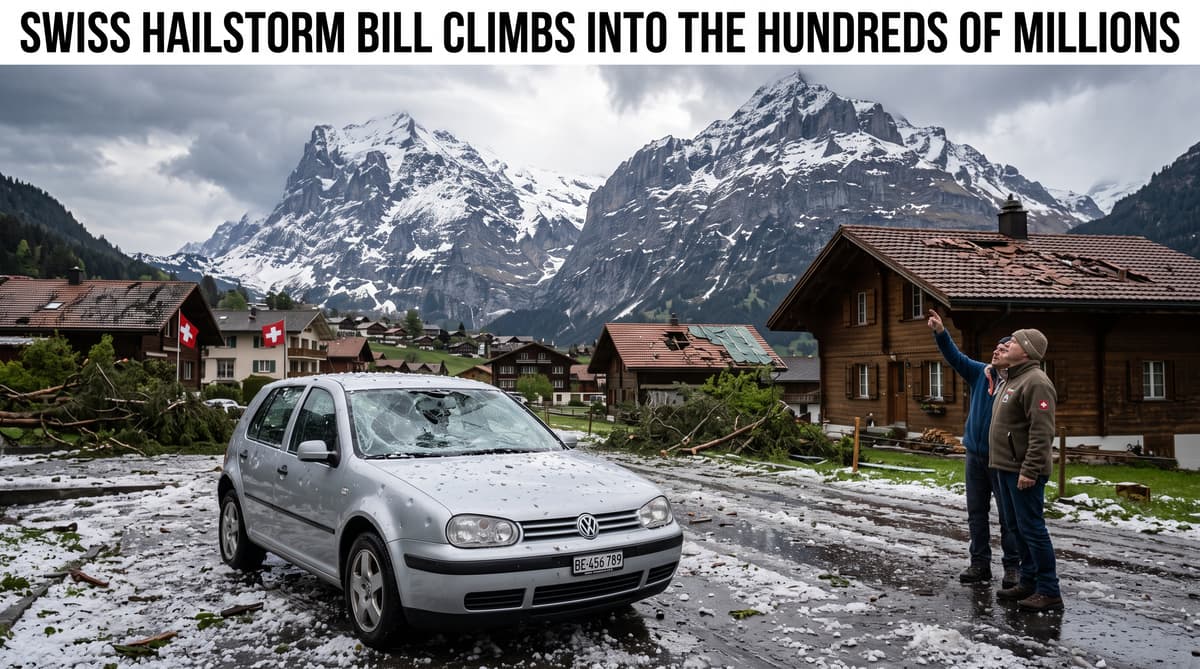
Insurers expect the August 28 storm to produce losses in the three-digit million-franc range. The hailstorm, the most damaging of the year according to several non-life insurers, struck populated parts of Switzerland with enough force to overwhelm claims teams and repair networks within days.
An AWP survey cited by Swissinfo.ch found that the combined bill is expected to reach at least the three-digit million range. No final national total is available yet. Claims continue to arrive, and insurers say they will need more time to assess damaged homes, gardens, cellars and vehicles.
Mobiliar had logged around 18,000 claims by Wednesday, September 2, including 14,300 involving vehicles. Allianz Suisse reported more than 11,000 vehicle claims, while Helvetia had received around 11,500 claims. These figures come from individual insurers and cannot be added together because their customer portfolios overlap only in part and cover different risks.
The financial impact reaches beyond insurers. Households face deductibles, disrupted travel and repair bills. Car owners may wait weeks for inspections or replacement vehicles. Garages and rental companies are dealing with a sudden concentration of demand across the Bernese Mittelland and other affected areas.
Damaged Cars Jam Repair Networks
Mobiliar alone counted 14,300 damaged vehicles among its first 18,000 claims. The concentration of motor claims shows how quickly hail can turn a weather event into a mass consumer problem. Thousands of cars may require bodywork, replacement windscreens, roof repairs or a full expert assessment.
Allianz Suisse said it had recorded more than 11,000 vehicle claims, and Helvetia said roughly 90% of its 11,500 claims came from motor-vehicle owners. Generali Switzerland also reported a rise in claims, although it said the number of cases and the financial impact remained impossible to assess definitively.
Insurers are responding with drive-through centres where roadworthy cars can be inspected without a conventional workshop appointment. Allianz Suisse is arranging collection and expert assessment for vehicles suspected of being total write-offs. Those assessments will determine whether repairs make economic sense or whether the vehicle must be written off.
The process can leave owners without transport. Helvetia and Allianz Suisse are offering financial support for public transport when a replacement car is unavailable. Helvetia warned that rental companies and garages do not have enough vehicles to meet the surge in demand, creating a second bottleneck after the storm itself.
Homes Face a Second Wave of Claims
Mobiliar expects its own storm losses to reach the high double-digit millions. Allianz Suisse gave a similar initial assessment, saying its total claim amount would be at least in the high double-digit millions. Those estimates cover more than crumpled car panels. Insurers are also processing claims for property damage, including affected cellars and gardens.
The national figure will depend on the number of late claims, the proportion of total write-offs and the cost of repairing buildings and household contents. Insurers have cautioned that a reliable projection may not be possible until the end of the week at the earliest, while Helvetia expects more claims to arrive over the following days and weeks.
Axa declined to provide figures but described the scale of the damage in parts of the densely populated Bern region of the Mittelland as exceptional. That concentration matters for insurers. A storm that hits a large number of policyholders in a compact area can generate a heavy claims load in a matter of hours, even when individual losses vary widely.
For households, the final cost depends on policy terms, deductibles and whether damage falls under motor, building or household insurance. Owners should document damage promptly and follow their insurer's reporting instructions before arranging major repairs.
Storm Risk Tests Swiss Resilience
August 28 was described by several non-life insurers as the worst hailstorm of 2026. The event arrived during a summer marked by severe weather disruptions, including thunderstorms that affected transport and other infrastructure. Its insurance cost now adds a clear financial measure to the season's volatility.
The source material does not establish that climate change caused this specific storm. It does show why insurers, property owners and public authorities are watching severe weather patterns closely. Hail risk depends on local atmospheric conditions, storm intensity and the density of exposed buildings and vehicles. In the Bernese Mittelland, a densely settled region, one storm can affect thousands of policyholders at once.
Switzerland has experimented with hail suppression, including cloud-seeding techniques and rockets designed to modify storm clouds. Recent experiments have not produced the desired results, according to a related Swissinfo.ch report. That leaves prevention focused largely on practical measures such as protected parking, stronger building components, drainage planning and rapid warning systems.
The insurance industry will use this event to refine risk models and claims capacity. For consumers, the practical questions remain immediate: what their policy covers, how much the deductible will be and how long repairs or replacement transport may take.
Claims Teams Prepare for the Long Tail
Insurers are still counting, and the final bill will take weeks to settle. Mobiliar said a full projection would probably not be possible until the end of the week at the earliest. Helvetia expects further claims in the days and weeks ahead, while Generali Switzerland said it could not yet assess the event's final financial effect.
That delay reflects the way catastrophe claims develop. Initial reports tend to focus on visible vehicle damage. Later inspections identify hidden structural problems, water intrusion and repair costs that may push a vehicle into total-loss territory. The number of claims can also rise as households return from holidays, receive assessments or discover damage after the storm.
Swiss consumers should keep photographs, invoices and correspondence, report losses through the channels specified by their insurer and avoid discarding damaged items before an assessment when possible. Vehicle owners should ask whether their insurer has opened a drive-through centre or offers transport assistance.
For insurers, the storm will test claims processing, expert availability and access to replacement cars. For the wider economy, it will put pressure on garages, rental fleets and repair suppliers. The immediate priority is to process tens of thousands of cases. The longer-term figures will show how much of the summer storm burden ultimately falls on households, insurers and Switzerland's weather-exposed infrastructure.