Switzerland
Swiss alliance launches referendum challenge against Mercosur trade deal
An alliance opposing Switzerland’s free-trade agreement with Mercosur has begun collecting signatures for a referendum. Campaigners cite risks to the rainforest, concerns about agricultural imports and potential harm to Swiss farming.
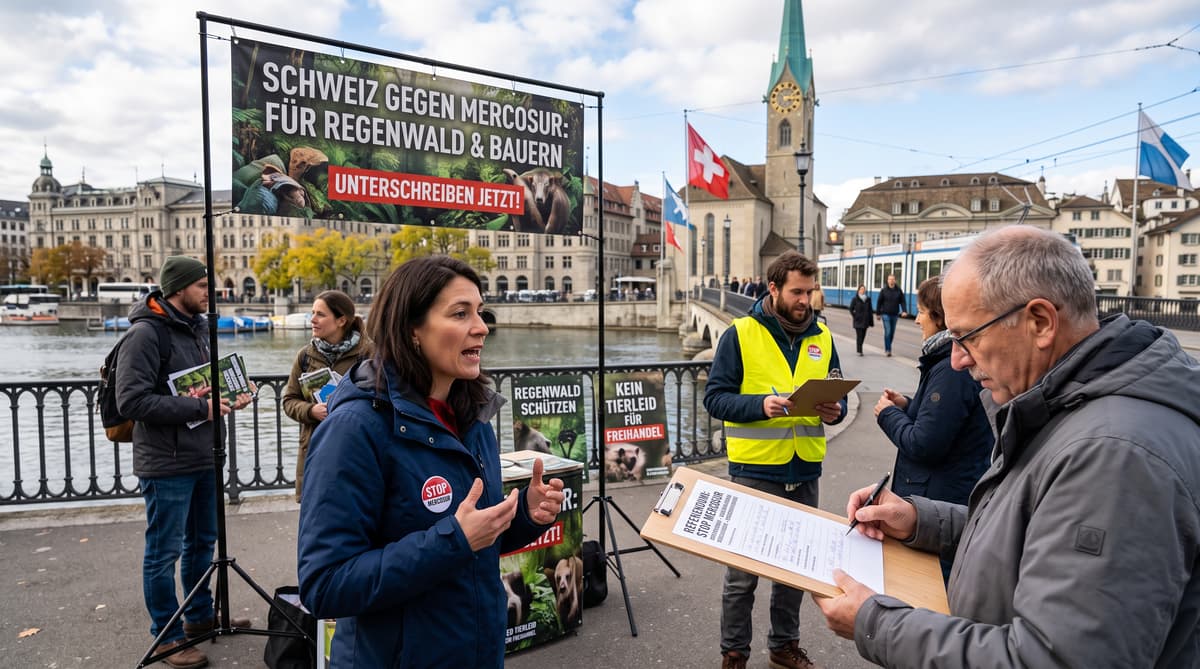
The referendum campaign starts with 100 days to gather 50,000 valid signatures. The Alliance against Switzerland’s free-trade agreement with the South American Mercosur bloc launched its challenge in Bern on Tuesday, October 13, 2026, putting the deal on course for a public vote unless campaigners fail to clear the legal threshold.
The alliance says the agreement could increase demand for food produced through industrial agriculture, with consequences reaching far beyond Swiss customs borders. Its representatives warned that large-scale soya cultivation and intensive cattle farming are key causes of rainforest deforestation in the Mercosur states. They also pointed to the displacement of long-established communities and repeated reports of forced labour on plantations.
The campaign places environmental protection and Swiss agricultural policy in the same argument. Opponents say the agreement could make it easier to import products associated with deforestation while exposing Swiss farmers to stronger competition. The Federal Chancellery must receive 50,000 valid signatures by January 21, 2027. Until then, organisers will need to build a nationwide network capable of collecting, checking and submitting signatures within a compressed timetable.
Put the trade deal under scrutiny
The agreement was signed on September 16, after eight years of negotiations between EFTA and Mercosur. Switzerland belongs to the European Free Trade Association, which negotiated the deal with the South American bloc. The pact is intended to deepen trade ties with Argentina, Brazil, Paraguay and Uruguay, while lowering or adjusting barriers affecting goods traded between the two regions.
Environmental safeguards became a prominent part of the negotiations. Swissinfo reported in 2025 that EFTA and Mercosur negotiators sought to include climate and environmental protections as trade agreements faced closer public scrutiny. The referendum alliance argues that those provisions do not resolve the practical risks created by additional incentives for imported food linked to forest clearance and intensive production.
The dispute now moves from negotiation tables to Swiss democratic institutions. Parliament has already taken a position, but a successful signature drive would give voters the final say. For the alliance, the agreement’s environmental language must be judged against supply chains in the field, including soy cultivation, cattle production and labour conditions. Supporters of the deal will have to defend both its economic value and the effectiveness of its safeguards.
Make agriculture the domestic battleground
The Council of States approved the agreement on September 15 and allocated CHF 517 million to Swiss agriculture. The parliamentary decision gives the referendum campaign a clear target: an agreement that has passed the Senate but remains vulnerable to a popular challenge if the alliance reaches the signature threshold.
The agricultural funding is central to Switzerland’s domestic debate. The package signals that lawmakers recognise adjustment pressures for farmers as trade ties expand. The alliance nevertheless argues that financial support cannot remove the competitive risks created by additional agricultural imports. It says Swiss producers could face pressure from products made under different environmental, labour and production conditions.
The Mercosur debate therefore extends beyond tariff schedules. It touches on how Switzerland defines fair competition, what standards it expects from imported food and whether public money should cushion sectors affected by new market access. Farmers, food businesses and consumers may assess the agreement differently depending on the products involved and the safeguards applied. The source material does not specify the distribution of the CHF 517 million package or the precise import quotas, leaving those details likely to become important in the campaign.
Race to qualify the public vote
January 21, 2027 is the deadline that will determine whether the agreement reaches a nationwide vote. The alliance has to collect more than signatures in name: every submission must be valid, and the campaign must establish support across Switzerland quickly enough for municipalities and the Federal Chancellery to process the paperwork.
The coming weeks will test whether environmental concerns can be translated into a broad Swiss coalition. The alliance links rainforest protection with food imports, farming livelihoods, community displacement and labour rights. That combination gives the campaign several points of entry, from urban climate groups to rural producers concerned about market conditions.
The government and supporters of the agreement will have to explain how the treaty addresses those objections. They will also need to make the economic case for closer ties with Mercosur while defending the agreement’s environmental provisions. A referendum would bring the trade relationship into a national conversation about consumption, production standards and Switzerland’s responsibilities as an importer. The immediate measure of the campaign remains precise: 50,000 valid signatures delivered by the legal deadline.