Art
Winterthur foundation investigates two works for Nazi-era claims
A Winterthur foundation has opened provenance investigations into an Albert Anker painting and a Renaissance sculpture to determine whether they were confiscated as a result of Nazi persecution. Both works are in storage and are not currently on public display.
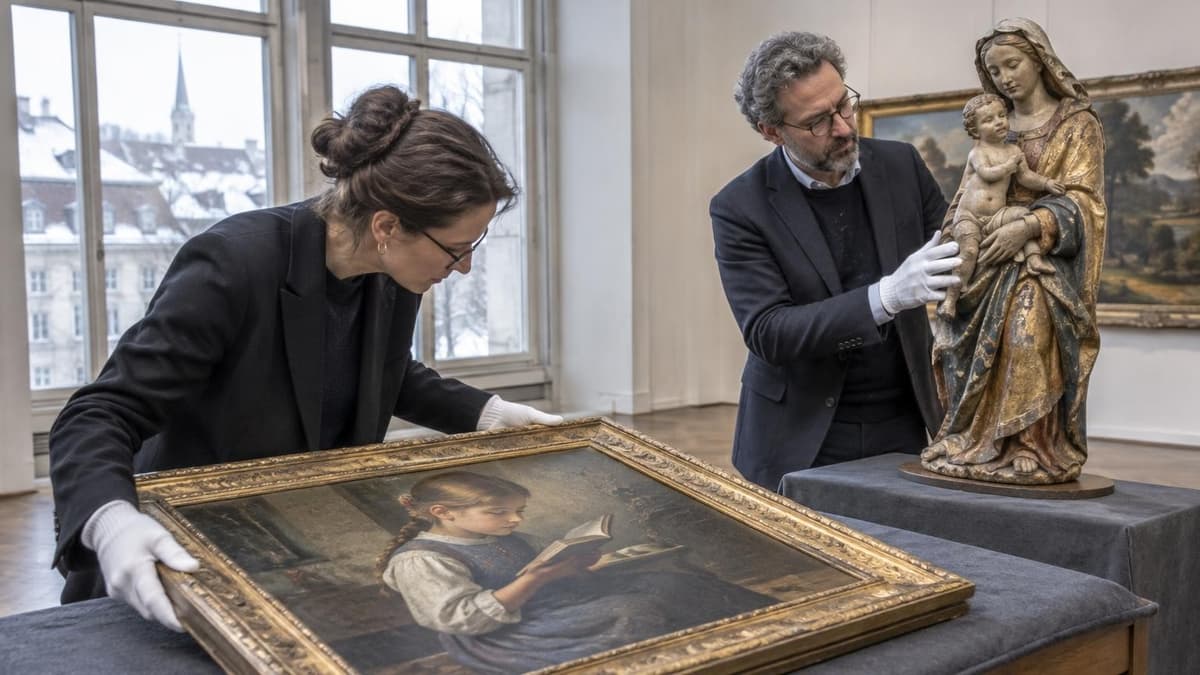
Two provenance investigations opened in Winterthur at the end of October put the history of works in a Swiss collection under scrutiny. The Independent Commission of the Winterthur Foundation for Art, Culture and History is examining Albert Anker’s 1874 painting Der neue Wein I and the Renaissance sculpture St John, dated 1510 to 1520 and attributed to the workshop of Tilman Riemenschneider.
The Commission is seeking to establish whether either work was confiscated between 1933 and 1945 as a result of Nazi persecution, and whether heirs or legal successors of former owners have claims to it. Both works remain in the Foundation’s storage facility and are not on public display.
The two inquiries concern different works and ownership histories, but share the same central task: tracing provenance to assess claims linked to persecution. The Commission says it will work towards a “just and fair solution” in the Anker case if its investigation establishes that the painting was seized as a result of Nazi persecution.
Trace the Anker painting’s ownership
The Anker inquiry is examining a possible connection to a Jewish couple who fled Nazi persecution. The 1874 painting Der neue Wein I may once have belonged to Erna Marcelina Reder Frenkel, who lived from 1904 to 1971, and Jacob Reder, who lived from 1891 to 1965.
The couple were persecuted by the Nazis and fled from Brussels to the United States in 1939, according to the Foundation’s Independent Commission. Investigators are now tracing the painting’s ownership history and assessing whether it was “seized as a result of Nazi persecution”.
The question is whether the work’s passage between owners can establish a link to the couple and the persecution they endured. The Commission has said that, after examining the provenance, it will work out “a just and fair solution”. The painting is currently held in the Foundation’s storage facility, away from public display, while that inquiry proceeds. Its date, 1874, places it decades before the Nazi period the Commission is investigating.
Examine the sculpture’s provenance
The second inquiry concerns a Renaissance sculpture identified as St John. The work is dated to 1510 to 1520 and attributed to the workshop of Tilman Riemenschneider, the German sculptor. It has been part of the Winterthur Foundation’s collection since 1993 and is now the fifth case handled by its Independent Commission.
The Commission’s two proceedings share a mandate: to determine whether collection objects were confiscated between 1933 and 1945 as a result of Nazi persecution, and whether heirs or legal successors of former owners have claims. The Foundation says both works are in storage and not on public display.
For St John, the provenance investigation places a Renaissance object within that same inquiry into ownership and claims. Its date and workshop attribution identify the sculpture under review, while its 1993 entry into the Foundation’s collection marks its place in the collection’s history. The case number, five, also shows that the Commission has handled several investigations before this pair began.
Assess claims and ownership records
The Commission’s work centres on ownership records and the possibility of claims by former owners’ successors. Its stated remit is to investigate whether objects in the Foundation’s collection were confiscated between 1933 and 1945 as a result of Nazi persecution, then assess whether heirs or legal successors have claims to those works.
The Anker painting investigation includes a possible connection to Erna Marcelina Reder Frenkel and Jacob Reder, who fled Brussels for the United States in 1939. The Foundation has said it will seek a “just and fair solution” after examining the painting’s history. The sculpture St John is also under investigation, and the Commission counts it as its fifth case.
The two works remain in storage during the proceedings. For the Winterthur Foundation, the inquiries bring questions about wartime ownership into the review of objects held in its collection. Their outcome will depend on the Commission’s examination of each work’s provenance and any claims connected to former owners.