policing
Proposal to extend police detention sparks rights concerns
The Swiss government is considering doubling the time police can hold suspects after violent unrest at a Bern demonstration last year. Human-rights groups warn that extending detention could weaken legal safeguards.
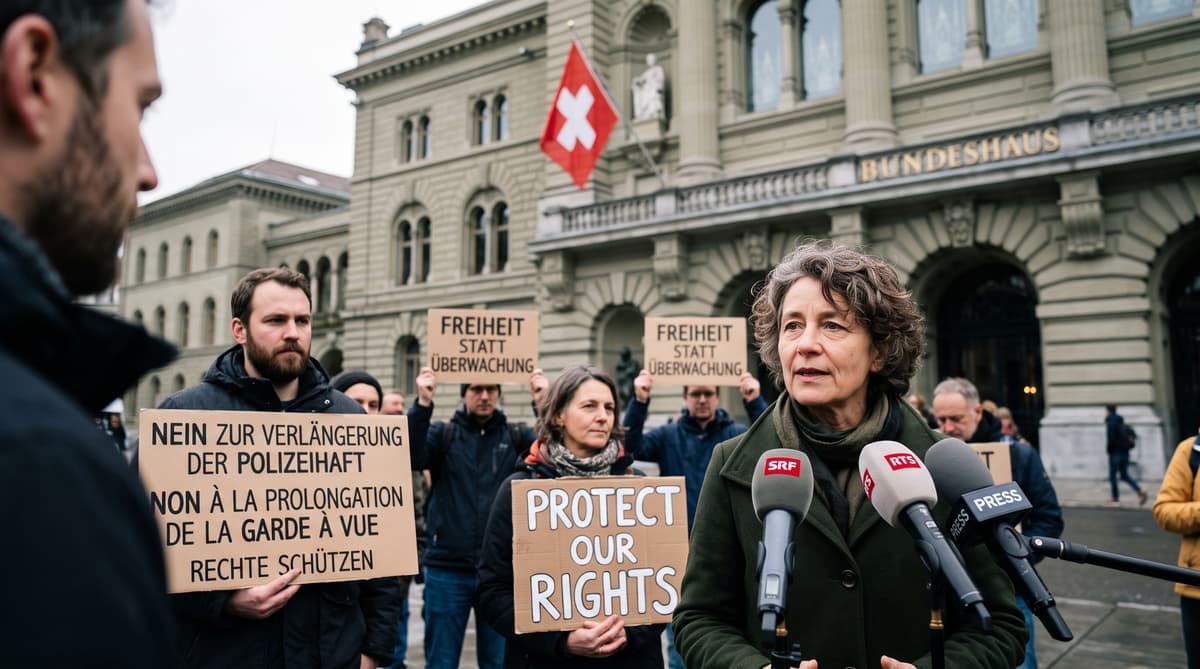
Five thousand people joined the Bern demonstration, and 536 were detained afterward. The scale of the unrest has pushed Switzerland’s rules on police custody back into the political spotlight, one year after an unauthorised pro-Palestinian protest turned violent in the capital.
The demonstration on 11 October 2025 left 18 police officers injured, including four who required hospital examinations. Property damage reached millions of Swiss francs. Police also detained hundreds of people for questioning and identity checks, creating the kind of large, fast-moving investigation that officers say cannot always be completed within a single day.
This week, the National Council followed the Council of States in supporting, in principle, a plan to double the maximum period of police custody from 24 to 48 hours. The Federal Council must now determine how such a change could operate in practice.
The proposal carries significance beyond the Bern case. Swiss authorities rarely face unrest on this scale, and the existing 24 hour limit reflects a system designed to move suspects quickly from police custody to prosecutorial or judicial oversight. Any extension would alter that balance while lawmakers assess its compatibility with procedural guarantees and the European Convention on Human Rights.
Give Investigators More Time
Police custody could rise from 24 hours to 48 hours under the proposal. Current rules require officers to release suspects or hand them over to prosecutors within one day. Max Hofmann, secretary general of the Association of Swiss Police Officers, says that deadline can be difficult to meet when investigators must process dozens of arrests after violent demonstrations.
Hofmann supports the additional day because it would give officers more time to establish what each person allegedly did. A longer initial investigation could allow police to compare statements, assess evidence and prepare a more complete case file before prosecutors take over.
The numbers from Bern illustrate the operational pressure. Officers detained 536 people after the protest, while the event involved around 5,000 participants. Those figures do not establish individual responsibility, but they show why police organisations are seeking more time to separate suspected offences from mass arrests and identity checks.
The proposed change would apply to the period before prosecutors and courts assume their roles. That distinction matters. Police custody is legally tied to investigation, while continued detention requires decisions by prosecutorial and judicial authorities. Parliament has endorsed the direction of travel, but the Federal Council still has to define the safeguards and procedures.
Protect the Judicial Clock
The proposed extra 24 hours would come from a fixed judicial timetable. Under the existing framework, judicial authorisation for continued detention must be obtained within 96 hours. Extending police custody to 48 hours could leave prosecutors and judges with less time to prepare and review detention applications.
That compressed schedule concerns Alicia Giraudel, a lawyer at Amnesty International. She questions whether authorities could preserve all procedural rights and still complete the detention review within the available period. The Federal Council has also identified practical difficulties with implementation.
The issue is procedural as well as logistical. A detainee must be informed of the basis for custody and given access to the protections required by Swiss law. Prosecutors need time to assess the police file, while judges must independently examine whether continued detention is justified. A longer police phase could affect each step that follows.
Hofmann rejects the assumption that an extension would necessarily slow the process. He argues that a more complete police file could help prosecutors work efficiently and make later proceedings faster. The proposal’s final design will determine whether that efficiency is realistic, particularly when large numbers of people are detained at once.
Draw the Line at Punishment
Amnesty International says longer police custody raises a direct human rights concern. Giraudel argues that the longer a person remains in police hands, the more serious the potential interference with individual rights becomes. She also warns that detention cannot be used as a substitute for punishment.
Hofmann has pointed to a possible deterrent effect. An additional day in custody, he says, could make some people reconsider violent behaviour at future demonstrations. His example referred to the consequences of missing work after an arrest and having to explain an absence.
Giraudel rejects that reasoning because police custody is intended to support an investigation, not to discourage political participation. The presumption of innocence continues until conviction. That principle applies even when police are investigating serious violence and extensive property damage.
The Bern unrest has intensified the debate because the injuries and damage were substantial by Swiss standards. Yet the proposed rule would extend to future cases, including situations where allegations are less clear. Parliament must therefore decide how the law should distinguish investigative necessity from punitive intent, and what information, access to counsel and review mechanisms detainees would receive during the additional hours.
Set the Guardrails
The Federal Council now faces the task of turning parliamentary support into workable rules. Both chambers have backed the proposal in principle, but the practical framework remains unsettled. Officials must decide how police, prosecutors and courts would coordinate during the longer custody period and how detainees’ procedural rights would be protected.
The debate will shape the state’s response to demonstrations across Switzerland, not only in Bern. Police need tools to investigate violence when arrests occur in large numbers. Prosecutors and judges need enough time to test the evidence. Detainees need timely information, legal safeguards and an effective review of the reasons for their detention.
The Bern case provides the immediate political backdrop: 18 injured officers, 536 people detained and damage worth millions of Swiss francs after the October 2025 protest. Those figures have strengthened calls for a more flexible investigative period. They do not, by themselves, resolve whether a blanket extension would be proportionate in every case.
The government’s implementation plan will determine whether the change remains an investigative measure or becomes a broader expansion of police power. It must also show how a 48 hour limit would comply with the European Convention on Human Rights before the reform can move beyond parliamentary approval.