Switzerland
Swiss voters face VAT choice to fund 13th pension payment
Swiss voters will decide on November 29 whether to raise VAT by 0. 4 percentage points to help finance the 13th monthly OASI pension payment. The extra payment will go ahead regardless, but its long-term funding remains unresolved if the proposal fails.
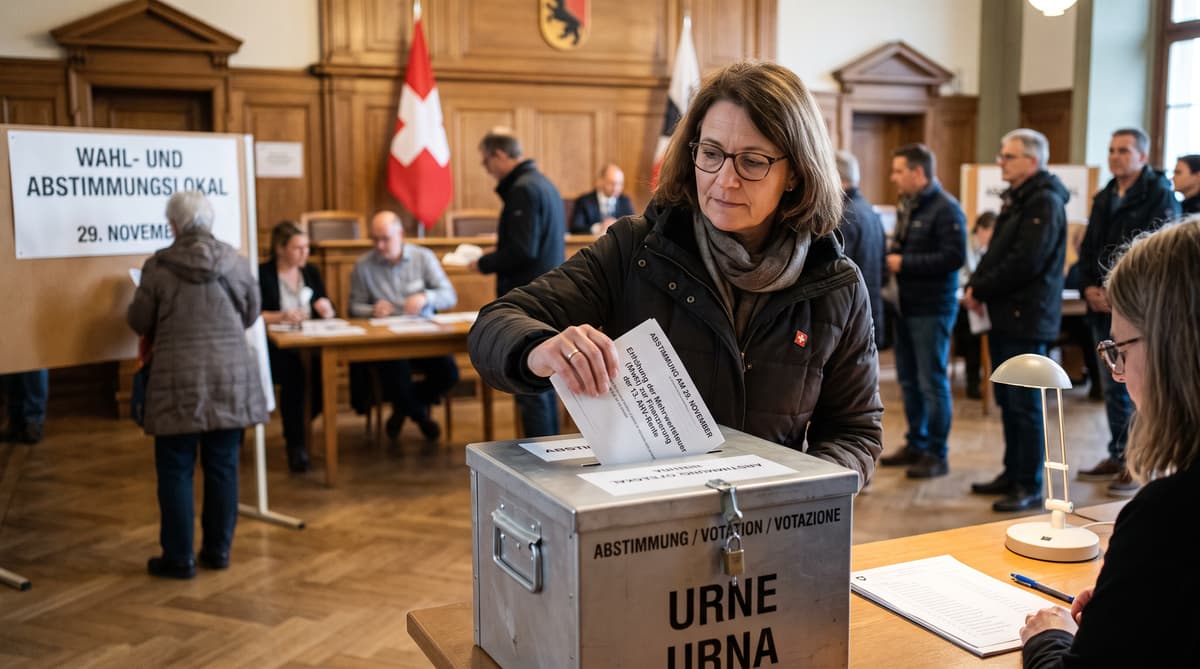
The first 13th OASI payment arrives in December 2026, and about 2.5 million recipients are set to receive it. Swiss voters approved the new payment by 58.2% in March 2024, giving retirees a higher annual benefit after years of debate over living costs and retirement security. The November 29 referendum concerns the financing plan, not whether the payment should go ahead.
Parliament wants to raise the standard value-added tax rate from 8.1% to 8.5% starting in 2028. The special rate for hotels and other accommodation would rise from 3.8% to 4%. Food, medicines and other goods covered by the reduced rate would remain taxed at 2.6%.
The new payment will cost roughly CHF 4.2 billion a year. The proposed VAT increase would bring in approximately CHF 1.4 billion annually, leaving the OASI system reliant on further measures to cover the full cost. The vote therefore places a popular pension benefit alongside a tax increase that would affect consumers, businesses and visitors to Switzerland.
Follow the money behind the extra payment
A single pensioner could receive up to CHF 2,520 more per year, while a married couple could receive up to CHF 3,780. The additional payment applies to OASI recipients in Switzerland and abroad, and its annual cost will rise as the retired population grows and pensions continue to track living costs.
The OASI operates largely on a pay-as-you-go basis. Contributions from today’s workforce finance current pensions, with employees and employers providing about 70% of revenue. The federal government covers just over 20% of expenditure, drawing on general funds and taxes on tobacco and spirits. VAT and casino taxes account for about 9% of revenue.
The system recorded a CHF 4.4 billion surplus in 2025, with total revenue above CHF 55 billion. That recent result does not remove the pressure created by the new payment. The government’s projections put the annual OASI deficit at almost CHF 5 billion by 2035 if the proposal fails. Approval would reduce the projected gap to around CHF 3 billion, according to estimates cited by the Federal Council.
Baume-Schneider makes the government’s case
Elisabeth Baume-Schneider says the proposed tax increase would protect the pension fund from a sharper deterioration. The social affairs minister has described the package as a moderate compromise, pointing to the decision to leave the reduced VAT rate unchanged. That rate covers essential goods including food and medicines, while health insurance premiums carry no VAT.
Baume-Schneider said rejecting the measure would have serious consequences for OASI finances. Government projections show reserves falling below the statutory minimum of one year’s expenditure in 2027. By 2035, the reserves would cover only about 50% of annual spending without additional VAT revenue. With the increase, the projected coverage would reach about 70%.
The minister also stressed that all revenue from the higher rates would go directly to social security. She rejected calls to balance the system through an immediate departmental restructuring and said raising the retirement age would require approval from both Parliament and voters. Her argument is focused on timing: the 13th payment begins now, while broader reforms remain under discussion through the government’s OASI 2030 consultation.
Opponents push for structural reform
The PLR/FDP says households and small businesses should not carry the cost through higher consumption taxes. The party launched its campaign against the proposal in late September, arguing that a VAT increase would weaken purchasing power and add pressure to companies already facing higher costs.
Opponents favour structural changes and spending cuts. Some support increasing the retirement age, a politically difficult option that would require a parliamentary decision and a referendum. The debate also reflects the different ways Swiss voters experience the OASI system. Retirees would receive the new payment, while workers and consumers would help finance it through payroll contributions and VAT.
The government and Parliament present the tax increase as a way to distribute the burden across generations. Critics say it postpones harder decisions about the system’s long-term balance. The proposed revenue would cover only part of the CHF 4.2 billion annual cost, leaving the Confederation to consider additional financing under the OASI 2030 reform. That future package could combine another VAT increase with higher social security contributions.
The referendum sets the next OASI test
A rejection would leave the 13th payment in place while reopening the funding fight. Retirees would still receive the December 2026 payment, but Parliament and the Federal Council would need to secure the missing revenue through another bill, new contributions, spending changes or a future tax proposal.
Approval would provide OASI with about CHF 1.4 billion a year, although it would not fully finance the new benefit. The government would still face a projected shortfall of around CHF 3 billion by 2035, based on the figures cited by Baume-Schneider. A rejection would raise that projected deficit to almost CHF 5 billion and reduce reserve coverage to about 50% of annual spending by 2035.
The vote will also test the political durability of the pension decision made in 2024. Baume-Schneider supported the Socialist campaign for the 13th payment before joining the government, then opposed it as a minister because of its cost. She now backs the tax increase needed to help finance it. Swiss voters will decide whether that compromise offers a credible first step toward OASI’s next reform.