Switzerland
Report traces Swiss munitions to Russia via indirect routes
An investigation reported that Swiss-made munitions supplied to Slovenia later reached Russia through indirect trade routes. The revelations come two weeks before Swiss voters decide on changes to the War Materiel Act.
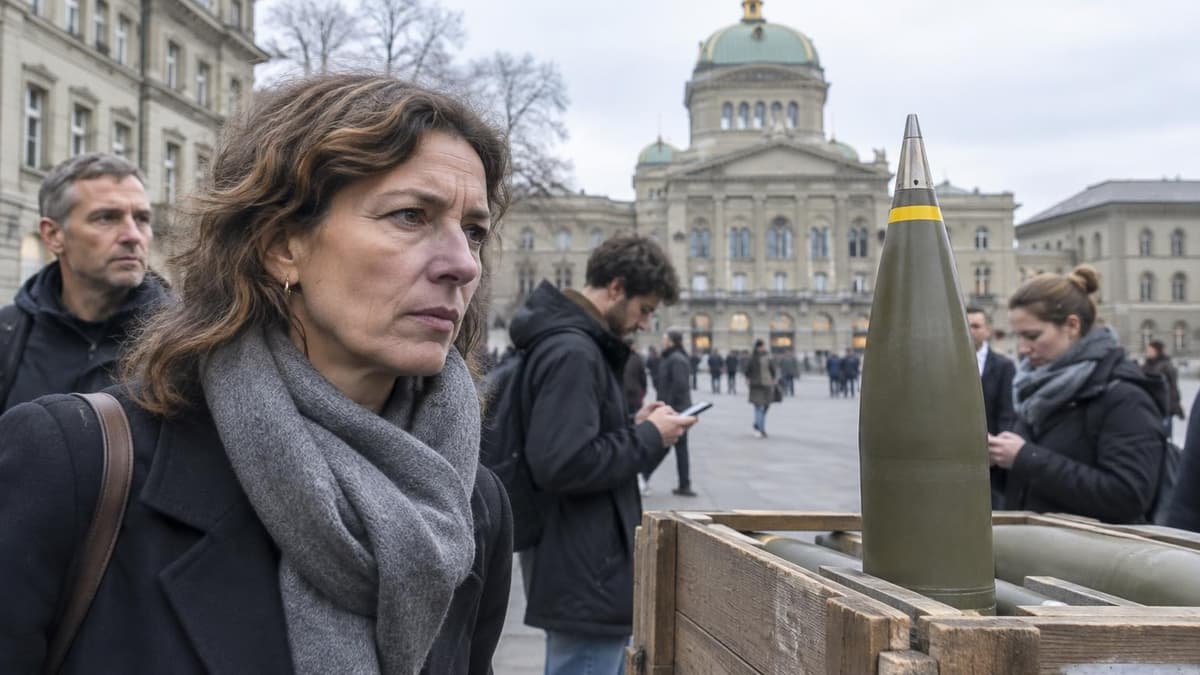
Swiss-made ammunition appears in a Moscow register just as Switzerland prepares to vote on arms-export rules. An investigation by NZZ am Sonntag found two records of deliveries by RUAG, the state-owned defence contractor, in December 2022 and April 2023. The newspaper traced the ammunition through Slovenia and Kyrgyzstan before it reached Russia.
The findings were published on 16 November, two weeks before voters were due to decide on changes to the War Materiel Act. The law sets the rules for exporting weapons and ammunition from neutral Switzerland. The proposed revision would make exports more flexible and change the use of non-re-export declarations, which are intended to prevent Swiss military equipment from being passed on to another country.
The case puts that control system under scrutiny. SECO, Switzerland’s licensing authority, told NZZ am Sonntag it was clarifying the specific case documented in the Moscow register.
Trace the route through third countries
The reported route ran from Switzerland to Slovenia, then through Kyrgyzstan to Russia. RUAG legally delivered the ammunition to Slovenia, an EU and NATO member. According to the investigation, a private arms dealer then sold it to Kyrgyzstan, probably with the Slovenian government’s approval. From there, the ammunition made its way to Russia.
The NZZ am Sonntag investigation based its account in part on a Moscow register of conformity certificates. It identified two entries for RUAG ammunition deliveries, one in December 2022 and another in April 2023. The records place the deliveries in a period when Russia was already subject to restrictions on new war-materiel transfers from Germany, but the route described by the newspaper passed through third countries.
The reported path illustrates how equipment can move beyond its first buyer. In this case, Slovenia was the direct recipient of the Swiss delivery, while the onward sales involved a private dealer and Kyrgyzstan.
Examine the safeguards in the law
The proposed law would scrap non-re-export declarations as a standard safeguard. Under the revised War Materiel Act, Switzerland would request such pledges from governments only in exceptional cases. The current rules do not require private arms dealers abroad to submit the same declaration promising not to re-export Swiss military equipment.
SECO introduced another requirement in March 2024. Private foreign dealers trading in handguns, pistols and ammunition must provide a written explanation of where they intend to sell Swiss-made equipment, either in their home country or in a named third country. The government has said this explanation does not carry the same force as a re-export prohibition.
That distinction matters in the route described by NZZ am Sonntag: the first buyer was a government, but a private dealer handled a subsequent sale. The proposed changes would further reduce the occasions when Switzerland asks governments for non-re-export commitments, while written explanations from certain private dealers remain part of SECO’s licensing practice.
Take the debate to the ballot box
The November vote has sharpened disagreement over how much risk Switzerland should accept when exporting arms. Social Democrat parliamentarian Fabian Molina warned that dropping declarations could allow weapons to reach authoritarian governments and combatants through indirect routes. “War materiel will find its way to authoritarian states, to warmongers, via circuitous routes,” he said.
Swiss People’s Party politician Michael Götte argued that unwanted transfers cannot be prevented with complete certainty under either the existing or revised rules. “I think we have to live with that if we export anything,” he said, adding that exports matter for Switzerland’s security and economy.
The vote on 29 November will decide whether the proposed changes to the War Materiel Act take effect. Meanwhile, SECO is clarifying the case raised by the Moscow register. The investigation has brought the practical challenge of controlling onward sales into the centre of the campaign, with the reported Slovenia-to-Kyrgyzstan route serving as a live test of the debate over declarations and export flexibility.