Switzerland
Zurich Airport to test self-driving wheelchairs for passengers
Zurich Airport will trial four self-driving wheelchairs over the next three years to help passengers with reduced mobility reach their gates. The airport says the devices will supplement, not replace, personal assistance.
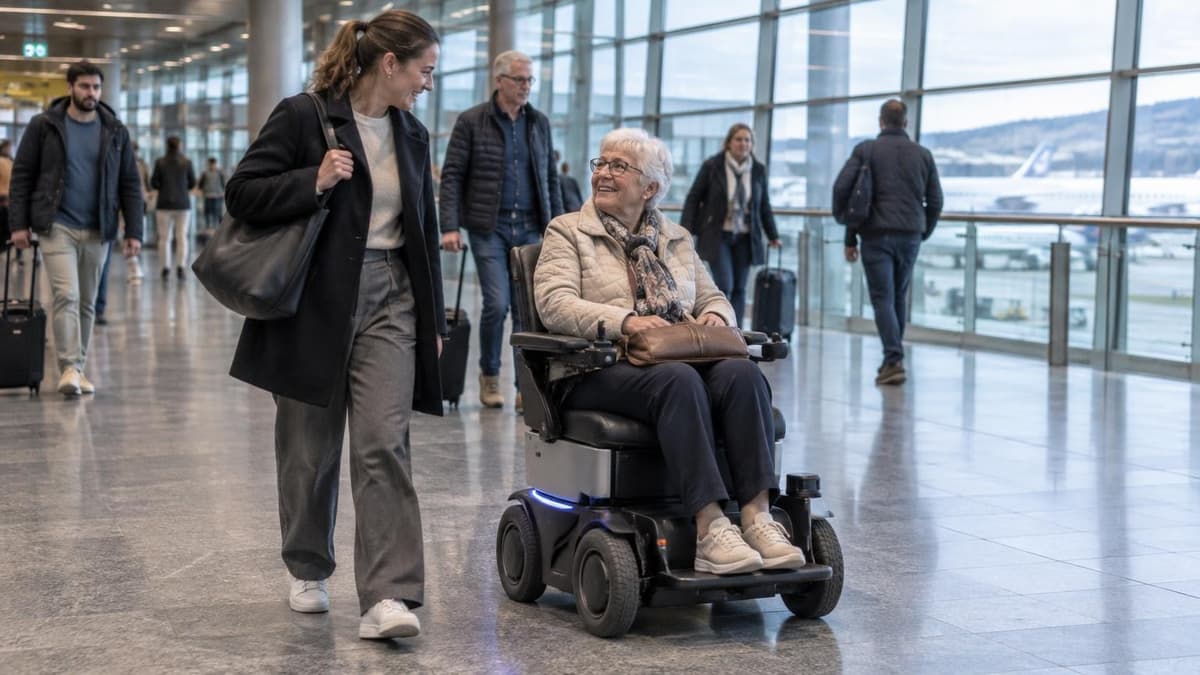
Four autonomous wheelchairs are set to help passengers reach their gates at Zurich Airport. The airport will test the devices over the next three years, aiming to give travellers with reduced mobility greater independence during their journey through the terminal. The trial will also allow staff to assess how the wheelchairs fit into their daily work.
Zurich Airport says the service will complement personal assistance. Staff will continue to help passengers, with the airport expecting the devices to leave them more time for people who need more intensive support because of a disability. The trial puts the focus on how a new mobility option can work alongside that existing assistance. For passengers, the wheelchairs are intended to provide another way to travel to the gate, within the areas covered by the test.
Set the route through Dock A
The trial will run on designated routes in Dock A. The wheelchairs will carry passengers between the airside waiting area and the gates, but only through parts of the passenger area where no boarding-pass, security or passport checks are required.
That route plan sets a defined scope for the test: the devices will move passengers through selected airport spaces rather than across every part of their journey. Zurich Airport says it will use the trial to assess how the wheelchairs can be integrated into staff’s day-to-day work. The airport’s stated goal is greater independence for passengers with reduced mobility, alongside more staff time for those who need more intensive support. The route restrictions and operational assessment are part of the trial’s practical setup.
Pair sensors with human support
More than 30 sensors help each wheelchair scan its surroundings. The devices can detect obstacles and brake automatically, while an SOS button lets passengers request assistance when needed. These features are designed to support movement through the designated passenger areas during the trial.
Zurich Airport has stressed that the autonomous service will remain a supplement to personal assistance, not a replacement. That distinction is central to how the airport describes the project: the wheelchairs offer passengers another way to reach their gates, while staff continue to provide support, particularly for travellers who require more intensive help. The trial will let the airport examine how the devices function within everyday operations and how they work alongside the assistance already provided.
Place the trial in a wider automation push
Zurich’s trial joins a small group of airport deployments already under way in Europe. Self-driving wheelchairs are in use at Munich, Amsterdam and Rome airports. Zurich plans to use its three-year test to examine how the devices can become part of staff’s daily work and support passengers on the route to their gates.
The wheelchairs are one part of a broader automation effort at Zurich Airport. The airport already uses cleaning robots, self-driving waste bins and automated shuttle buses for staff. The new trial adds passenger mobility to that range of projects. Its stated aim is to give people with reduced mobility greater independence while enabling staff to spend more time with passengers who need intensive support. The four devices will be tested on designated routes in Dock A as the airport evaluates their place in its operations.