Switzerland
Swiss home prices keep rising despite higher mortgage rates
Swiss home prices continued to rise in the third quarter, despite higher fixed-rate mortgage costs. Single-family homes increased 2% from the previous quarter, while apartment prices rose 1. 7%.
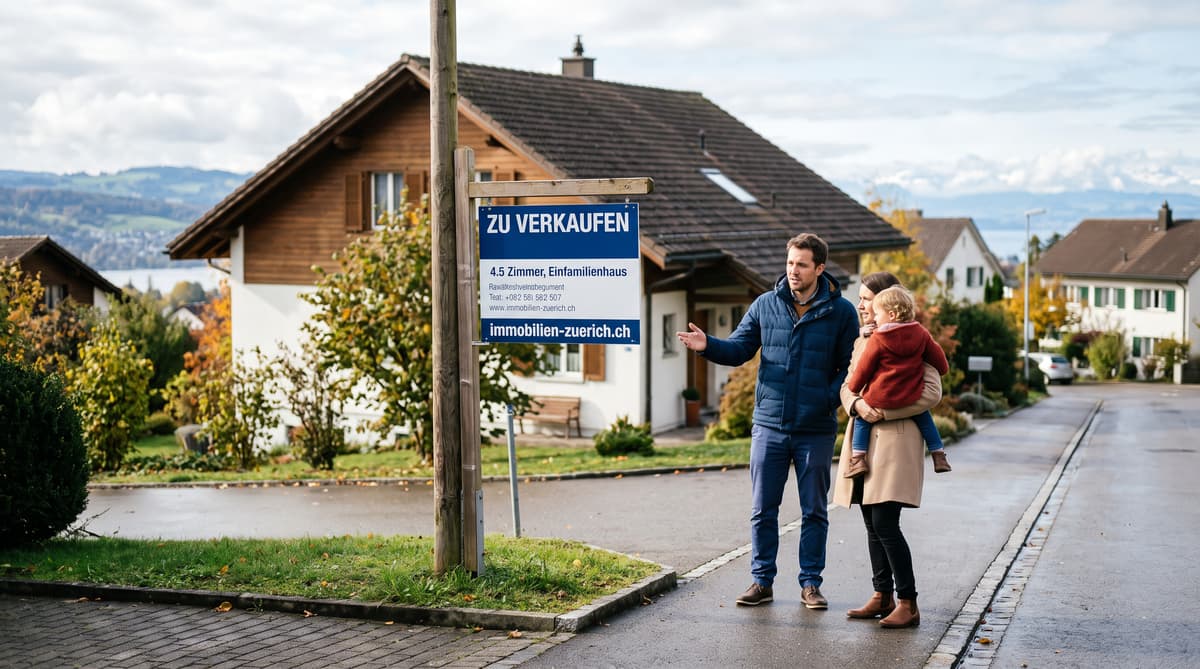
Single-family homes rose 2.0% and apartments 1.7% in the third quarter of 2026, extending a price climb that higher fixed-rate mortgage costs have failed to halt. The latest figures from the Raiffeisen Transaction Price Index show that buying a home became more expensive across Switzerland between July and September.
The annual comparison is even sharper for apartments. Prices increased 5.9% from the third quarter of 2025, compared with a 3.6% rise for single-family homes. The figures cover owner-occupied residential property and are based on actual transaction prices supplied by Raiffeisen and the Swiss Real Estate Datapool.
That distinction matters in a market where advertised prices may not reflect completed sales. The index tracks what buyers actually paid, offering a direct view of the pressure facing households seeking ownership. For families renewing financing or entering the market for the first time, the combination of higher borrowing costs and rising purchase prices narrows the room for manoeuvre. The third-quarter data also show that demand remains strong enough to absorb the financial impact of more expensive fixed-rate loans.
Track the regional price divide
Zurich led the annual rise in single-family home prices at 4.8%, with Western Switzerland close behind at 4.6%. The strongest gains remain concentrated in regions where employment, transport links and limited developable land support sustained demand.
Southern Switzerland recorded a 3.3% annual increase for single-family homes, while Eastern Switzerland posted 3.5%. Those figures still represent firm growth, although they trail Zurich and the French-speaking western market. The regional spread points to a national market moving in the same direction at different speeds.
Apartment prices followed a different pattern. Southern Switzerland led the country with a 7.4% annual increase, while the Lake Geneva region recorded only 0.4%. The result shows why a national average can conceal very different conditions for buyers. A household searching around Geneva faces a slower rate of price growth than one buying in Southern Switzerland, though that does not make either market broadly affordable.
Location continues to shape the price of access to Swiss housing. Proximity to jobs, schools, rail connections and established amenities keeps competition intense in several regions, while the supply response remains limited.
Watch tourist centres pull ahead
Tourist municipalities recorded a 7.9% annual increase in apartment prices, the strongest result among the municipality categories measured by the index. Demand for flats in resort areas continues to support higher prices, particularly where new construction is constrained and second-home rules limit the available stock.
Central municipalities showed a different pattern. Single-family home prices rose 5.2% over the year, while apartment prices in these municipalities increased 1.6%. The gap between the two property types suggests that land scarcity and the limited supply of detached homes are exerting a particularly strong effect in established communities.
These categories do not describe every local market, and they should not be read as a forecast for an individual street or canton. They do, however, illustrate how Switzerland’s housing market is shaped by local geography and planning conditions. Tourist centres compete for a finite number of apartments, while central municipalities offer few opportunities to add detached housing.
For prospective buyers, the practical consequence is a highly local search. A change in municipality can affect both the price level and the type of property available, even within the same broad region.
Measure the mortgage pressure
Higher fixed-rate mortgage costs have not yet changed the direction of the market, according to Fredy Hasenmaile, Raiffeisen’s chief economist. He said the increase in interest rates remains too moderate to overcome the strong upward momentum in prices.
The other force is supply. Switzerland has limited residential property available for purchase, and the shortage gives sellers leverage even as financing becomes more expensive. When buyers compete for a small number of homes, mortgage rates alone may not be enough to produce broad price declines.
The Raiffeisen index captures completed transactions, so the latest figures reflect deals that made it through the market rather than asking prices that may later be reduced. That makes the continued quarterly increase significant for anyone assessing current affordability. Buyers must account for two separate costs: the price of the property and the interest charged on the loan used to finance it.
The data also indicate why a general cooling may take time. A modest increase in borrowing costs can reduce what some households can afford, yet strong demand and scarce listings can keep transaction prices moving higher in the properties that do reach the market.
Recalculate the path to ownership
The third-quarter figures leave Swiss buyers facing a market where both ownership costs and entry prices are rising. Apartments became 5.9% more expensive year on year, while single-family homes rose 3.6%, before the cost of financing is added to the calculation.
That combination will keep the buy-or-rent decision highly dependent on location, household income and the length of time a buyer expects to stay. A household may find a less expensive purchase in one municipality, but commuting costs, limited listings or the need for renovation can alter the calculation. Swiss renters also face a competitive housing market, particularly in employment centres and popular tourist areas.
The Raiffeisen Transaction Price Index does not provide a forecast for the next quarter. Its current message is narrower and clear: through the third quarter of 2026, higher fixed-rate mortgage costs had not weakened the national price trend. Any sustained change will depend on the balance between financing conditions, buyer demand and the supply of homes available for sale.
For households planning a purchase, the latest regional figures reinforce the value of comparing municipalities rather than relying on a single national average.