Switzerland
Coalition attacks proposed easing of Swiss arms-export rules
A coalition of 28 parties and organisations has launched its campaign against proposed changes that would make Swiss arms exports easier. Opponents describe the bill as immoral and anti-Ukraine ahead of the November 29 referendum.
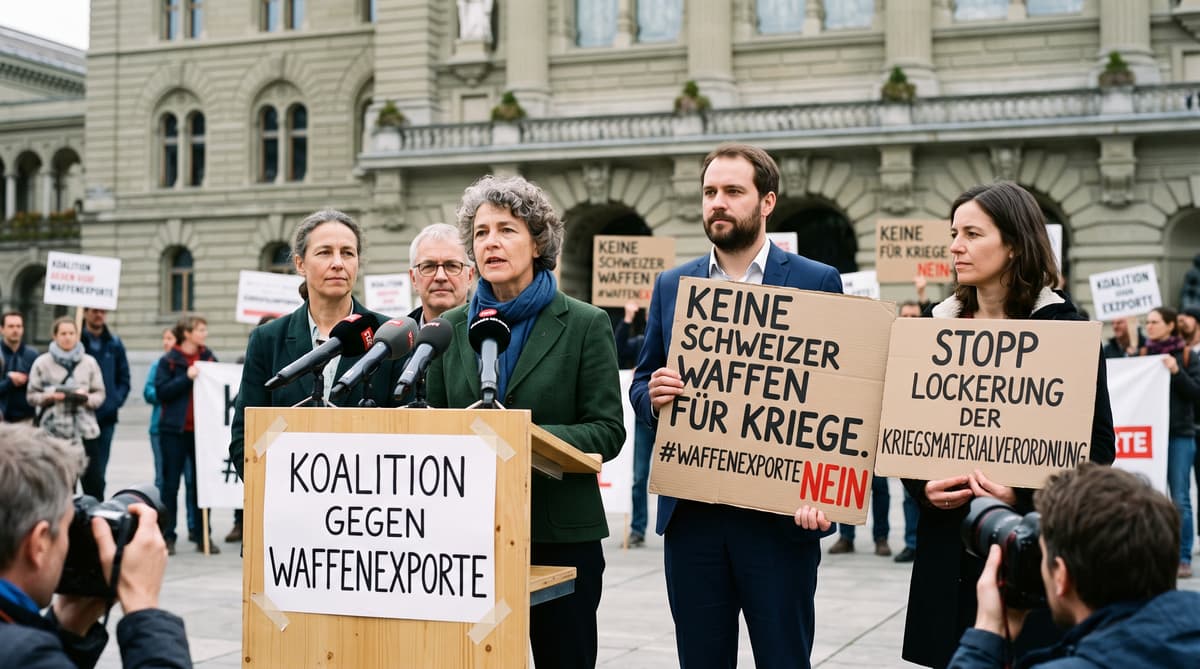
Switzerland’s November 29 vote will decide how much political control remains over the export of military equipment. A coalition of 28 parties and organisations opened its campaign in Bern on October 12, branding the proposed amendments to the War Material Act “immoral” and “anti-Ukraine”.
The alliance brings together left-wing parties, the Evangelical People’s Party, Caritas, the Group for a Switzerland without an Army, Justitia et Pax and the Commission of the Swiss Bishops’ Conference. Its members say the bill would weaken safeguards that parliament and civil society fought to establish.
The referendum follows a political dispute over Switzerland’s defence industry, neutrality and its position in Europe’s security system. Supporters of the amendments argue that existing rules have made Swiss manufacturers less competitive and restricted cooperation with foreign partners. Opponents say the proposed remedy would give the executive excessive room to approve exports.
The coalition’s campaign will now move from Bern’s press rooms into the country’s cantons. Voters will assess a measure that could affect arms sales, weapons transfers and Switzerland’s claims to uphold international law. The result will also test public confidence in the compromise reached after an earlier civil society initiative was withdrawn in 2021.
Expand government discretion
The proposed law would restore direct exports to countries caught in civil wars, according to its opponents. The coalition says the changes would remove export criteria for 36 countries, including the United States and Argentina. It described the measure as a “blank cheque” for governments it accuses of disregarding democracy and human rights.
Under the proposal, the Swiss government could waive authorisation requirements in “exceptional circumstances” or when exports served “Switzerland’s interests”. Social Democratic parliamentarian Fabian Molina said those grounds were too vague and would reduce parliament’s ability to scrutinise sensitive decisions.
The coalition also objects to a transfer rule that would allow a customer buying weapons in Switzerland to send them on to another country. Molina said Switzerland would be the only country in Europe to adopt such a practice. The source material does not detail the bill’s full legal text or the government’s interpretation of every provision, leaving the referendum campaign to focus heavily on the safeguards that would disappear.
Alicia Giraudel of Amnesty International said the dispute reached beyond commercial licences. She linked the vote to Switzerland’s credibility on human rights, the rule of law and international law, placing export decisions within the country’s wider foreign policy debate.
Trace the weapons’ next destination
Opponents say Swiss weapons could reach Sudan or Israel and be used in Gaza under the proposed transfer rules. Martina Weber, a member of the Caritas executive board, said export decisions carry consequences for civilians, forced displacement and refugee movements.
The coalition’s argument rests on the possible chain between a Swiss authorisation and later battlefield use. Once a buyer can transfer equipment to another country, campaigners say Swiss authorities would have less control over where weapons end up and how they are deployed. They cite Sudan and the conflict in Gaza as examples of the risks they believe the bill creates.
Lisa Mazzone, president of the Green Party, said companies should not profit from civil wars and the persecution of populations. She also accused the arms industry of returning to its campaign for looser rules after the withdrawal of the so-called correction initiative.
The debate carries particular weight in Switzerland, where neutrality has traditionally shaped decisions on military exports. The government eased rules earlier in 2026 to support an industry facing exclusion from parts of the European defence market. The November vote will determine whether that approach gains a broader legal foundation.
Put Ukraine at the centre
Ukraine would remain excluded from the proposed relaxation, a provision opponents call politically calculated. The coalition says the exception was designed to appease the right-wing Swiss People’s Party and arms manufacturers while leaving Ukraine outside the new export framework.
That position reflects a larger tension in Swiss policy. Switzerland has faced pressure to support European defence cooperation while preserving its neutrality and controlling the re-export of Swiss-made equipment. The country’s defence industry has argued that restrictive rules make it harder to participate in international supply chains and compete for orders.
Opponents reject the idea that industrial concerns should drive the law. Marc Jost of the Evangelical People’s Party pointed to the compromise reached in 2021, which helped persuade civil society to withdraw an earlier initiative. He presented that compromise as a trust-based settlement now at risk.
The coalition’s inclusion of religious organisations and humanitarian groups broadens the campaign beyond the traditional left. Its organisers are presenting the referendum as a test of whether economic and security arguments can override established export controls. The government and industry case will face scrutiny in the weeks before voters receive their ballots.
Take the dispute to the ballot box
Voters will settle the dispute on November 29 after a campaign focused on control, credibility and industrial survival. The opponents’ alliance says the bill would make the government’s waiver powers too broad and allow weapons to move through buyers into third-country conflicts. Its supporters are expected to stress the needs of Swiss manufacturers and the limits that current rules place on defence cooperation.
The referendum will also show how Swiss citizens weigh neutrality against the country’s growing involvement in European security debates. A rejection would preserve the existing framework and maintain pressure on the arms industry to operate within stricter political conditions. Approval would give the government a wider mandate to authorise exports and manage exceptions, subject to the details of the implementing rules.
For the coalition, the campaign offers a chance to connect arms licences with humanitarian outcomes and Switzerland’s international reputation. For the bill’s backers, the vote is a decision about whether the legal framework still fits a changing security market.
The first major test arrives at the ballot box. Until then, Bern’s referendum debate will turn on the reach of executive power, the reliability of re-export controls and the place of Ukraine in Swiss defence policy.