Geneva
ILO staff protest in Geneva over budget and job cuts
Nearly 300 current and former International Labour Organization staff protested in Geneva against budget and job cuts. The approved plan removes 120 full-time-equivalent posts, including 86 filled positions and 180 vacancies.
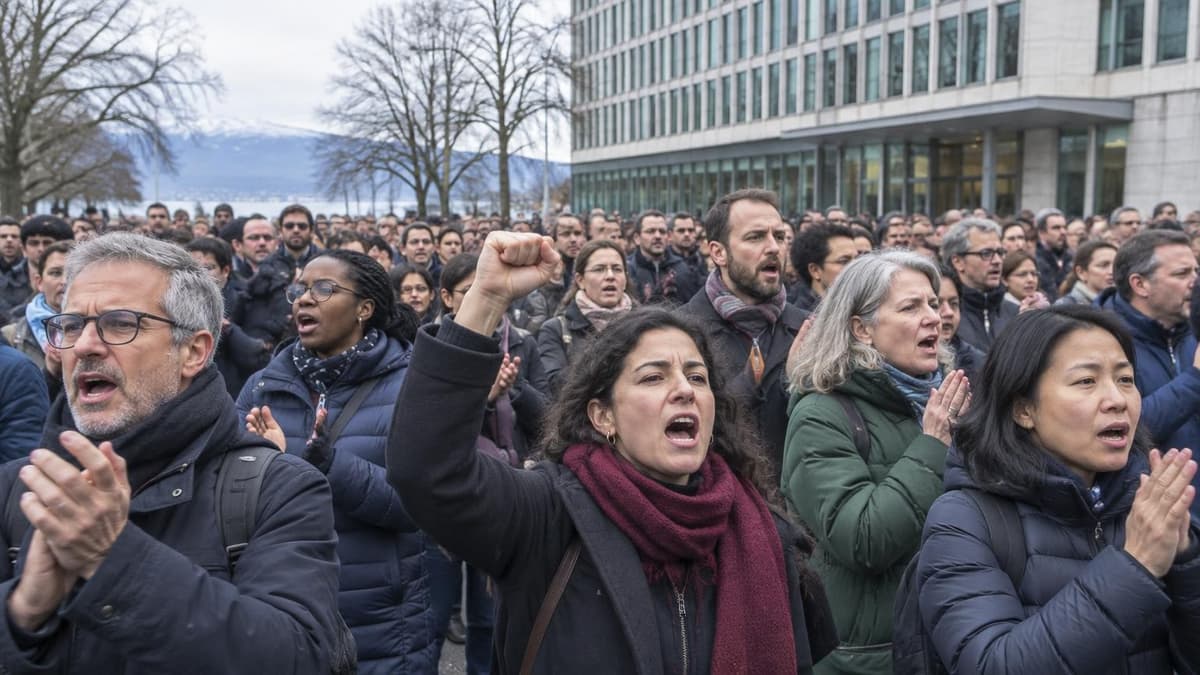
Nearly 300 current and former staff gathered in Geneva on November 11 to challenge the ILO’s approved budget and job cuts. The protest was supported by Geneva-based trade unions, with participants calling for their proposals to be taken seriously. They made their case as the International Labour Organization’s Governing Body met, bringing the dispute directly into the institution’s decision-making forum.
Séverine Deboos, president of the ILO trade union, addressed the Governing Body with a blunt reminder: “Behind the figures, there are people.” Her words put the focus on employees affected by the plan, as well as on the choices facing an organisation whose work and standards reach across countries. The protest brought current employees together with former colleagues, turning the approved cuts into a visible workplace dispute in the Swiss city that hosts the ILO.
Read the Approved Cuts Clearly
The approved plan provides for 120 full-time-equivalent job cuts, with 86 occupied posts and 180 vacancies set to be eliminated. Director-General Gilbert Houngbo put forward the plan, which has now been approved. For 2026-2027, the filled posts scheduled to go include 35 fixed-term positions and 51 permanent ones.
Those figures describe different parts of the staffing plan: the 86 filled posts are the jobs held by employees, while the 180 vacancies are unfilled positions the organisation plans to remove. The full-time-equivalent figure sets out the planned reduction in staffing capacity. Together, the details show that the restructuring reaches both existing employees and the ILO’s vacant posts. For staff members, the distinction does little to soften the immediate concern about the filled positions. For the organisation, removing vacancies also reduces the posts available for future recruitment.
Track the Wider Staffing Impact
The ILO trade union says nearly 600 people have left the organisation since 2025 following cuts to United States funding. The figure places the newly approved plan within a longer period of staffing reductions, although it refers to departures since 2025 rather than to posts in the current plan. The union raised that history as staff protested the latest decisions in Geneva.
The approved plan itself sets out cuts to filled and vacant posts for 2026-2027. Its 86 filled posts include permanent and fixed-term jobs, while the additional 180 vacancies are unoccupied positions. The union’s account of departures points to the human consequences that staff representatives say should shape decisions about the organisation’s future. Deboos’s appeal to the Governing Body captured that concern in a single line: “Behind the figures, there are people.”
Press for a Serious Consultation
Union representatives say the consultation process has fallen short, and they want staff proposals taken seriously. Yves Defferrard, regional secretary for Unia, held talks with ILO management. He criticised the process, saying: “The consultation process here, in an institution that is supposed to set a global example, falls short.” His remarks linked the local dispute in Geneva to the ILO’s role as an organisation that sets international labour standards.
Geneva-based trade unions supported the protest, and the demonstration brought pressure from outside the management talks into view as the Governing Body met. The approved plan remains in place, with cuts covering filled posts and vacancies. The immediate dispute now centres on how staff concerns and proposals are heard as those reductions are carried out. For Geneva, the protest placed a workplace conflict at an organisation headquartered in the city and brought local union voices into a debate over the institution’s workforce.