European Union
Historian challenges Switzerland’s image as wholly independent from Europe
Historian André Holenstein says Switzerland’s long-standing image of self-sufficient independence overlooks the country’s historical and economic dependence on surrounding powers. His comments come as Parliament considers the latest package of agreements with the European Union.
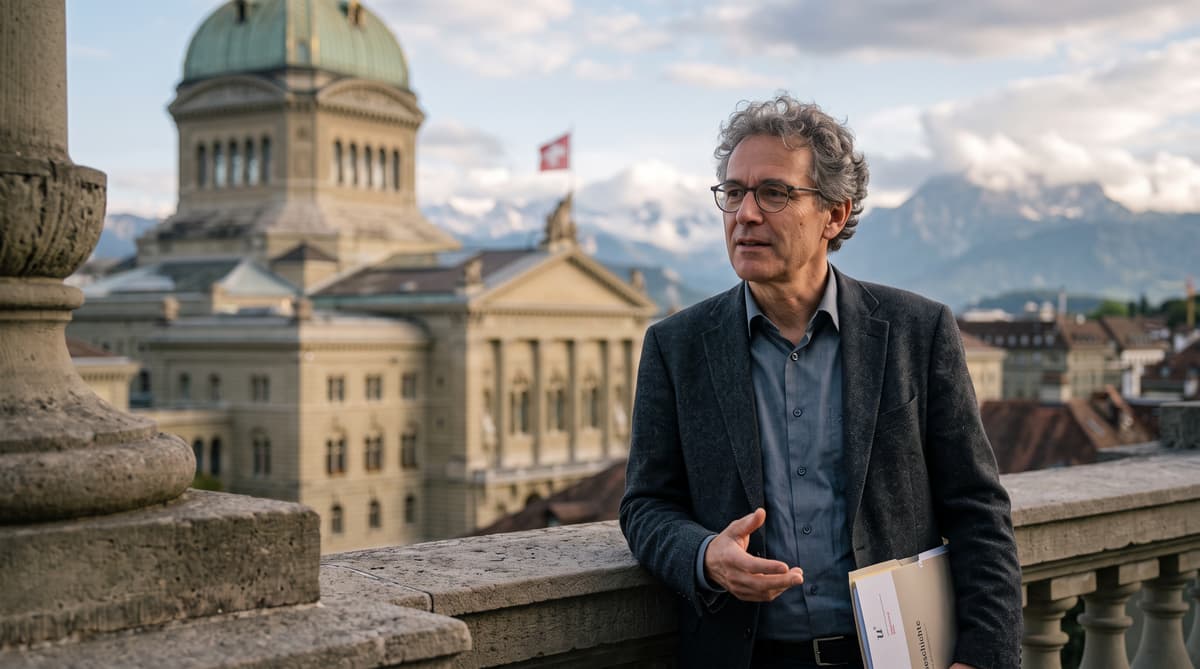
A 2,228 page treaty package has cleared the Senate and now faces the House of Representatives. The parliamentary timetable gives André Holenstein’s intervention immediate political weight. Switzerland’s latest agreements with the European Union, known as Bilaterals III, are entering the next stage while the country’s traditional language of independence remains central to the debate.
The package was agreed in March, when Swiss President Guy Parmelin and European Commission President Ursula von der Leyen signed the deal. The Senate completed its examination in October. The conservative camp, led by the Swiss People’s Party, has framed the negotiations around “diktats from Brussels”, “foreign judges” and the risk of submission to European institutions.
Holenstein, speaking to RTS, says that language rests on a selective account of Swiss history. He argues that Switzerland has long combined international economic openness with a powerful domestic image of isolation. That tension shapes the current parliamentary dispute. Switzerland remains outside the EU, yet its voters have repeatedly supported arrangements linking the country to the bloc’s common market. The historian’s argument asks lawmakers to assess Bilaterals III through that longer record of interdependence, rather than treating the agreement as a sudden concession to Brussels.
Name the relationship Switzerland already has
Switzerland has already chosen deep access to the European common market through democratic votes, according to Holenstein. The historian points to the country’s membership in the European Free Trade Association, or EFTA, and to a series of popular decisions that have integrated Switzerland into the economic space surrounding it.
That arrangement carries a practical consequence. “If we want to be part of this common market, of course we are obliged to follow the rules under which it was established,” Holenstein told RTS. He rejects descriptions of the relationship as a colonial contract or a contract of submission, saying those formulations obscure the nature of the choice Switzerland has made.
His phrase, “partial member of the European Union”, is deliberately provocative because Switzerland is not an EU member state. It has no seat in the EU institutions and retains its own political system, currency and direct democratic procedures. At the same time, agreements with the bloc shape the conditions under which Swiss companies, workers and institutions interact with Europe. Holenstein’s point is that legal distance from the EU does not erase economic proximity. The Bilaterals III debate therefore concerns the terms of an existing relationship, as well as the limits Switzerland wants to place on it.
Trace sovereignty back to 1798
Holenstein places the roots of modern Switzerland in the 50 years from 1798 to 1848. Before that period, he describes the old Confederation as a Helvetic body made up of 13 small republics. Their shared priority was to preserve autonomy and avoid becoming a nation, he says.
The arrangement was repeatedly tested by internal conflict and pressure from neighbouring powers. The French invasion in 1798 brought the Ancien Régime to an end and created the Helvetic Republic. Holenstein regards that intervention as one of the decisive events in the country’s political development. The period ended with the creation of modern Switzerland in 1848.
This account does not present Switzerland as a state formed in isolation. It describes a political system shaped by war, cantonal crises and the calculations of stronger powers around it. “Foreign powers played a major role in helping Switzerland become what it was by 1848,” Holenstein said. His argument challenges a national story that treats sovereignty as an uninterrupted inheritance. For the current EU debate, the historical point is direct: Swiss autonomy has always developed within a European balance of power. The forms of pressure have changed, while the surrounding political geography has not disappeared.
Watch Parliament define the next chapter
The next stage of the debate will test whether Parliament treats European integration as a negotiated choice or as a loss of control. The House of Representatives must now consider the package after the Senate’s review. The political language will remain sharply divided. The Swiss People’s Party and its allies warn of outside interference, while Holenstein argues that market access necessarily involves shared rules.
The disagreement reaches beyond the technical details of Bilaterals III. It concerns how Switzerland describes its place in Europe. The country is deeply connected to the EU while remaining outside the bloc, a position that has allowed successive governments to pursue economic links without full membership. Holenstein’s history places that policy in a longer pattern of adaptation to external powers and markets.
For Swiss voters, the eventual argument will involve familiar questions about sovereignty, judicial authority and the country’s ability to set its own course. It will also involve the practical value of access to the surrounding European economy. Parliament’s next decisions will show which part of Switzerland’s identity carries greater weight in 2026: the image of a self sufficient Alpine republic, or the record of a country whose prosperity and institutions have developed through sustained European connections.