Geneva
Geneva parents win approval for 24-week parental leave
Switzerland’s Federal Assembly has approved an extended 24-week parental-leave scheme in Geneva, three years after voters in the canton backed the measure. The decision clears a long-delayed step toward implementation and gives families in Geneva a more generous leave entitlement.
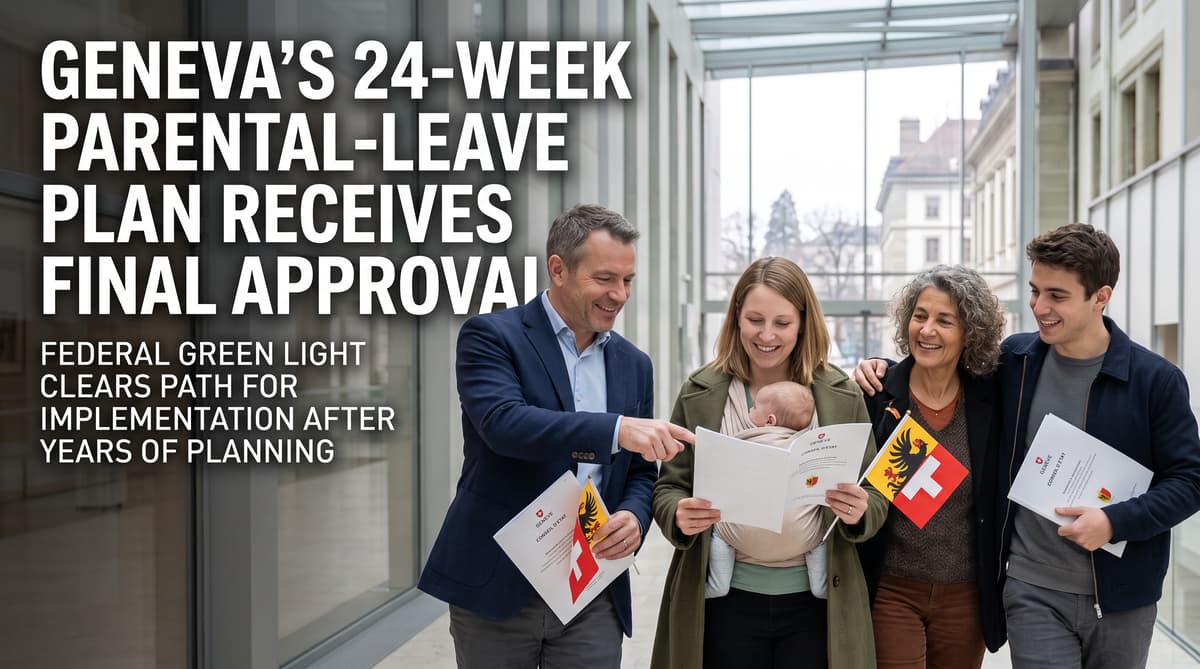
Geneva can now move toward implementing a 24-week parental-leave scheme, after the Federal Assembly approved the cantonal arrangement three years after voters endorsed it. The decision removes the legal obstacle that had kept the measure suspended and gives Geneva a route to put one of Switzerland’s most extensive regional leave plans into operation.
Geneva voters approved the measure in June 2023. The plan provides an additional eight weeks for the other parent, alongside the existing maternity-leave framework. Its arrival has taken longer than supporters expected. The canton originally planned to launch the system in September 2024, but parliament halted implementation after determining that the new Geneva constitutional provision conflicted with federal law.
The federal decision matters beyond Geneva’s borders. Switzerland leaves substantial responsibility for social policy with the cantons, yet cantonal initiatives must operate within national rules governing income compensation and employment rights. By approving the legal change, Bern has allowed Geneva to proceed while opening a path for other cantons to consider longer leave for the other parent. The immediate task now shifts to Geneva: set the administrative details, confirm the start date and ensure families and employers understand how the new entitlement will work.
Federal Law Held Up Geneva’s Vote
A conflict with the Federal Act on Compensation for Loss of Earnings, known as the LAPG, delayed Geneva’s plan for more than a year. The Geneva Constitution had been amended after the 2023 vote, but the provision could not take effect while it remained incompatible with the federal compensation system.
The legal problem centred on the division of powers. Switzerland sets the basic national rules for paid maternity and paternity leave through federal legislation. Cantons can pursue broader social protections, but those measures must fit the federal framework, particularly when public compensation and parental entitlements are involved.
That is why Geneva’s planned September 2024 launch never happened. The cantonal parliament suspended implementation rather than activate a rule vulnerable to challenge or administrative confusion. In December, federal deputies adopted a revision of the LAPG that permits cantons to go beyond national law when establishing leave for the other parent. Federal approval of Geneva’s scheme followed that change.
The sequence shows how Swiss direct democracy and federalism can collide in practice. Geneva voters had already expressed their preference, yet the decision required a second political process in Bern before the canton could act. Families will now wait for Geneva authorities to translate the legal approval into a working system, including eligibility, registration and payment procedures.
Geneva Pushes Beyond the Federal Baseline
The federal baseline remains far shorter than Geneva’s approved plan. Under the framework described in the report, mothers receive 14 weeks, or 98 days, of leave, while fathers or the other parent receive two weeks. During maternity leave, compensation is set at 80% of salary, subject to a maximum of CHF 196 per day.
Switzerland introduced paid maternity leave in 2005, later than many European countries. The country then waited until 2021 to establish statutory paternity leave. Before that reform, many fathers had only one family day when a child was born and had to use annual leave if they wanted more time at home.
Geneva’s plan would significantly expand the role of the other parent during the first months of a child’s life. The measure also gives the canton a distinct position in Swiss social policy, where national entitlements remain limited compared with much of Europe. Its practical value will depend on the final rules and on whether families can take the leave without losing income or facing uncertainty at work.
For employers, the change creates a new cantonal entitlement to administer. For parents, it could make the early division of care less dependent on vacation balances, workplace discretion and the ability to absorb unpaid time away from work.
The Cost Debate Moves to the Cantons
Switzerland’s gradual expansion of parental leave has always carried a financial debate. Before statutory paternity leave arrived in 2021, opponents raised the cost to the public sector and questioned whether the state should finance time away from work after a child’s birth. The estimated annual cost of the national reform was CHF 230 million.
Those arguments reflected a wider Swiss tradition of individual responsibility. Families often relied on employers, annual leave or private arrangements when they needed time at home. Financial concerns and cultural expectations reinforced each other, particularly the assumption that fathers should return to work quickly while mothers carried more of the early childcare burden.
Geneva’s approval tests whether cantonal policy can move faster than the national minimum. The measure gives the other parent a longer period of leave and places the canton among the Swiss regions willing to spend political capital on a broader model of family support. It may also provide evidence for future debates over whether parental leave should be expanded nationally.
The new arrangement will affect more than household schedules. It will require clear coordination between Geneva authorities, employers and the compensation system. Questions about funding, eligibility and how leave can be divided will shape whether the legal reform becomes a practical benefit for families across income groups.
Now Geneva Must Make the Scheme Work
Geneva’s next deadline is implementation. Federal approval resolves the constitutional and legislative conflict, but it does not by itself place payments in parents’ bank accounts. Cantonal authorities must now publish the operational rules, identify the responsible offices and explain how the additional leave will interact with employment contracts and existing federal benefits.
The canton will also need to communicate clearly with families before the scheme begins. Parents will want to know who qualifies, when the leave can be taken, whether it can be divided and how compensation will be calculated. Employers will need predictable documentation and timelines, particularly in sectors where staff absences affect shifts and service delivery.
The political significance is equally clear. Geneva’s voters approved the measure in 2023, and the Federal Assembly has now authorised the legal basis required to proceed. The canton has become a test case for a more decentralised approach to parental leave, with regional governments using their own constitutional powers to extend support beyond the federal minimum.
Other cantons will be watching the rollout. A smooth launch could strengthen arguments for similar measures elsewhere. Administrative difficulties, high costs or uneven access could reinforce calls for a single national standard. Geneva’s experiment will therefore be judged by both its legal durability and its usefulness to working parents.