Switzerland
Switzerland considers traffic lights to tackle motorway jams
Switzerland is considering traffic lights and other measures to manage congestion on increasingly crowded motorways. The government plan has drawn criticism as traffic jams continue to grow on roads built for a smaller vehicle fleet.
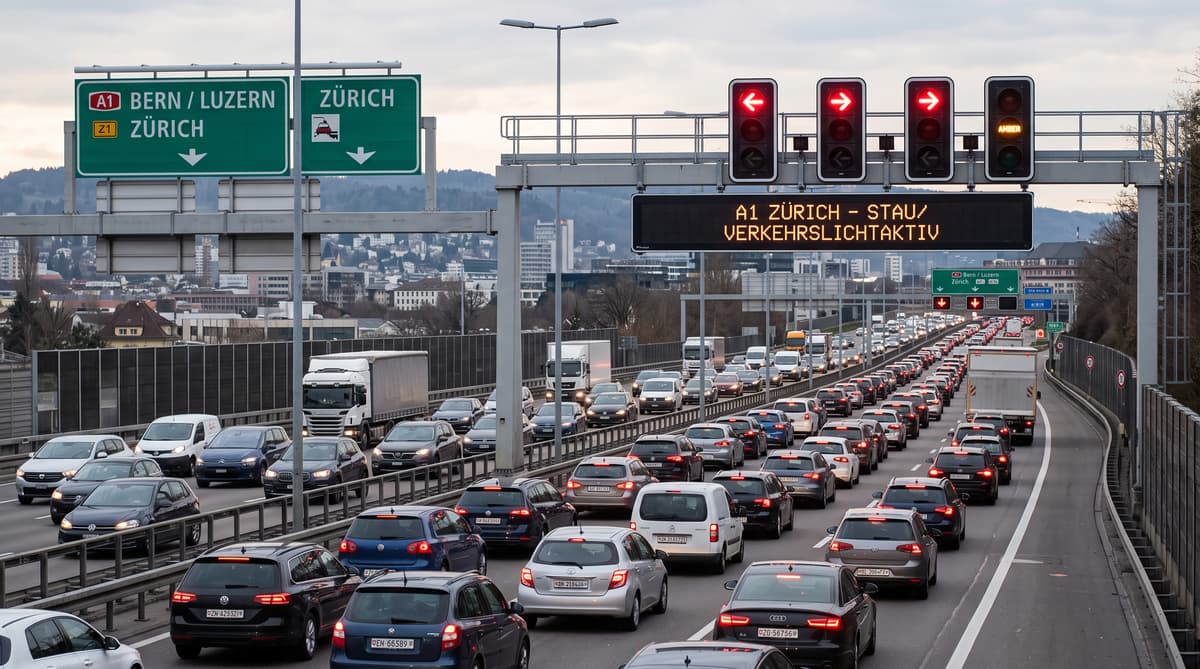
Swiss motorways are carrying more vehicles than their older layouts can comfortably absorb. The government is now considering traffic lights and other traffic management measures to limit the jams that have expanded across the country in recent years.
The proposal comes as Switzerland’s motorway network faces sustained pressure from a growing vehicle fleet. The roads were designed decades ago, when fewer vehicles were in daily circulation. The supplied report does not identify the exact motorway entries where traffic lights could be installed, or provide a timetable for implementation. It does establish the direction of policy: the federal government wants to control how traffic reaches congested sections rather than rely only on building more road capacity.
That approach would affect the first moments of a journey. Signals at motorway access points could regulate the flow of cars entering a busy route, with the aim of preventing traffic from collapsing into stop and go conditions. For commuters, freight operators and people travelling between cantons, the effect would be felt through longer waits before entering the motorway and potentially more predictable travel times once on it.
Regulate the entrances
The proposed signals would manage access to the motorway, rather than create new lanes. That distinction matters in a country where expanding transport infrastructure can take years and requires decisions at federal, cantonal and local levels.
The Local report describes traffic lights as one part of a wider package of measures. It does not set out the full package or quantify the expected reduction in congestion. Any system would have to account for conditions that change quickly: commuting peaks, accidents, roadworks, weather and traffic entering from nearby cantonal roads.
A ramp signal can meter vehicles before they join a motorway. In practice, that may create queues on feeder roads while keeping the main carriageway moving. The policy therefore shifts where drivers experience delay. Authorities would need reliable live traffic data and clear communication so that motorists understand why a red light is holding them at an entrance to a road that appears open ahead.
The supplied source gives no indication that Switzerland has approved a nationwide rollout. At this stage, the government plan is presented as a response under consideration, with operational details still to be made public.
Measure the local cost
The government’s proposal has already attracted criticism. That reaction reflects the practical tradeoff built into traffic metering: a measure designed to reduce congestion on the motorway can impose additional waiting on roads leading to it.
Drivers are likely to judge the plan by whether it produces a visible improvement in journey reliability. A commuter may accept a brief pause at a ramp if the motorway remains moving. The same system could face opposition if queues spill into urban streets, disrupt bus routes or make local traffic slower without delivering a clear benefit on the main road.
The supplied report does not name the critics or record their specific objections. It also provides no figures for the number of traffic jams, their total length or the cost of the proposed measures. Those gaps will matter as the federal authorities develop the plan. Public debate will depend on evidence showing where congestion occurs, how traffic lights would change it and which communities would carry the extra waiting time.
Switzerland’s federal structure adds another layer. Motorways fall under federal responsibility, while surrounding roads and local traffic management involve cantonal and municipal authorities. Coordination would be essential before signals could alter daily journeys around major interchanges.
Set the test for success
The pressure on Switzerland’s roads is structural, and traffic lights can only manage part of it. The source report links the rise in jams to a vehicle fleet that has outgrown motorways designed for an earlier era. That points to a problem that daily signal timing alone cannot resolve.
The government’s plan places traffic management alongside the longer debate over road capacity, public transport and travel demand. Better information about delays could help motorists choose different departure times or routes. Reliable trains and regional buses could give commuters alternatives, although the supplied source does not assess their capacity or availability.
Authorities will also need to explain how they will judge success. Relevant measures could include the duration of queues at motorway entrances, average travel times on the motorway, delays on surrounding roads and the frequency with which signals operate. None of those targets has been published in the material provided.
For now, the proposal signals a willingness to intervene before vehicles enter overloaded sections. The next stage will require concrete locations, traffic data, consultation with affected cantons and a public timetable. Until those details emerge, Swiss drivers know the direction of travel, but not yet the shape of the system they may encounter.