Credit Suisse
Former Credit Suisse chair fined over staff-surveillance probe
Former Credit Suisse chair Urs Rohner has received a suspended fine over alleged false statements to Swiss regulators during an investigation into the bank’s staff-surveillance scandal. The finance ministry’s penalty decision is not final.
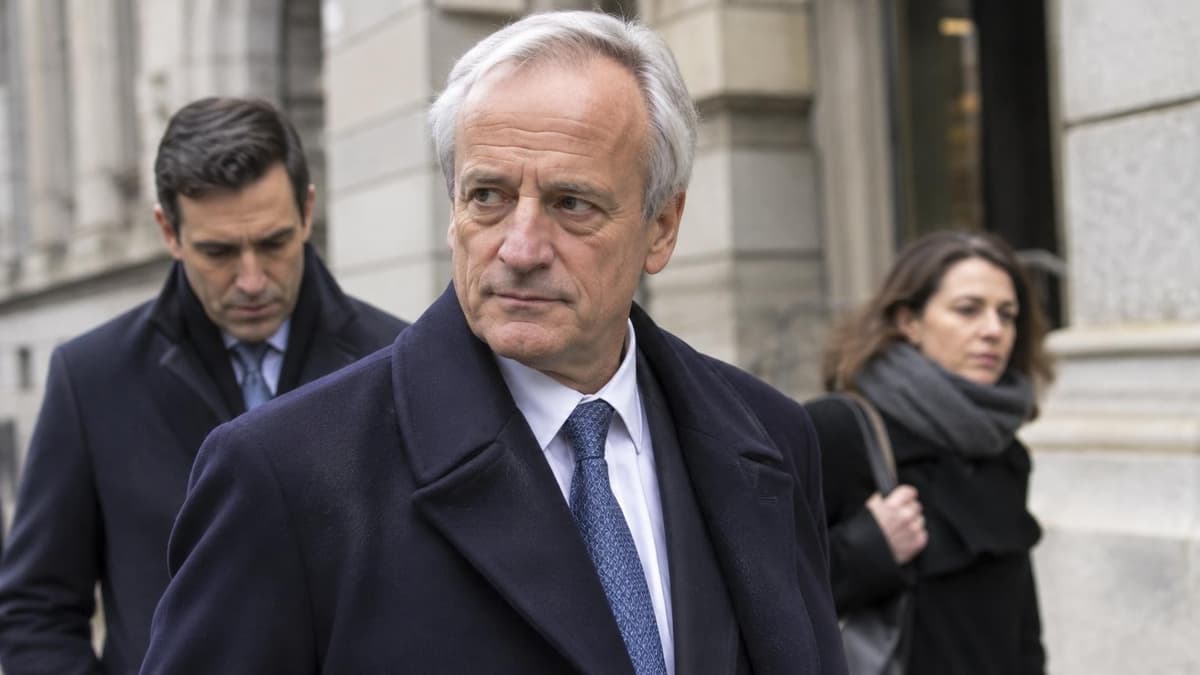
Urs Rohner has been fined over his account of Credit Suisse’s staff-surveillance scandal. The Swiss finance ministry says the former chair intentionally gave false information to regulators, imposing a CHF24,840 fine alongside 144 suspended daily fines of CHF690 each. Its penalty decision, dated October 20, is not final.
Rohner, 66, led the now-defunct bank from 2011 to 2021. The case concerns a reply Credit Suisse sent to the Swiss Financial Market Supervisory Authority, FINMA, in October 2019, after the surveillance affair became public. The ministry says the response left out information relevant to FINMA’s questions about monitoring contracts and complaints concerning former chief executive Tidjane Thiam.
The ruling follows criminal proceedings opened against Rohner in June 2025. The alleged offence carries a maximum sentence of three years’ imprisonment. SRF Investigativ and Republik reviewed the decision, which places Rohner’s signed response at the centre of the case.
Trace FINMA’s Questions
FINMA asked Credit Suisse to account for surveillance contracts and internal complaints. In the wake of the scandal, the regulator sought the number of external surveillance contracts awarded over the previous three years and the number of substantiated internal complaints about Thiam.
Credit Suisse’s reply repeated its public description of the surveillance of former international wealth management chief Iqbal Khan as an “isolated incident”. Citing investigations by law firm Homburger, the bank also reported two other cases. One involved monitoring a former Thiam employee in 2016 after threatening emails. The other concerned plans to monitor a “non-employee third party outside Switzerland”.
The ministry says the reply, signed by Rohner and dated October 25, 2019, did not reveal that the third party was the ex-husband of Thiam’s partner. That detail formed part of the ministry’s assessment of what the bank told its regulator. The questions from FINMA also covered complaints about Thiam, including a report made to Rohner by a former senior executive days after the affair surfaced.
Count the Surveillance Cases
FINMA later identified seven surveillance operations planned or carried out at Credit Suisse between 2016 and 2019. External firms were engaged in four of the cases. Those findings widened the picture beyond the Khan monitoring episode that the bank had described publicly as isolated.
The ministry’s decision says the bank’s reply did not mention the report from a former senior executive who had complained to Rohner about Thiam and voiced suspicions of surveillance. FINMA had asked about substantiated complaints concerning the former chief executive.
The decision also records that the ministry found no evidence Rohner had “specific knowledge” of the further planned or completed surveillance operations or investigations. It nevertheless said there were “sufficient indications” pointing in that direction. The distinction is central to the ministry’s reasoning: its finding concerns the information Rohner provided in a signed response, while its account also weighs what he may have known about activity elsewhere in the bank.
Watch the Non-Final Ruling
The finance ministry’s decision remains non-final. Its penalty combines a CHF24,840 fine with 144 daily fines of CHF690 each, suspended. The alleged offence, intentionally providing false information, can carry up to three years in prison. The ministry opened its criminal proceedings against Rohner in June 2025.
The case turns on Credit Suisse’s October 2019 response to FINMA and the information the ministry says that response omitted. The regulator’s later investigation found seven surveillance operations had been planned or carried out between 2016 and 2019, with outside firms involved in four. The ministry also considered the complaint about Thiam that a former senior executive had raised with Rohner shortly after the scandal emerged.
Rohner denies the ministry’s findings. The ruling therefore remains a penalty decision rather than a final determination. It places the former chair’s communication with Switzerland’s financial supervisor under scrutiny as part of the wider inquiry into how Credit Suisse handled surveillance inside and around the bank.