defence
Why Switzerland’s second missile-defence system is facing delays
Switzerland’s planned second missile-defence system will not be procured by the end of 2026 after parliament rejected an urgent review.
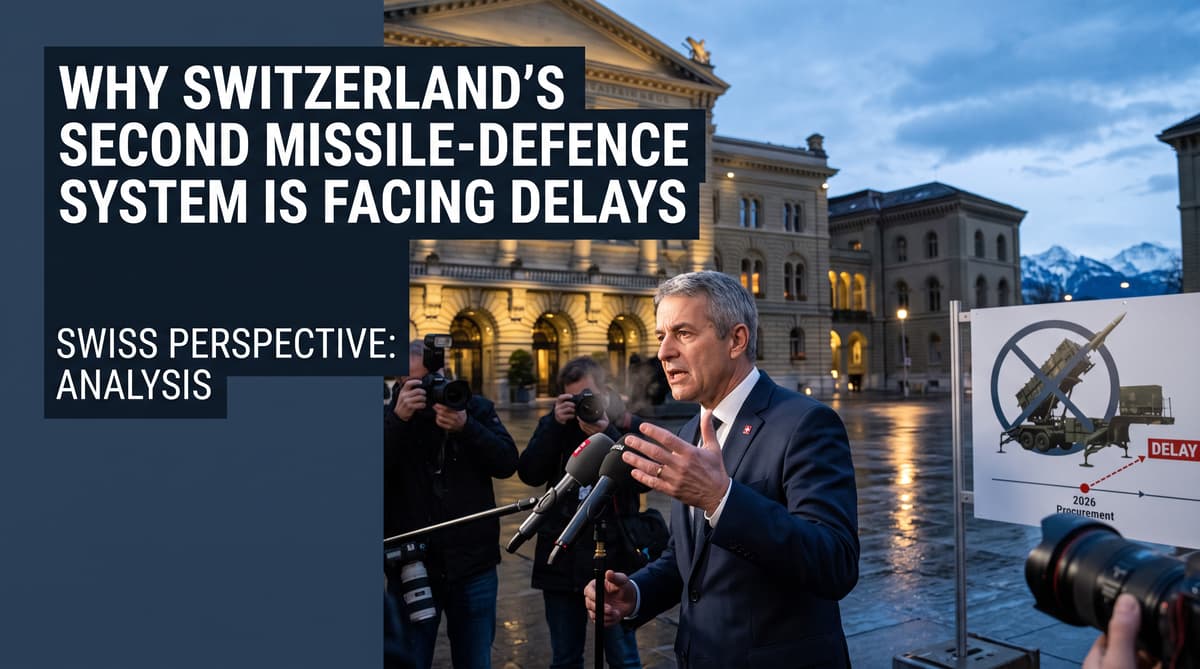
Switzerland will miss its end of 2026 target for procuring a second missile-defence system. The delay followed a decision by the House of Representatives not to treat the matter as urgent during the winter session, according to the Federal Department of Defence, Civil Protection and Sport, known as DDPS. Both parliamentary chambers would have needed to review the issue on an accelerated timetable for the original schedule to survive.
The setback comes as the government moves from technical evaluation to a political decision. Armasuisse, the Federal Office for Armaments, confirmed just over a week earlier that it had completed its assessment of the competing systems. The final choice now rests with the Federal Council.
The DDPS said the government would assess the new situation, determine the next steps and issue a statement. It has not announced a replacement procurement date. The delay therefore affects more than a calendar milestone. It leaves the political approval process, the financing debate and the final contract decision still to be aligned for a major expansion of Switzerland’s ground-based air-defence network.
Armasuisse Narrows the Field, Ministers Hold the Decision
Armasuisse has finished evaluating the bids, but the procurement has not reached a contract decision. The project is known internally as “Bodluv GR2”, short for the second phase of Switzerland’s ground-based air-defence expansion. The evaluation examined systems offered by manufacturers in France, Israel and South Korea. All the suppliers contacted by Armasuisse submitted firm bids.
Media reports have identified the system offered by Eurosam, the Franco-Italian company, as the favourite. That status does not amount to a government decision. The Federal Council must weigh the military performance of each system alongside industrial, financial and diplomatic considerations before authorising the purchase.
The government’s own response to questions from Jean-Luc Addor of the Swiss People’s Party sets out the criteria. These include availability, protection against long-range threats, purchase costs, integration risks and supply security. The Federal Council also cited foreign-policy and wider security considerations. Industrial value in Switzerland and Europe will form part of the assessment, although ministers have rejected a rule that would automatically exclude suppliers from outside Europe.
A CHF 6 Billion System Meets a Larger Budget Fight
CHF 6 billion has been earmarked for the second system and at least part of the additional costs associated with the Patriot system. The amount sits within an army supplementary budget of CHF 24 billion, according to information provided by the DDPS. The figures place the project among the largest elements of Switzerland’s current defence expansion.
Parliament has yet to settle the broader financing framework. During the autumn session, the Senate approved a 0.2 percentage-point increase in VAT for 18 years to support the army. The House of Representatives still needs to approve the measure. That unresolved vote adds another layer to the procurement timetable, even though the immediate delay resulted from the rejected urgent review.
The financing debate gives lawmakers a direct role in determining how quickly the military can expand its air-defence capacity. It also links a specialised weapons purchase to a long-term tax decision affecting households and businesses across Switzerland. Until Parliament resolves the budget and the Federal Council confirms the procurement route, the project remains exposed to further scheduling changes.