Switzerland
Swiss government accepts shortcomings in F-35 procurement process
The Federal Council has accepted six of seven recommendations from a parliamentary oversight body following criticism of Switzerland’s F-35 fighter-jet procurement. The government says it will improve transparency and risk management in future defence purchases, while rejecting claims that the US contracts were barely reviewed.
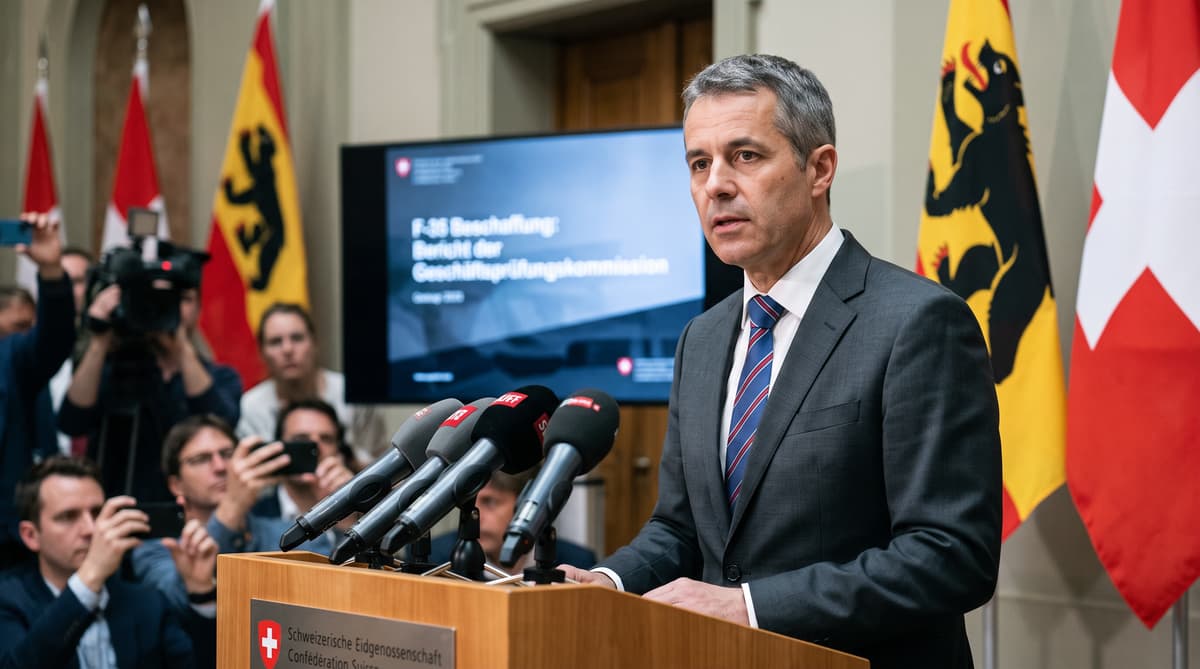
Six recommendations accepted put the Federal Council on record that Switzerland’s F-35 procurement needs changes in how future defence purchases are managed. In a statement on Friday, October 23, the government said it would make procurement more transparent, improve risk management and reinforce the legal department at the Federal Office for Defence Procurement, known as Armasuisse.
The response follows criticism from a parliamentary oversight body over the fighter-jet deal and the failure of the promised fixed price to hold. The Federal Council accepted six of the body’s seven recommendations. Its decision signals a commitment to address weaknesses in procurement practice, while drawing a line at one claim: the government says the US contracts were not barely reviewed.
The dispute has direct consequences for Switzerland’s planned fleet. Defence Minister Martin Pfister has said the available funds would probably buy 30 F-35s rather than 36, and parliament has approved an additional CHF 394 million.
Strengthen Procurement Oversight
Transparency and risk management are the centrepieces of the Federal Council’s planned response. The government said future defence procurement should be conducted more transparently and that risk management should improve. It also plans to strengthen the legal department within Armasuisse, the federal office responsible for defence procurement.
Those steps address the oversight body’s broader criticism of how Switzerland handled the F-35 purchase. By accepting six recommendations, the government has committed to changes in the way defence deals are prepared and assessed. The measures are aimed at future purchases, while the current F-35 contract remains at the heart of the dispute over cost and the promised fixed price.
For Swiss defence procurement, the announcement puts legal capacity alongside transparency and risk controls as priorities. Armasuisse’s legal department is to receive added strength as part of the response. The Federal Council presented these measures as lessons to be applied after the F-35 controversy, rather than accepting the allegation that officials had largely left the US contracts unread.
Defend the Contract Review
The Federal Council disputes the claim that the contracts were barely scrutinised. It said it regretted the impression that only the project manager at the time had read the documents in full. According to the government, other Armasuisse experts also studied the contracts in their entirety.
The defence ministry and former Defence Minister Viola Amherd, the government said, examined the pricing clauses in depth. That account directly contests the criticism of how the US agreements were reviewed, even as the Federal Council accepts most of the parliamentary body’s recommendations on procurement practice.
The argument over who examined the contracts has become part of the wider controversy surrounding the F-35 deal. The oversight body criticised the failure of the promised fixed price to materialise. The Federal Council’s response acknowledges the need for changes to future procurement while defending the level of contract review carried out by officials and political leaders.