Switzerland
Swiss voters to decide VAT rise for 13th pension payment
Swiss voters will decide on November 29 whether to raise VAT to finance the new 13th state-pension payment. Social Affairs Minister Elisabeth Baume-Schneider says rejecting the measure would have serious consequences for the pension system.
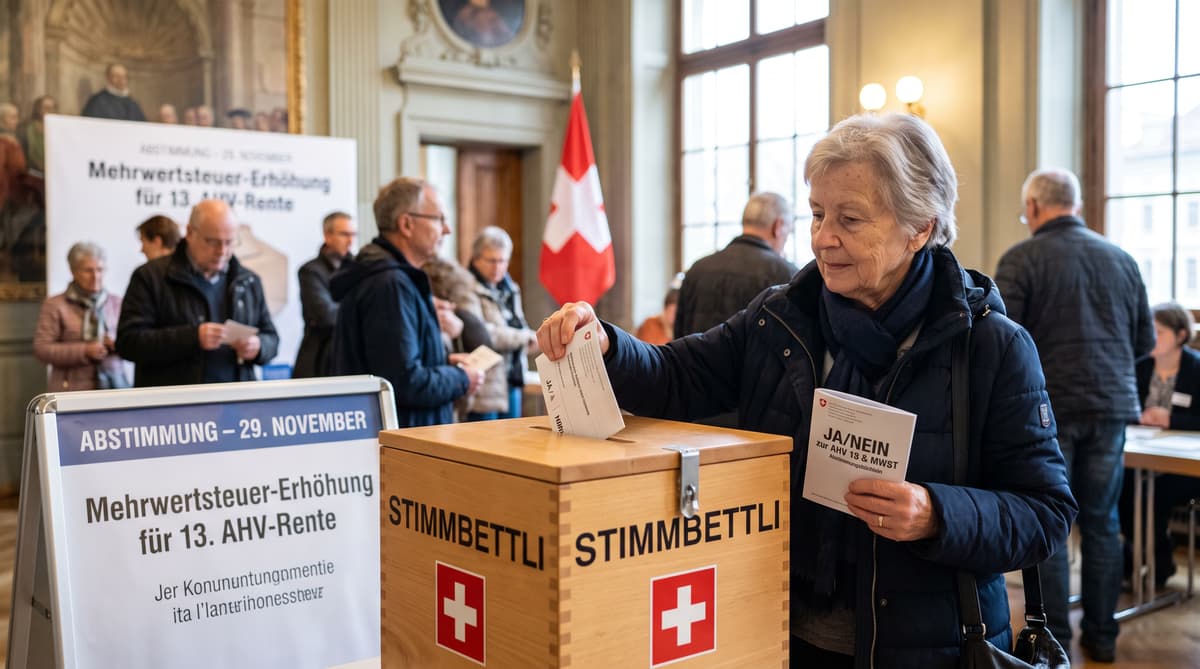
The first 13th pension payment is due in December 2026, but its long-term financing remains in voters’ hands. Swiss citizens will decide on 29 November whether to approve a VAT increase designed to help fund the new annual payment. The vote comes just weeks before around 2.5 million pensioners are scheduled to receive the additional money.
The proposal would increase the standard VAT rate from 8.1% to 8.5%. Hotels would face a rise from 3.8% to 4%, while the reduced rate on essentials such as food and medicines would stay at 2.6%. Health insurance premiums would remain outside the VAT system.
Social Affairs Minister Elisabeth Baume-Schneider has argued that the measure gives the state pension system an immediate source of revenue. She warned at a press conference in Bern that rejecting it would have serious consequences. The Federal Council and Parliament describe the plan as a moderate compromise that spreads the financing burden across the population.
The referendum places a popular pension benefit alongside a tax increase on the same ballot. That pairing gives voters a direct choice over both the payment and the mechanism intended to support it.
Calculate the Household Cost
The 13th payment carries an annual price tag of CHF 4.2 billion. Parliament’s financing plan would raise CHF 1.4 billion through the higher VAT rates, leaving the pension system to cover the remaining cost through its broader funding structure.
For consumers, the increase would apply to taxable purchases rather than to every household bill. Food and medicines would retain the reduced 2.6% rate, a safeguard the government says will limit the effect on lower-income households. Hotels would pay the special rate of 4%, up from 3.8%, while the standard rate would rise by 0.4 percentage points.
The practical impact will vary with household spending. People who spend more on goods and services subject to the standard rate would contribute more in absolute terms. The plan does not impose VAT on health insurance premiums, an important exclusion in a country where compulsory health costs weigh heavily on household budgets.
Baume-Schneider has described the arrangement as socially acceptable because the additional revenue would go directly to social security. The government has ruled out restructuring her department as an alternative source of savings. Opponents say the tax would still reduce purchasing power, particularly for families and small businesses facing higher operating costs.
Track the Pension Fund Gap
Government projections show a pension-fund deficit approaching CHF 5 billion a year by 2035 without extra revenue. Approval of the VAT plan would reduce that projected shortfall to around CHF 3 billion, according to estimates cited by the government.
The pressure is already visible in the reserve outlook. The fund’s reserves could fall below the statutory minimum of one year’s expenditure in 2027. By 2035, reserves would cover only 50% of annual spending if voters reject the measure. With the VAT increase, the government estimates coverage at 70%.
Those figures do not eliminate the financial challenge. They show how the proposed tax would slow the deterioration while leaving the pension system exposed to longer-term demographic and fiscal pressures. Baume-Schneider has argued that the system requires new money now, while structural measures would take longer and require further parliamentary and popular approval.
The government’s case therefore rests on timing as well as arithmetic. The 13th payment is about to begin, but its cost will recur every year. A rejection would not cancel the political debate over the payment’s future. It would force policymakers to address the funding gap through another combination of revenue, spending controls or structural pension reform.
Face the Reform Fight
The opposition says Switzerland should reform the pension system before raising consumption taxes. The PLR/FDP launched its campaign against the proposal in late September, warning that higher VAT would put additional pressure on households and small and medium-sized businesses.
Opponents favour structural changes, including a higher retirement age, as well as spending cuts. Baume-Schneider responded that changing the retirement age would require approval from both Parliament and voters. Her position is that the pension system needs additional financing immediately, while larger reforms would require a separate political process.
The debate also reflects an unusual shift in the minister’s own record. Before entering government, Baume-Schneider supported the Socialist Party’s campaign for a 13th annual state pension. As the minister responsible for pensions, she later opposed the proposal because of its cost. She now supports the payment and the tax increase intended to finance it.
The Federal Council and Parliament present the VAT rise as an intergenerational measure, distributing the cost across consumers rather than placing it solely on current pensioners or payroll contributors. The opposition disputes that framing and argues that consumption taxes can hit working households and businesses before deeper reforms take effect.
Prepare for the Vote
The referendum will determine whether Switzerland finances the new payment with a modest VAT increase or returns to the drawing board. A yes vote would put the standard rate at 8.5%, direct the additional proceeds to social security and help keep pension reserves at an estimated 70% of annual spending in 2035.
A no vote would leave the 13th payment facing a larger funding gap. Government estimates place the annual deficit at almost CHF 5 billion by 2035, compared with around CHF 3 billion if the VAT proposal passes. The pension fund could also fall below its statutory reserve threshold in 2027 and cover only half of annual spending by 2035.
Neither outcome ends the pension debate. Approval would provide new revenue while preserving the reduced rate for essential goods, but it would not remove the projected deficit. Rejection would protect current VAT rates, while demanding a rapid alternative for a payment that is scheduled to begin in December.
Voters will therefore decide on more than a few tenths of a percentage point. They will choose how Switzerland shares the recurring cost of the 13th payment, and how quickly politicians must confront the pension system’s remaining financing needs.