Business
Iconic Swatch Group Faces Crisis as Profits Collapse Nearly 90%
Swatch Group, the world's largest watchmaker, is navigating a historic downturn with net profits collapsing by almost 90% in 2025, squeezed by a strong Swiss franc and a luxury market slowdown that raises questions about the brand's future.
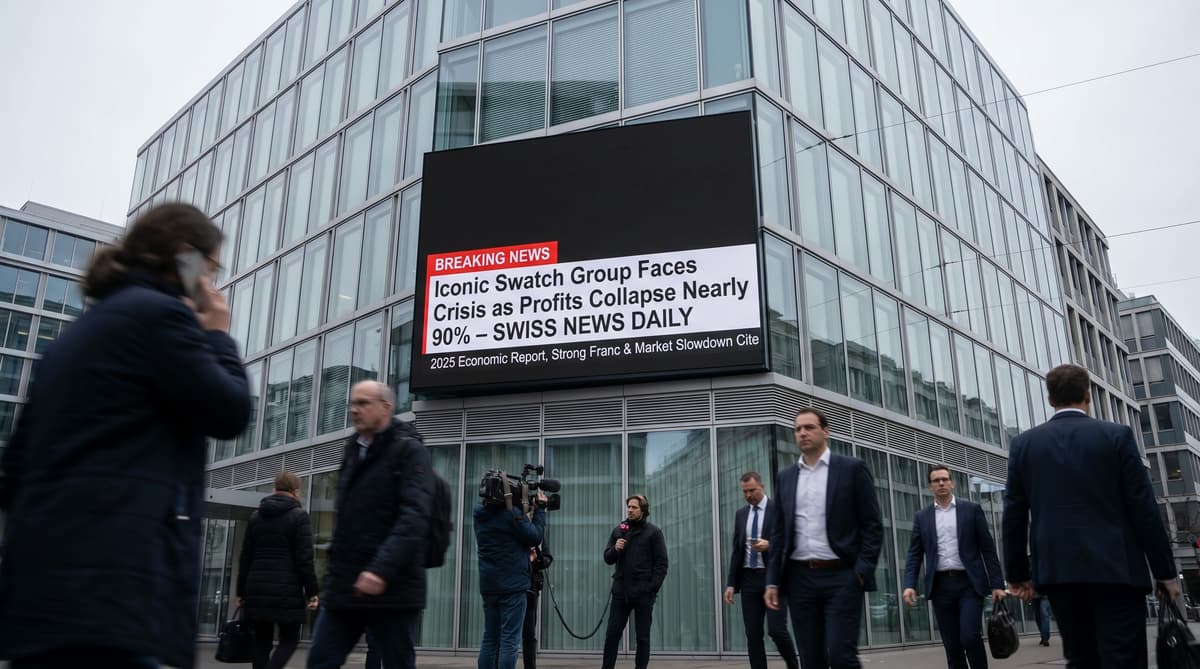
A staggering 90% collapse in net profit has sent shockwaves through the heart of the global watch industry. Swatch Group, the undisputed titan of timekeeping, reported a measly CHF 25 million ($32 million) in net profit for 2025, a figure that would have been unthinkable just a decade ago. This catastrophic decline follows a 75% drop in the preceding year, signaling a freefall that the company’s leadership is struggling to arrest. The culprit is a lethal cocktail of a surging Swiss franc and a brutal slowdown in the Chinese luxury market. While the group’s 16 brands—ranging from the accessible $50 plastic Swatch to the ultra-exclusive Breguet—once seemed invincible, the current economic climate is ruthlessly exposing vulnerabilities. Market capitalization has evaporated, plummeting from nearly CHF 20 billion to less than CHF 11 billion today. This is no longer a mere market correction; it is a fundamental crisis of confidence that threatens the very foundations of the Hayek family’s horological empire.
Activists Storm the Boardroom Fortress
A clear disregard for minority investors has sparked an unprecedented legal and corporate rebellion against the Hayek dynasty. Steven Wood, the aggressive CEO of US-based GreenWood Investors, is leading the charge, bringing legal proceedings against the company to demand a voice in a boardroom he claims treats outsiders as 'irritants.' For years, the Hayek family has maintained an iron grip on the group through a dual-class share structure, effectively insulating themselves from the demands of public markets. CEO Nick Hayek and Chair Nayla Hayek continue to operate under the philosophy of their father, Nicolas Hayek, who famously quipped that the company 'sells watches, not shares.' However, as profits vanish, this 'maverick' approach is facing its most significant challenge yet. Critics like Vincent Kaufmann of Ethos argue that the lack of independent oversight has led to one of the worst governance structures in Switzerland. The tension between family control and shareholder capitalism has reached a breaking point, transforming the boardroom into a legal battlefield.
The High Price of Swiss Loyalty
More than 150 production sites across Switzerland represent the backbone of a manufacturing ecosystem that Swatch Group refuses to dismantle, regardless of the cost. To many Swiss citizens, the company is more than a business; it is a national treasure that saved the industry during the 1980s quartz crisis. This historical legacy creates a unique shield for Nick Hayek, who is often praised for protecting Swiss jobs at the expense of short-term margins. The group maintains that without its domestic workforce, there would be 'zero return' for any stakeholder. This commitment to 'Swiss Made' is a powerful source of national pride, yet it creates a massive financial burden when the Swiss franc remains aggressively strong. While competitors might outsource or downsize, Swatch remains embedded in the local culture, sponsoring major sporting events and sustaining entire communities in the Jura Mountains. The company is currently grappling with the reality that its role as a social stabilizer is increasingly at odds with its requirements as a publicly traded entity.