Defence
Lawmakers press defence minister over F-35 procurement failures
A parliamentary grilling has exposed unresolved questions over Switzerland’s F-35 procurement, including the absence of a fixed price and concerns about consultancy and oversight. The government is expected to respond to auditors’ findings in December.
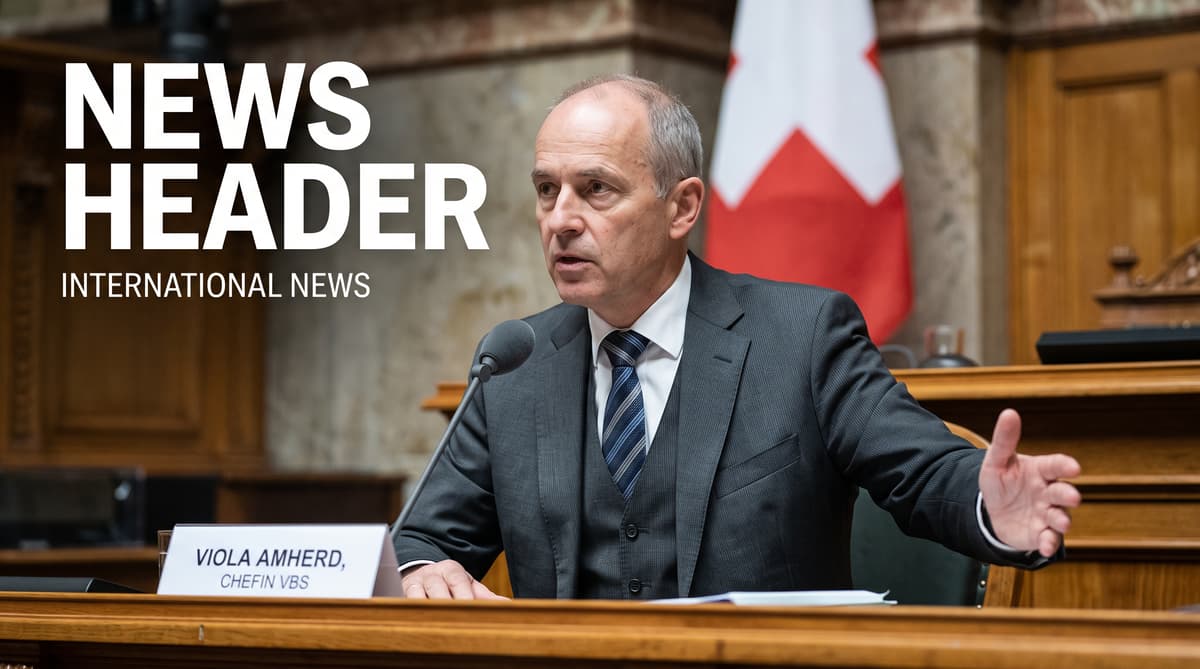
Nineteen parliamentary questions put Martin Pfister under sustained pressure on September 21, as lawmakers sought answers over Switzerland’s troubled purchase of F-35 fighter jets. The defence minister faced demands to identify those responsible for the procurement failures and to clarify whether anyone could face criminal consequences.\n\nPfister repeatedly referred the chamber back to the Federal Council’s forthcoming response. “The Federal Council will set out its position in due course,” he said. The government is due to state its position in December on the auditors’ report, published after a September 8 assessment exposed serious shortcomings in negotiations with the United States.\n\nThe report challenged previous assurances from former Defence Minister Viola Amherd and the military procurement agency armasuisse. Switzerland did not secure a fixed price for the aircraft, despite earlier statements suggesting that such an agreement existed. That disclosure has widened scrutiny from the cost of the jets to the way the procurement was managed and communicated.\n\nThe episode has placed Pfister, who inherited the file, at the centre of a parliamentary dispute over accountability, oversight and public money. His answers offered few conclusions before the Federal Council completes its review.
A Missing Price Shrinks the Fighter Order
No fixed price was agreed during the negotiations with Washington, according to the September 8 report. The finding cuts into the basis on which Switzerland presented the F-35 purchase to the public and Parliament, and raises questions about how armasuisse monitored the deal.\n\nThe government originally planned to buy 36 aircraft. Higher prices demanded by the United States have since led Switzerland to reduce the order to 30 jets. The government has also asked Parliament for CHF394 million to cover additional costs.\n\nThat request comes as the programme’s financial scale becomes clearer. Switzerland had paid nearly $2 billion for the fighters by the end of June. The total budget earmarked for the programme stands at CHF6.4 billion. Pfister told lawmakers that operating costs remain “on track” to meet the budget, though the procurement dispute concerns the terms and oversight of the purchase itself.\n\nThe government has said the reduction in aircraft numbers does not immediately alter the wider programme. Parliament must now weigh the requested extra funding alongside the auditors’ findings and the December response. The fixed-price dispute has made that assessment more politically difficult, particularly because earlier official statements conveyed greater certainty about the contract than the report supports.
Lawmakers Target Consultancy and Oversight
Homburger’s role has become a central oversight issue. The external consultancy was hired to help armasuisse negotiate the F-35 contract, but the auditors’ report highlighted a potential conflict of interest linked to discussions over the fixed price. Several lawmakers have questioned whether that arrangement was legally sound.\n\nPfister defended the use of outside expertise. “Enlisting the help of an external consultancy is standard practice,” he said. He also maintained that the report found “no unlawful conduct or financial loss within the meaning of liability law.”\n\nThose statements address the legal threshold identified by the minister, while lawmakers are also examining governance questions. They want to know who approved the consultancy’s involvement, how its advice was managed and whether sufficient safeguards protected the public interest during negotiations. The auditors’ findings have therefore shifted attention towards process, not only the final price of the aircraft.\n\nThe dispute also tests the relationship between armasuisse, the Defence Department and Parliament. Swiss military procurement relies on specialist expertise, especially for complex international weapons systems. The F-35 case has raised questions about how that expertise is commissioned, supervised and reported to elected representatives. The Federal Council’s December response is expected to clarify whether it will accept recommendations, assign responsibility or propose changes to procurement controls.