Syngenta
How a handful of companies came to dominate global agriculture
A small group of multinational companies, including Switzerland-based Syngenta, controls a disproportionate share of agricultural seeds, machinery and crop-protection products. The concentration is raising concerns about competition, prices and farmers’ dependence on large suppliers.
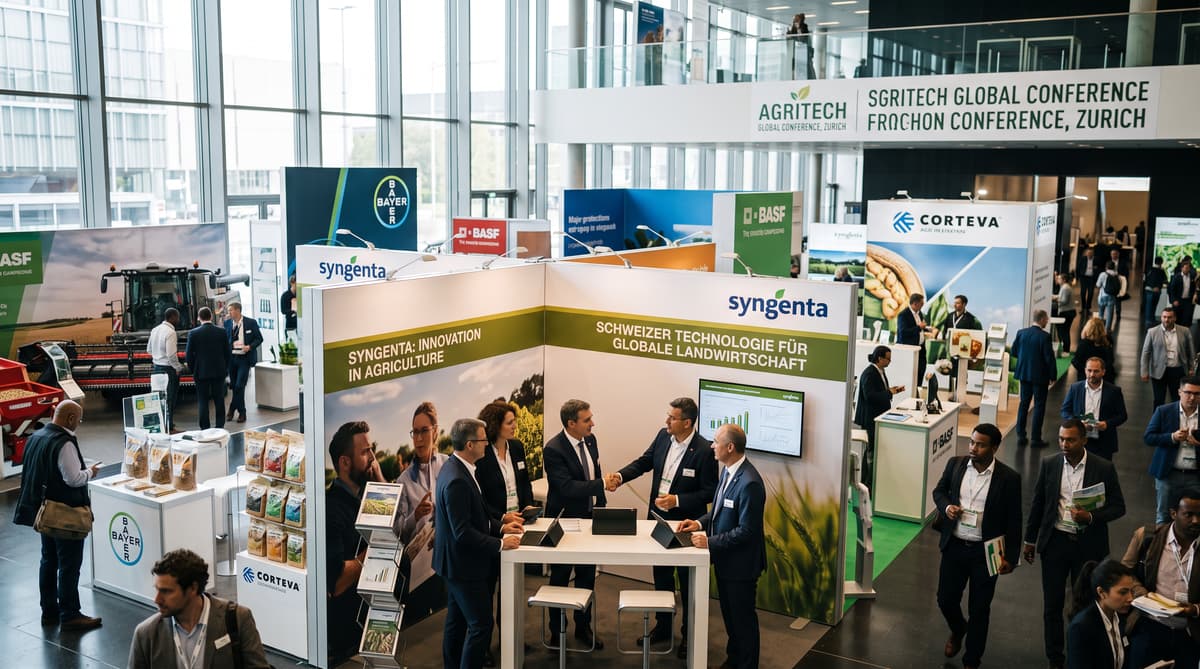
The top four pesticide companies control 56% of the global market. That concentration gives a small group of suppliers influence over the products farmers use to protect crops, manage disease and secure yields. Seeds, fertiliser, machinery and food processing are also dominated by a limited number of companies, according to agricultural researchers cited by Swissinfo.
The Swiss connection is direct. In 2025, Basel-based Syngenta generated $13.7 billion, or CHF 11.3 billion, from crop-protection products, a 4% increase on the previous year. Its annual report recorded almost 1,800 plant-protection products that the company had registered, re-registered or extended.
Those figures matter because farmers often buy several essential inputs from markets with few major suppliers. Fewer competing products can narrow the practical choices available to farms and increase dependence on corporate approval decisions, pricing and distribution. The consequences move through the food chain, affecting producers first and potentially food costs later.
Robert Finger, an agricultural economist at ETH Zurich, describes the pattern as broad rather than confined to chemicals. The same pressure appears in commercial seeds and farm machinery, creating a global supply system in which corporate scale has become a central competitive advantage.
Watch seed power move upward
The seed market has compressed rapidly around its largest players. The ETC Group, an agricultural research collective, reported that the top two companies now control almost 40% of the global commercial seed market. A decade ago, the top ten companies held 40%, according to Taarini Chopra, a co-author of the report.
The comparison captures the speed of consolidation. Market share has shifted upward from a broader group of firms to the two largest companies. That shift can reduce the number of independent breeding programmes and commercial alternatives available to farmers, even when several brands remain visible in local markets.
The concentration extends across the farm gate. Companies that sell seeds may also offer crop-protection products or operate alongside firms with major positions in fertiliser, machinery, processing and retail. Such links can shape which technologies farmers receive, how they combine inputs and where they can sell their harvests.
For Switzerland, the issue reaches beyond Syngenta's headquarters. Swiss researchers, regulators and food companies operate within an international agricultural system. Imported seed, chemicals and machinery connect Swiss farms and consumers to decisions made in corporate offices, laboratories and regulatory agencies around the world. The available data show market power accumulating at several points in the chain, rather than in one isolated product category.