Finance
Hong Kong Overtakes Switzerland as World's Top Offshore Wealth Hub
For the first time, Hong Kong has surpassed Switzerland as the largest global hub for cross-border wealth, fueled by a surge of investment from mainland China, according to a new Boston Consulting Group report.
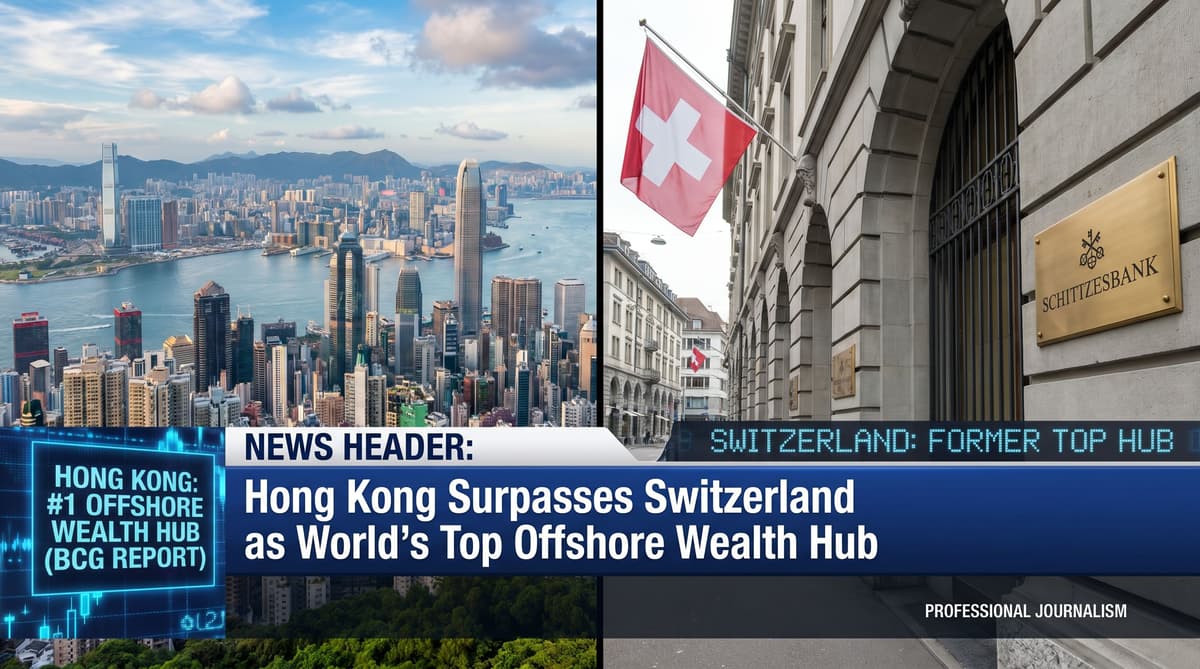
A seismic shift has rocked the foundations of global finance: Switzerland is no longer the world’s undisputed king of offshore wealth. In a historic reversal, Hong Kong has surged past the Alpine nation to become the premier destination for international assets. For decades, the Swiss vault was the ultimate symbol of financial security, but the tide has turned. According to the latest data from Boston Consulting Group, Hong Kong’s wealth managers now oversee a staggering $2.9 trillion in international assets. This isn't just a minor fluctuation; it is a fundamental reordering of the global economic hierarchy. While Switzerland remains a formidable force, it now finds itself in the uncharacteristic position of playing catch-up. The momentum has shifted decisively toward the East, fueled by a relentless influx of capital that shows no signs of slowing down. As the gap widens, the Swiss financial sector must confront a uncomfortable reality: the traditional haven is being eclipsed by a more dynamic, aggressive rival.
The China Engine: Driving a $2.9 Trillion Surge
The engine behind Hong Kong’s meteoric rise is unmistakable: the sheer economic might of mainland China. An incredible 60 percent of Hong Kong’s international assets—nearly $1.74 trillion—now originates from the mainland. This surge is powered by a resurgence in equity capital markets and China’s absolute dominance in high-growth sectors like electric vehicles and green technology. Wealthy Chinese entrepreneurs are no longer just keeping their money at home; they are flooding into Hong Kong to leverage its sophisticated financial infrastructure. BCG forecasts that this rapid accumulation of Asian fortunes will expand Hong Kong’s lead even further, widening the gap between the two hubs to nearly $600 billion by 2030. While Switzerland grapples with the mature, slower-growing wealth of Western Europe, Hong Kong is riding the crest of the Asian century. The territory has successfully positioned itself as the primary gateway for the world's fastest-growing pool of capital, creating a gravitational pull that is reshaping global investment flows.
Diversify or Die: The Rise of Jurisdictional Hedging
The world’s ultra-wealthy are no longer just looking for low taxes; they are looking for survival. A 'completely new phenomenon' is emerging: jurisdictional diversification. In an era defined by aggressive sanctions, geopolitical volatility, and political instability, the global elite are spreading their assets across multiple borders to hedge against risk. Michael Pellman Rowland of Baseline Wealth Management notes that this shift has accelerated dramatically since the pandemic. Clients are terrified of having all their eggs in one basket—even a Swiss one. This trend has transformed the role of 'booking centers' from simple tax havens into strategic fortresses. Hong Kong has capitalized on this fear, offering a unique bridge between Eastern capital and Western-style legal frameworks. Meanwhile, other players like Dubai are exploding onto the scene, growing by 11 percent to reach $721 billion as they serve as a neutral ground for capital from Russia, India, and Europe. The message is clear: in the modern age, stability is measured by how many borders your wealth can cross.