Geneva
Geneva ban on politicians’ religious symbols faces legal challenge
Geneva’s ban on conspicuous religious symbols worn by members of cantonal and municipal parliaments is facing a legal challenge. Critics argue that the narrowly approved constitutional amendment infringes fundamental rights, bringing the canton’s policy on religion and public office before the courts.
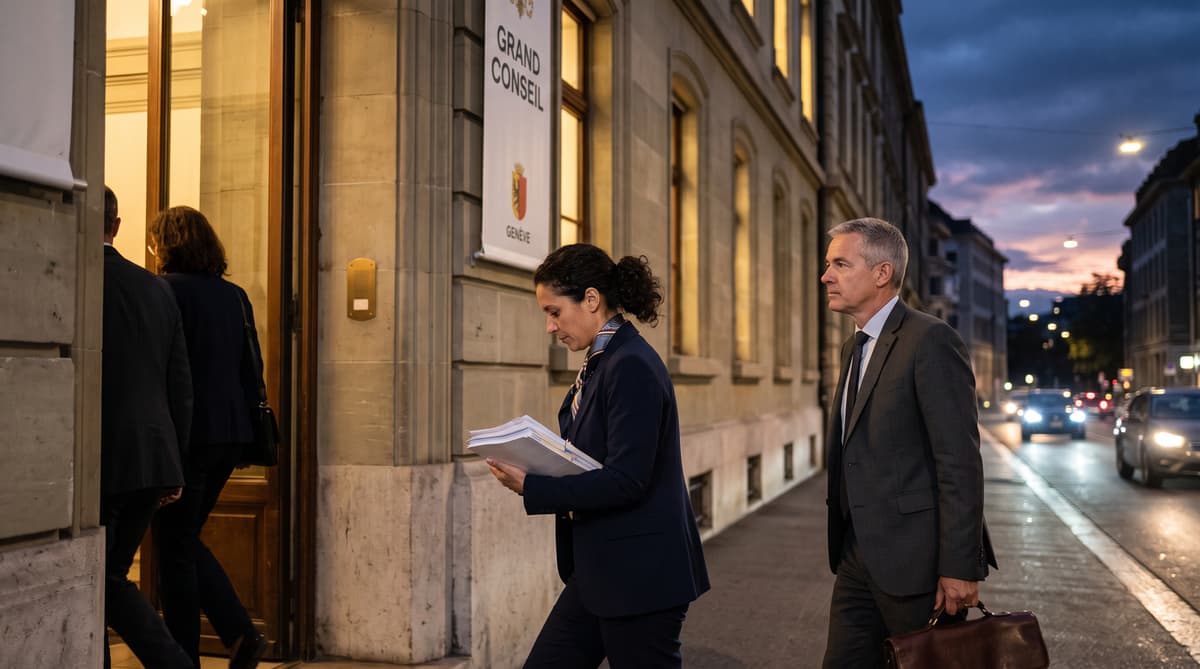
Four legal challenges have put Geneva’s new religious-symbol ban before the courts. The constitutional amendment prevents members of cantonal and municipal parliaments from wearing conspicuous religious symbols, including headscarves, kippahs and crosses. Voters approved it by just 51.5% in June 2026, leaving a closely divided canton to argue the issue through the legal system.
The challenges broadly claim that the amendment violates higher law, freedom of conscience, democratic principles and individual fundamental rights. Green members of the cantonal parliament, evangelical Christians and a Protestant local politician are among those contesting it. The latest case was filed in September 2026 by two private citizens, one Muslim and one Christian. The first challenge dates to December 2025.
The dispute concerns more than dress in the chamber. It tests whether Geneva can extend its strict model of state secularism to elected legislators, who debate and vote as representatives of the public. The canton’s government opposed the constitutional amendment. Carole-Anne Kast, a Socialist member of Geneva’s cantonal government, said the measure was unconstitutional after voters approved it.
The Constitutional Chamber now faces a dispute that combines religious freedom, electoral representation and Geneva’s distinctive interpretation of laïcité.
Geneva Extends Secularism Into the Chamber
The amendment changes the rules for elected lawmakers, who had previously occupied a distinct position under Geneva’s secularism regime. Since 2019, members of the cantonal government and municipal executives have been required to avoid displaying religious symbols while carrying out official duties. Civil servants and teachers face similar restrictions.
Parliamentarians were excluded from those rules. In an earlier decision, Geneva’s Constitutional Chamber held that elected legislators represent society in its diversity rather than the state itself. That distinction became the target of supporters of a broader prohibition.
The measure was backed by the Swiss People’s Party, known nationally as the UDC or SVP, the Liberals, known as the PLR or FDP, the Centre and the right-wing populist Mouvement Citoyen Genevois. The cantonal parliament voted to place the ban in the constitution, sending the question to voters because it required a constitutional amendment.
The result exposed the measure’s limited electoral margin. A 51.5% majority was enough to amend the canton’s fundamental law, but opposition remained concentrated among left-wing parties and members of the government. The ensuing litigation will determine how the new provision interacts with protections for conscience, religion and political participation.