Geneva
Geneva ban on politicians’ religious symbols faces legal challenge
Geneva’s ban on conspicuous religious symbols worn by members of cantonal and municipal parliaments is facing a legal challenge. Critics argue that the narrowly approved constitutional amendment infringes fundamental rights, bringing the canton’s policy on religion and public office before the courts.
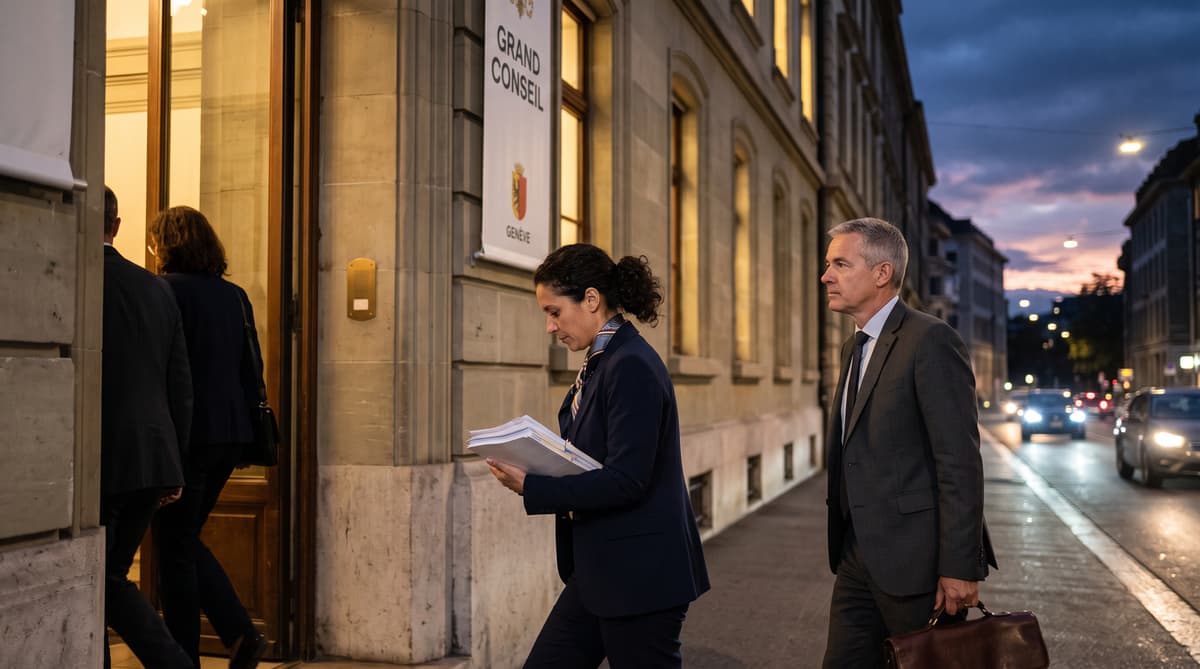
Four legal challenges have put Geneva’s new religious-symbol ban before the courts. The constitutional amendment prevents members of cantonal and municipal parliaments from wearing conspicuous religious symbols, including headscarves, kippahs and crosses. Voters approved it by just 51.5% in June 2026, leaving a closely divided canton to argue the issue through the legal system.
The challenges broadly claim that the amendment violates higher law, freedom of conscience, democratic principles and individual fundamental rights. Green members of the cantonal parliament, evangelical Christians and a Protestant local politician are among those contesting it. The latest case was filed in September 2026 by two private citizens, one Muslim and one Christian. The first challenge dates to December 2025.
The dispute concerns more than dress in the chamber. It tests whether Geneva can extend its strict model of state secularism to elected legislators, who debate and vote as representatives of the public. The canton’s government opposed the constitutional amendment. Carole-Anne Kast, a Socialist member of Geneva’s cantonal government, said the measure was unconstitutional after voters approved it.
The Constitutional Chamber now faces a dispute that combines religious freedom, electoral representation and Geneva’s distinctive interpretation of laïcité.
Geneva Extends Secularism Into the Chamber
The amendment changes the rules for elected lawmakers, who had previously occupied a distinct position under Geneva’s secularism regime. Since 2019, members of the cantonal government and municipal executives have been required to avoid displaying religious symbols while carrying out official duties. Civil servants and teachers face similar restrictions.
Parliamentarians were excluded from those rules. In an earlier decision, Geneva’s Constitutional Chamber held that elected legislators represent society in its diversity rather than the state itself. That distinction became the target of supporters of a broader prohibition.
The measure was backed by the Swiss People’s Party, known nationally as the UDC or SVP, the Liberals, known as the PLR or FDP, the Centre and the right-wing populist Mouvement Citoyen Genevois. The cantonal parliament voted to place the ban in the constitution, sending the question to voters because it required a constitutional amendment.
The result exposed the measure’s limited electoral margin. A 51.5% majority was enough to amend the canton’s fundamental law, but opposition remained concentrated among left-wing parties and members of the government. The ensuing litigation will determine how the new provision interacts with protections for conscience, religion and political participation.
A Parliamentary Stunt Sharpens the Argument
A colander worn in parliament became the most visible symbol of the campaign for a wider ban. Céline Zuber-Roy, a PLR/FDP member of Geneva’s cantonal parliament, appeared in the chamber wearing a colander on her head last year. The gesture referred to Pastafarianism, a satirical religion created by American physics graduate Bobby Henderson in 2005.
Zuber-Roy used the stunt to argue that conspicuous religious symbols can distract from parliamentary debate and weaken the chamber’s appearance of confessional neutrality. Pastafarianism emerged in protest against efforts to teach intelligent design alongside evolution in Kansas schools. Henderson’s argument was that if one untestable supernatural explanation received classroom recognition, another could claim the same treatment.
The episode gave an abstract constitutional debate a sharply visual example. Supporters of the amendment saw the colander as evidence that parliamentary symbols can become a focus of attention. Opponents reject the broader premise that lawmakers should lose the ability to express religious identity while exercising an elected mandate.
The legal challenges will have to address whether neutrality in a legislative chamber requires restrictions on individual lawmakers, and whether such restrictions can stand against fundamental rights. The source material does not indicate when the courts will rule.
Geneva’s Secular Model Sets It Apart
Geneva’s version of laïcité has roots reaching back to 1907. The canton has maintained a strict separation of church and state for more than a century, and it applies limits on religious symbols in parts of the public sector that set it apart from Switzerland’s other cantons.
The principle is intended to create a neutral public framework for people with different beliefs. In practice, Geneva’s policy has produced recurring disputes over where the state’s neutrality begins and where an individual’s freedom of conscience must prevail. The 2019 rules for government members, municipal executives, civil servants and teachers marked a significant expression of that policy.
The parliamentary amendment extends the approach to elected legislators. That extension matters because parliamentarians are not appointed public employees. They receive a mandate through elections and participate in a body designed to represent the population. The earlier Constitutional Chamber reasoning rested on precisely that representative role.
Geneva’s case also carries significance beyond the canton. Its restrictive model places it closer to France’s long-running debates over laïcité than to the approach adopted in many other Swiss cantons. A court decision could clarify how far a Swiss canton may go when it seeks to enforce public neutrality through limits on the visible religious expression of elected officials.
Courts Will Define the Ban’s Reach
The courts now hold the next move after Geneva’s voters delivered a narrow constitutional mandate. Four challenges have been filed, and each broadly disputes the amendment’s compatibility with higher law and fundamental rights. The cases include challenges from elected Greens, evangelical Christians, a Protestant local politician and two private citizens, one Muslim and one Christian.
The proceedings will test several boundaries at once. They will examine freedom of conscience, the right to participate in democratic life and the meaning of neutrality in a legislative institution. They will also revisit the legal distinction between officials who embody the state and parliamentarians who represent the electorate.
The outcome could affect how Geneva applies its existing restrictions and how other Swiss cantons assess proposals involving religious expression in public office. The source material does not specify whether the ban is currently being enforced while the challenges proceed, nor does it provide a timetable for a ruling.
For Geneva, the immediate issue is the validity of one constitutional amendment. For Switzerland, the litigation offers a closely watched test of how secular public institutions should treat visible religious identity when the people concerned hold elected mandates. The legal record will now determine whether the June vote can survive that test.