Science
Geneva Pioneers a New Frontier in Mental Health with AI and Brain Scans
In a move away from trial-and-error treatments, researchers at Geneva's university hospitals are combining artificial intelligence with brain imaging to create personalized psychiatric therapies, aiming to identify the right treatment for patients faster.
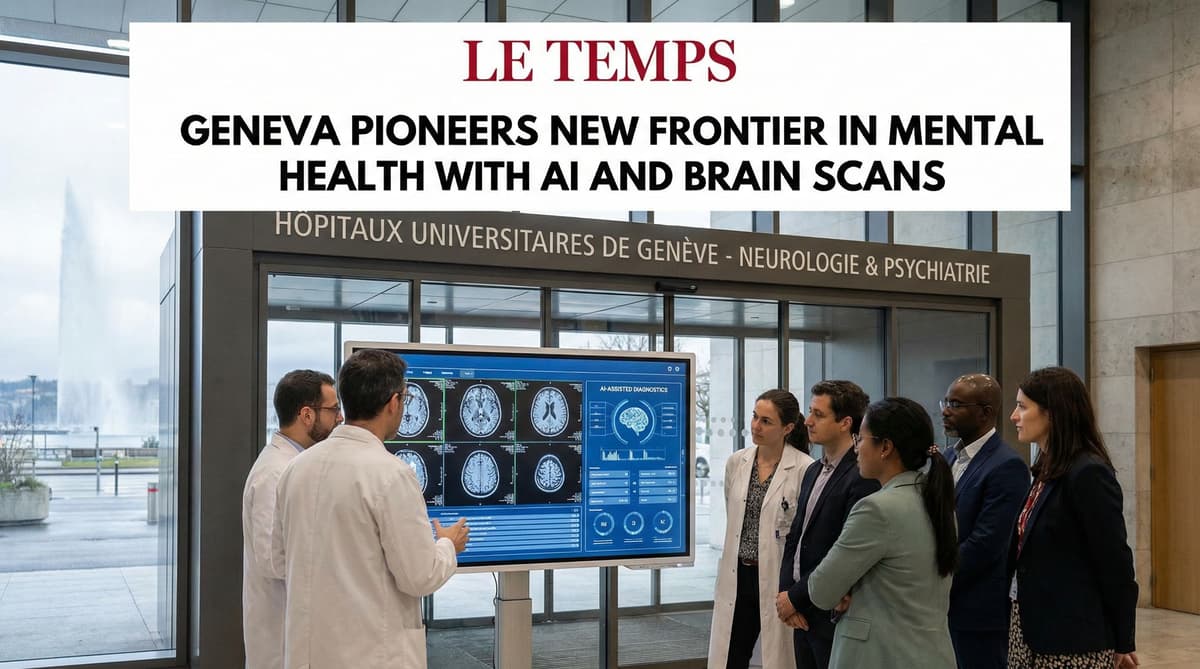
For decades, psychiatry has grappled with a frustrating reality: finding the right medication for depression or schizophrenia is often a blind gamble. Patients frequently wait weeks, if not months, for a prescription to take effect, only to find the side effects unbearable or the results negligible. This agonizing wait is now being challenged in Geneva. Researchers at Geneva University Hospitals (HUG) and the University of Geneva (UNIGE) are deploying a lethal combination of artificial intelligence and advanced brain imaging to eliminate the guesswork. By scanning a patient’s brain before a single pill is prescribed, doctors can now visualize the specific neural architecture of a disorder. This is not just an incremental improvement; it is a total paradigm shift. Instead of broad diagnostic categories, Geneva is pioneering a 'precision psychiatry' that treats the individual, not the label. The stakes are massive: faster recovery times mean less suffering and a dramatic reduction in the economic burden of long-term mental health struggles.
The AI Hub: Where Data Science Meets the Human Soul
A staggering 50 professionals—ranging from neuroscientists to data scientists—are now operating under one roof at Geneva’s Campus Biotech. This AI hub, which launched in December, serves as the nerve center for this medical revolution. Here, the 'crosstalk' between the laboratory and the clinic is immediate and relentless. Massive datasets containing clinical histories, biological markers, and high-resolution brain scans are fed into AI algorithms. These machines identify patterns invisible to the human eye, predicting with unprecedented accuracy which therapy will succeed. Stefan Kaiser, Head of Psychiatry at HUG, notes that the focus has shifted from merely understanding the brain to actively improving care. While traditional methods rely on subjective patient reporting, this new model utilizes objective, hard data. The integration of the AI hub into Campus Biotech ensures that every patient consultation feeds back into the research loop, creating a self-evolving system of psychiatric care that grows smarter with every scan.
Neuromodulation: Rewiring the Brain with Precision
Transcranial Magnetic Stimulation (TMS) is no longer a futuristic concept—it is a frontline weapon in Geneva’s psychiatric arsenal. By using magnetic pulses to influence brain activity, doctors can target the specific regions responsible for depression without the systemic side effects of medication. However, the true breakthrough lies in personalization. In contrast to the 'one-size-fits-all' approach of the past, Geneva’s researchers use AI to pinpoint the exact coordinates in a patient's brain that require stimulation. This level of precision ensures that the 'neuromodulation' is tailored to the unique biological signature of the individual. While TMS is already used globally, the Swiss model integrates it with real-time brain imaging to monitor progress. The goal is clear: deliver the right dose to the right spot at the right time. As the technology matures, the hope is that these targeted interventions will become the gold standard, potentially replacing lifelong medication for thousands of Swiss citizens.