Politics
Renewed Push to Scrap Foreigner Voting Rights in Geneva
The Geneva branch of the Swiss People's Party (SVP) is launching an initiative to abolish the right of foreign residents to vote in municipal elections, reigniting a nationwide debate on the political integration of the non-Swiss population.
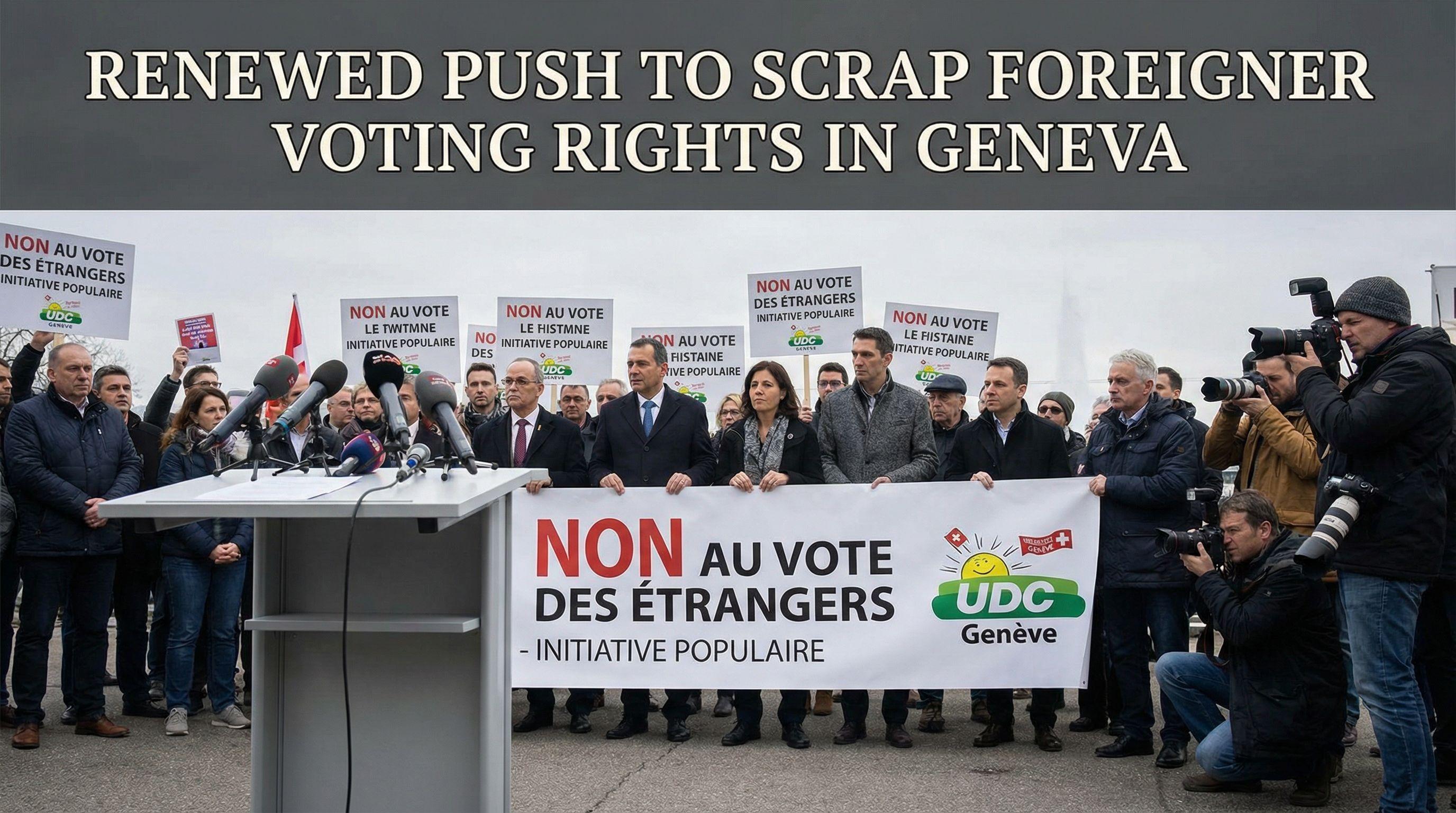
SVP Launches Assault on Foreigner Voting Rights
Geneva’s political landscape faces a seismic shift as the hard-right Swiss People's Party (SVP) declares war on the established rights of non-Swiss residents. In a bold move that strikes at the heart of local democracy, the Geneva branch of the SVP has announced an aggressive initiative to abolish the right of foreigners to vote in municipal referendums and elections. This is not merely a policy tweak; it is a fundamental challenge to the integration model of one of Switzerland's most international cities.
The proposal seeks to strip thousands of long-term residents of their voice in local affairs, reigniting an explosive debate on who truly belongs in the Swiss political sphere. While Geneva has long been viewed as a bastion of progressive enfranchisement, the SVP's maneuver signals a sharp pivot toward exclusivity. The party is capitalizing on a growing sentiment that political participation must remain the exclusive privilege of Swiss passport holders, regardless of how long a foreign resident has contributed to the local economy and society.
A Nation Divided: The Rejection Trend
A nationwide tide is turning against the expansion of political rights for non-citizens. Just last month, voters in two separate cantons delivered a stinging rebuke to integration efforts, categorically refusing to grant voting rights to their long-term foreign residents. This result reinforces an unyielding reality: most Swiss cantons strictly prohibit foreign residents from casting ballots, maintaining a rigid barrier between residency and political agency.
The recent November referendums serve as a grim bellwether for Geneva's foreign population. These rejections are part of an established, hardening trend across the Confederation. While proponents of voting rights argue that taxation without representation undermines social cohesion, the electorate in many regions remains unconvinced. The momentum is currently favoring restriction rather than expansion, providing the SVP with a powerful tailwind as they attempt to dismantle Geneva's existing inclusive policies.
The Rare Exceptions: Where Inclusion Survives
In stark contrast to the restrictive wave sweeping the nation, isolated pockets of enfranchisement still exist, defying the narrative of exclusion. While the SVP pushes to close doors in Geneva, tiny municipalities like Albula/Alvra in Graubünden continue to chart a different course. Here, foreign residents are granted the right to vote after an 8-year residency period, a testament to a more localized, pragmatic approach to integration.
These rare exceptions highlight the fragmented nature of Swiss federalism. However, the path to full political participation remains arduous. For many, the only guaranteed route to the ballot box is the grueling process of naturalization—a journey that can take over a decade. As noted by new Swiss citizens, the transition from resident to voter often involves a minimum of 10 years of residence and up to 18 months of processing time. Geneva's current system allows a shortcut to local engagement that is now under direct threat.
The High Stakes for Swiss Democracy
The battle lines drawn in Geneva represent a critical juncture for the future of Swiss democracy. If the SVP succeeds in scrapping these rights, it will send a chilling message to the international community that powers the city's economy: you are welcome to work, but not to decide. This initiative forces a confrontation between two competing visions of Switzerland—one that views citizenship as the sole gatekeeper of rights, and another that values the input of all permanent residents.
The implications extend far beyond the canton's borders. A victory for the SVP in Geneva could embolden similar movements in the few other jurisdictions that currently allow foreigner voting. As the debate intensifies, the definition of political integration is being rewritten in real-time. For the foreign population, the outcome of this push will determine whether they remain active participants in their home city or are relegated to the status of silent observers.