Zurich
Zurich moves closer to creating an international commercial court
Zurich’s cantonal council has backed plans for an international commercial court, where proceedings could be conducted in English. The proposal now goes to a drafting committee before a final parliamentary vote.
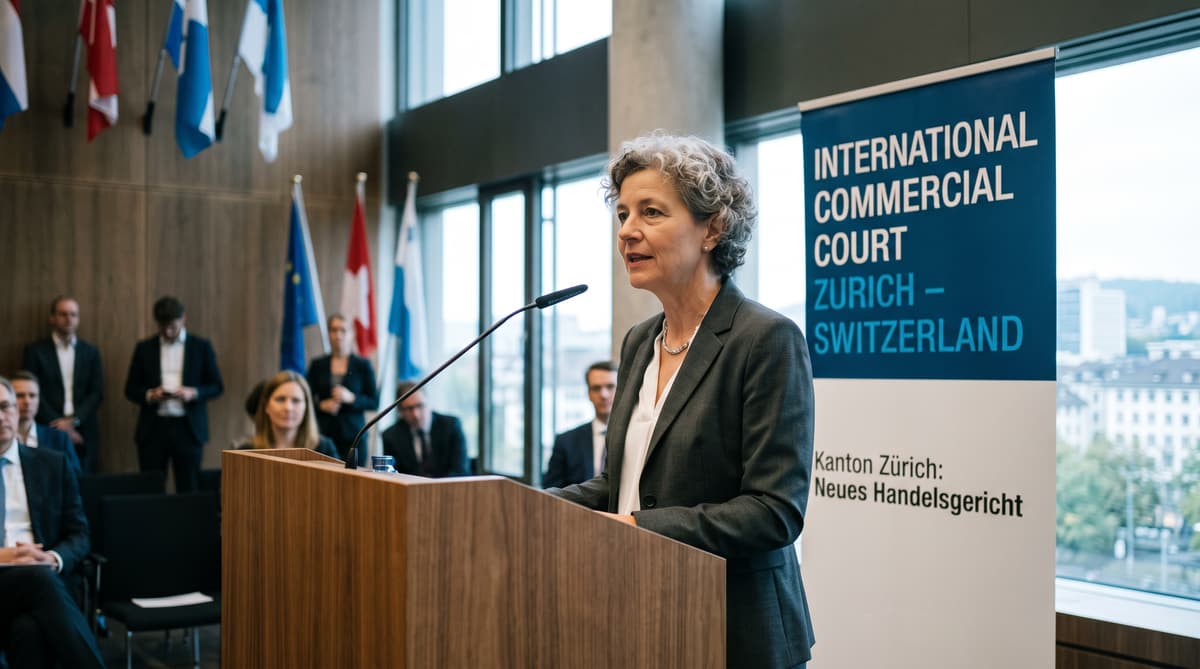
Zurich’s cantonal council has cleared the next hurdle for a court designed to hear international commercial disputes, with proceedings able to take place in English. The council rejected a motion to stop the proposal by 122 votes to 45, sending it to a drafting committee.
The committee will prepare the text for a final parliamentary vote, expected in a few weeks. The wide margin in favour makes that vote likely to be a formality, according to Keystone-SDA, though the proposal has not yet completed the legislative process.
The plan puts Zurich in line with other jurisdictions adapting their courts to global business. Germany, France, England and the Netherlands already have dedicated court divisions for international commercial cases. For a canton that is also a major business centre, the proposed court offers companies a local forum where disputes can be handled in English.
The move revives an effort first backed by Zurich’s cantonal parliament in 2019. At that time, federal law did not yet permit the canton to establish the division. Changes to the federal Code of Civil Procedure have since opened the way.
Move the Proposal Through Parliament
The 122-to-45 vote rejected an attempt by the Swiss People’s Party to prevent the motion from being considered. The proposal now goes to the drafting committee, which will shape the text before parliament takes its final vote.
The outcome reflected broad support across the council, even as left-wing parties raised specific concerns. Speakers from those parties nevertheless generally backed the proposal. Several argued that allowing proceedings in English made sense for disputes involving international businesses.
The debate signals support for a specialist forum, but the council’s vote is not the final approval. The drafting stage comes next, followed by the scheduled parliamentary decision in a few weeks. Keystone-SDA reports that the clear majority makes passage at that stage likely.
For businesses operating across borders, the language provision is central to the proposal. Zurich’s international commercial court would allow proceedings to be conducted in English, giving parties another way to handle globalised commercial disputes within the canton’s judicial system. The plan would place the new division inside an existing court rather than create a separate institution.
Build on Zurich’s Commercial Court
Zurich plans to place the international division inside its existing Commercial Court at the High Court. That arrangement would draw on the court’s current structure and the specialist knowledge of its commercial judges, rather than establish a stand-alone tribunal.
The canton expects only a small caseload at the outset, describing the forecast as “in the low single figures”. It does not plan to hire additional staff for the new division. If the number of cases grows and creates further costs, court fees would cover those costs in full, according to the proposal.
The forecast suggests a measured start, with the court able to build on existing capacity. The design also ties international cases to a judicial body already focused on commercial matters. Zurich’s proposal follows a wider pattern: Germany, France, England and the Netherlands have dedicated divisions for globalised commercial disputes.
For the canton, the approach combines an international-facing service with existing judicial infrastructure. Its final shape will depend on the text prepared by the drafting committee and the parliamentary vote that follows.
Use New Federal Powers
A change to federal civil procedure has made Zurich’s plan legally possible. Zurich’s cantonal parliament called for an international commercial court division in 2019, but the canton could not then designate its commercial court to hear international disputes.
The federal government amended the Code of Civil Procedure, and those changes took effect in January 2025. Cantons can now designate their commercial courts as the competent authority for international cases. Zurich’s proposal uses that new authority to create an English-language route for commercial proceedings within the existing court system.
The proposal still needs the drafting committee’s work and a final vote by the cantonal council. If approved, Zurich would join jurisdictions including Germany, France, England and the Netherlands in offering a dedicated forum for international commercial cases.
The initial caseload is expected to be low, and Zurich says court fees would cover any later additional costs if demand rises. The next parliamentary vote will determine whether the canton turns its renewed, legally enabled plan into a functioning court division.