Zurich
Zurich faces the world’s highest property-bubble risk, UBS says
Zurich has the highest property-bubble risk among the cities surveyed by UBS, with prices driven by strong demand from international professionals, very low vacancy rates and limited housing supply. Geneva’s risk has also risen, highlighting renewed pressure in Switzerland’s urban property markets.
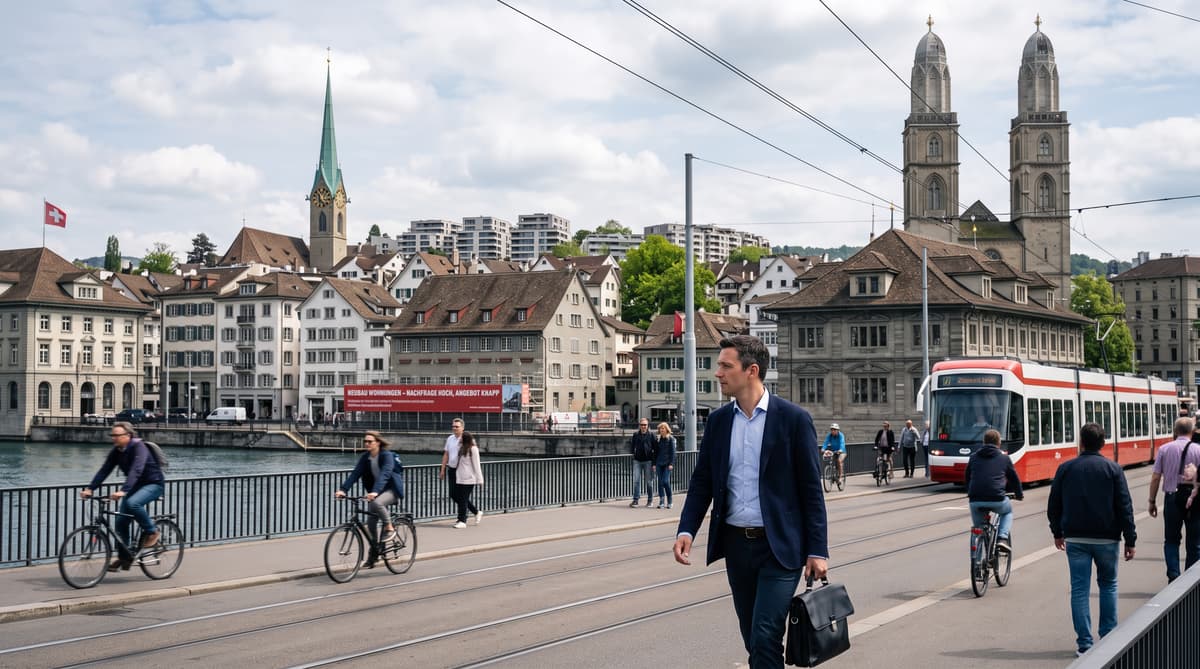
Zurich reached 1.69 points, the highest property-bubble risk recorded by UBS in its annual review of major international housing markets. The reading rose from 1.55 points last year, putting Switzerland’s largest city ahead of Tokyo and Miami.
The ranking reflects a market where demand continues to meet very little available housing. Zurich’s role as Switzerland’s leading business centre attracts international professionals, with technology and artificial intelligence companies adding to the pool of highly paid workers seeking homes. At the same time, the city’s vacancy rate is close to zero.
UBS also identified a shortage of owner-occupied housing. The supply remains well below its historical level, limiting options for residents who want to buy and adding pressure to the rental market. Low interest rates have further supported property prices, although the UBS analysis does not claim that every home or neighbourhood faces the same degree of risk.
For households, the index translates into a familiar local strain: finding a home in Zurich requires competing in a market with little room between listings. Affordability has widened the gap between the city’s most sought-after neighbourhoods and other parts of the property market.
Geneva Joins the High-Risk Group
Tokyo scored 1.54 points and Miami 1.41, leaving both cities below Zurich but well above the European capitals at the lower end of UBS’s comparison. Geneva also registered a high reading, at 1.12 points, up from 1.05 points in 2025.
The figures place both major Swiss urban markets under renewed scrutiny. Zurich has experienced the sharpest rise in property prices among the cities surveyed over the past 20 years, according to the UBS analysis. Geneva’s increase suggests that pressure is spreading beyond the country’s largest financial and technology hub, although the two cities have different economic profiles and housing markets.
At the other end of the ranking, UBS gave Paris an index reading of 0.33 points, London 0.30, and New York 0.28. San Francisco recorded minus 0.02 points, while São Paulo stood at minus 0.24. The index is designed to compare valuations and market conditions across cities, so the figures show relative risk rather than a prediction that prices will fall by a specific amount.
UBS included Lisbon and Seoul in the study for the first time this year. The expanded comparison covers 23 international cities, offering a broader context for Switzerland’s position in the ranking.
Short Supply Keeps Prices Elevated
A vacancy rate close to zero is keeping Zurich’s housing supply under pressure. UBS identified the shortage of homes as a central factor behind the city’s elevated bubble-risk reading. When new apartments and owner-occupied properties come onto the market, demand can quickly absorb them, particularly in neighbourhoods close to transport links and major employers.
The pressure reaches beyond prospective buyers. Tenants face limited choice, while households that already own property may find it increasingly difficult to move within the city without taking on a much larger financial commitment. The shortage also affects employers that need to recruit staff from outside the region, including workers arriving from abroad.
Low interest rates have supported property prices by making borrowing cheaper and improving the appeal of real estate as an investment. UBS’s assessment combines those financial conditions with price trends, affordability and the balance between demand and supply. The resulting score does not mean that a crash is imminent. It signals that valuations and market conditions have moved into territory associated with heightened correction risk.
Affordability remains uneven. UBS noted a growing divide between the most sought-after neighbourhoods and the rest of the market, a pattern that can make Zurich appear accessible in one district and out of reach in another.
Switzerland Confronts the Supply Gap
Switzerland’s two largest urban property markets now show rising pressure in the UBS index. Zurich’s score increased by 0.14 points in one year, while Geneva’s rose by 0.07 points. The movements matter for a country where major employers, international organisations and financial institutions remain concentrated in a small number of urban centres.
The data also puts housing supply at the centre of the debate. Building more homes could ease competition, but development in Swiss cities is shaped by land constraints, planning rules and local opposition. The source analysis does not quantify how many additional homes Zurich or Geneva would need, and it does not offer a forecast for prices.
For buyers, the UBS reading is a reason to examine financing costs, affordability and local market conditions carefully. For policymakers, it highlights the consequences of allowing demand to grow faster than the housing stock. For renters, the immediate issue remains practical: low vacancy means fewer choices and less room to negotiate.
Zurich’s ranking will continue to attract attention as UBS tracks the market across its international sample. The next readings will show whether supply expands enough to relieve pressure, or whether demand from a growing business economy continues to push valuations higher.