Switzerland
Swiss parties seek referendum to preserve nuclear-building ban
Left-wing and centrist parties have submitted more than 131,800 signatures for a referendum to preserve Switzerland’s ban on building new nuclear power plants. The move challenges government plans to reconsider the country’s nuclear policy.
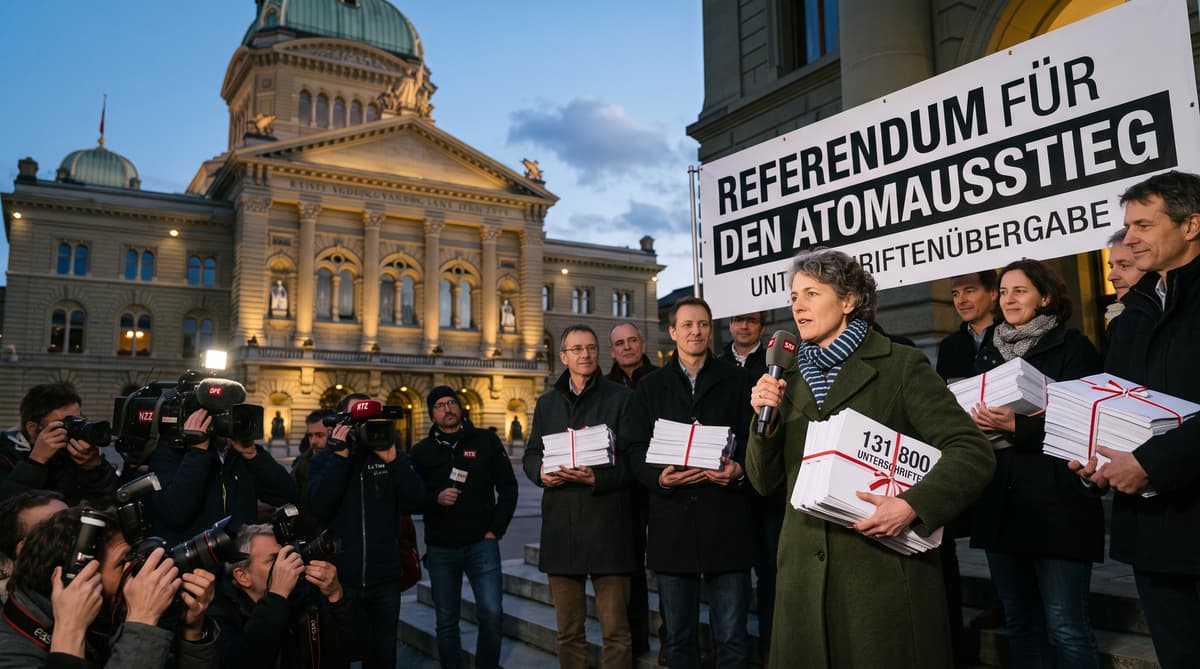
More than 131,800 signatures have put Switzerland’s nuclear future on a possible collision course with parliament and the Federal Council. Representatives of the Socialist Party, Greens, Green Liberals and parts of the Centre Party handed the signatures to the federal authorities in Bern on Tuesday, seeking to preserve the country’s ban on constructing new nuclear power plants.
The filing challenges government plans to reconsider that policy as Switzerland confronts a difficult winter electricity balance. Nuclear plants still provide just under 30% of domestic electricity generation, while the country remains dependent on imports when demand rises during the colder months. In winter 2025 to 2026, the gap reached approximately 6.8 TWh, about one fifth of seasonal consumption.
The referendum alliance says lifting the ban would divert money and political attention from renewable energy, especially solar and hydropower. Its opponents say those sources cannot yet guarantee enough electricity when winter demand peaks. The dispute now moves from committee rooms to a national campaign, where voters will weigh long construction timelines, radioactive waste and energy security against the cost of imports and the limits of intermittent generation.
Defend the Existing Energy Line
Just under 30% of domestic electricity still comes from nuclear power, making the existing fleet central to Switzerland’s energy debate even as the country plans its longer-term transition. The referendum campaign seeks to keep the legal prohibition on new plants in place while existing reactors continue to shape the electricity mix.
Green president Lisa Mazzone argues that nuclear energy belongs to an older and more expensive model of power generation. She points to the unresolved burden of highly radioactive waste, which remains a responsibility for future generations. The alliance also fears that a return to nuclear construction would slow the deployment of renewable projects and weaken support for measures already under way.
The legal ban dates from Switzerland’s post-Fukushima energy shift, when the country chose not to replace its existing reactors. That decision left the debate focused on how quickly solar, hydropower and efficiency measures can fill the eventual gap. The referendum would preserve that direction and block a legislative reversal. Its supporters are presenting the vote as a decision about investment priorities, not only about reactor technology.
Confront the Winter Supply Gap
The winter import gap reached approximately 6.8 TWh from 2025 to 2026, a figure that gives the pro-nuclear camp its strongest argument. Switzerland produces enough electricity at some times of the year but cannot consistently cover winter demand from domestic sources. Imports bridge that shortfall, exposing the country to regional market conditions and supply pressure.
Vanessa Gassler-Meury, a member of the committee behind the Stop the Blackout initiative, says renewable generation alone cannot yet provide the required reliability. Solar output varies with daylight and weather, while nuclear plants can operate continuously. Her argument will resonate most strongly during debates over cold, dark winter periods, when electricity demand rises and solar production is constrained.
The figures also leave room for a different reading. Supporters of the referendum say Switzerland should reduce the gap through faster renewable construction, storage, efficiency and expanded hydropower. They warn that new reactors would require substantial capital and long development periods. The campaign will therefore test whether voters view nuclear power as an immediate insurance policy or as a costly detour from the energy transition.
Scale Renewables Before Nuclear
More than 2 TWh of solar electricity was generated in Switzerland last winter, strengthening the case made by parties that want to focus investment on renewables. That output equals the additional winter production targeted through a planned expansion of hydropower by 2040, according to the campaign material cited by Le News.
Green Liberal president Jürg Grossen has called for solar subsidies to continue. The party supports expanding renewable capacity while maintaining measures that can improve winter output, including installations designed to produce more during the colder season. The challenge is to connect new generation to the grid and manage production that fluctuates across hours and weather conditions.
Centre Party National Councillor Priska Wismer-Felder, who represents Lucerne, also supports retaining the construction ban. She says Switzerland’s limited public and private capital should go toward renewables rather than a new nuclear programme. “We can only spend each franc once,” she said.
The investment argument gives the referendum a practical dimension. Voters will be asked to choose which technologies should receive priority as Switzerland replaces aging infrastructure and seeks to cut exposure to winter imports.
Prepare for the 2027 Decision
28 February 2027 is the earliest possible date for a national vote if the referendum moves through the formal process. The campaign will place Switzerland’s electricity strategy under direct public scrutiny and could reopen a debate that has shaped federal energy policy for more than a decade.
The vote would not build a reactor or close one. It would determine whether lawmakers can remove the legal barrier to new nuclear construction. A decision to preserve the ban would reinforce the current transition toward solar, hydropower and other renewable sources. A decision to lift it would give the government and parliament room to develop a new nuclear framework, although any project would still face planning, regulatory and financing hurdles.
Winter reliability will dominate the campaign. Supporters of nuclear power will highlight the 6.8 TWh import gap and the steady output of reactors. The referendum alliance will point to more than 2 TWh of winter solar generation, future hydropower expansion and the costs of radioactive waste. Switzerland’s voters will decide which risk deserves greater weight as the country plans beyond its existing nuclear fleet.