housing
Swiss home prices keep climbing despite higher mortgage rates
Swiss home prices continued to rise in the third quarter even as fixed-rate mortgage costs increased. Single-family homes rose 2% from the previous quarter and flats 1. 7%, while limited housing supply continues to support prices.
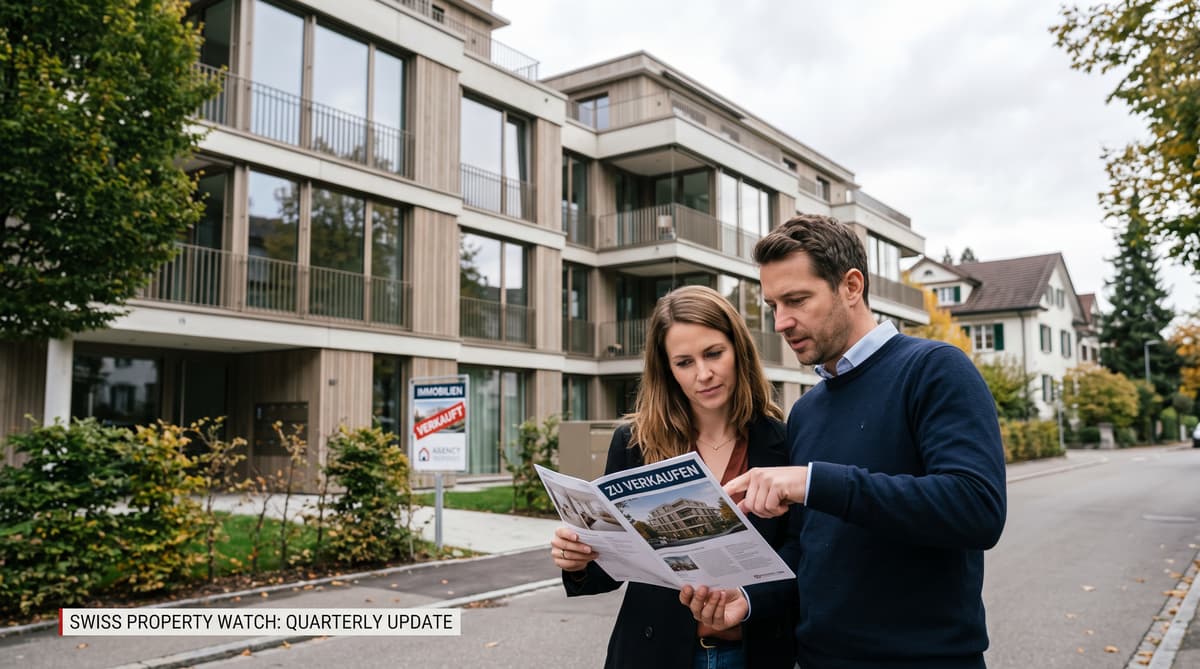
Single-family homes rose 2.0% and flats 1.7% in the third quarter of 2026, extending a run of price gains across Switzerland’s owner-occupied housing market. The latest figures from the Raiffeisen Transaction Price Index show that buyers continued to pay more between July and September, despite a renewed increase in the cost of fixed-rate mortgages.
On an annual basis, the gap is even clearer. Single-family homes became 3.6% more expensive than in the third quarter of 2025, while flats rose 5.9%. The index tracks actual purchase prices supplied by Raiffeisen and the Swiss Real Estate Datapool, rather than asking prices listed by sellers.
That distinction matters in a market where many properties attract several interested buyers and remain unavailable for long. Higher borrowing costs can reduce what households can afford, but a limited number of homes continues to support transaction prices. Raiffeisen chief economist Fredy Hasenmaile said the increase in mortgage rates remained too moderate to break the market’s upward momentum.
For households weighing ownership against renting, the result is a difficult calculation. A buyer faces both a higher purchase price and more expensive financing, while tenants continue to confront tight availability in many regions.
Mortgage costs rise through capital markets
A 10-year fixed mortgage cost 2.07% at the end of September, according to the online comparison portal Comparis. The indicative rate, calculated from the average rates offered by about 30 banks, rose as capital market yields increased and banks faced higher refinancing costs.
Five-year fixed mortgages stood at 1.90%, while three-year loans reached 1.75%, up from 1.38% three months earlier. The move raises monthly financing costs for new buyers and for homeowners whose mortgage terms are approaching renewal.
The increase has a different mechanism from a change in the Swiss National Bank’s policy rate. The SNB kept its key interest rate at 0%, but Swiss mortgage pricing also reflects conditions in international capital markets. Higher rates abroad, a weaker franc and rising energy prices have increased pressure on longer-term funding costs.
Dirk Renkert, a financial expert quoted by Comparis, said the more favourable economic outlook and currency weakness had increased the likelihood of tighter monetary policy, although low inflation meant the SNB was unlikely to rush into a rate increase.
For buyers, the figures underline the importance of comparing fixed terms, affordability tests and refinancing risks. Even a mortgage rate above 2% can affect the amount a household is able to borrow under Swiss lending rules.
Regions pull prices in different directions
Zurich led the annual increase for single-family homes at 4.8%, closely followed by Western Switzerland at 4.6%. The regional figures show how strongly location continues to shape the Swiss property market.
Southern Switzerland and Eastern Switzerland recorded more moderate annual gains for single-family homes, at 3.3% and 3.5%, respectively. The spread reflects differences in employment centres, transport links, land availability and demand from both resident households and second-home buyers.
The pattern changes for flats. Southern Switzerland posted the strongest annual increase, at 7.4%. In the Lake Geneva region, by contrast, flat prices rose just 0.4% over the same period. That result does not mean housing became broadly affordable around the lake. It indicates that price growth was much weaker than in other regions during the year measured.
Municipality type adds another layer. Single-family homes in central municipalities gained 5.2% over the year. Flats in tourist municipalities rose 7.9%, while flat prices in central municipalities increased only 1.6%.
These differences make national averages a limited guide for households. A buyer in Zurich, a family seeking space in central Switzerland and an investor looking at a tourist municipality face distinct supply and demand conditions.
Short supply keeps buyers under pressure
Scarce residential supply remains the main support for prices, according to Hasenmaile. Switzerland’s housing shortage limits the number of properties available to households, even when financing becomes less attractive.
Construction has struggled to keep pace with demand in many parts of the country. Population growth, employment concentration in major centres and restrictions affecting new development all shape the supply available to buyers. The result is a market where a modest rise in borrowing costs has so far reduced pressure only at the margins.
The shortage also affects renters. People unable to meet the financial or regulatory requirements for a purchase remain in the rental market, adding to competition for available flats. High housing costs have already become a factor in decisions about where people work and live, particularly in French-speaking Switzerland.
Switzerland’s mortgage system adds complexity. Buyers generally need substantial equity, and banks assess affordability using conservative calculations that can exceed the current interest rate. A household may therefore qualify for a loan at today’s rate while still needing to demonstrate that it could withstand a much higher calculated cost.
For prospective owners, the market combines three pressures: rising prices, higher fixed-rate financing and limited choice. Until more homes reach the market, those forces are likely to keep affordability under strain.
Buyers face a tighter calculation
The next phase will depend on whether supply expands faster than demand and how capital market rates evolve. The current data offer no sign that the third-quarter increase in mortgage costs has halted the rise in purchase prices.
The Swiss National Bank’s 0% policy rate provides one element of the outlook, but fixed mortgages respond to longer-term market conditions. Comparis said rates had risen mainly because banks’ refinancing costs increased. A further rise could narrow the pool of buyers, particularly among households already close to their affordability limits.
A sustained increase in borrowing costs could eventually weigh on transactions or slow price growth. The effect would vary by region and property type. Areas with stronger employment demand and fewer homes may continue to attract buyers, while markets with more discretionary or second-home demand could respond more quickly to changes in financing costs.
Households can reduce some risk by comparing lenders, considering different fixed-rate periods and accounting for renewal costs. The national housing calculator highlighted by Swissinfo also offers a way to compare buying and renting across locations.
For now, the third-quarter figures show a market still driven by a basic imbalance: too many households are competing for too few homes. Mortgage rates have moved higher, but supply remains the stronger force.