Government
Government Ready to Disclose COVID-19 Vaccine Contracts After Court Ruling
The Swiss government will not appeal a Federal Administrative Court decision ordering the disclosure of its COVID-19 vaccine purchase contracts. The Federal Office of Public Health stated that vaccine manufacturers may still appeal to protect commercial secrets.
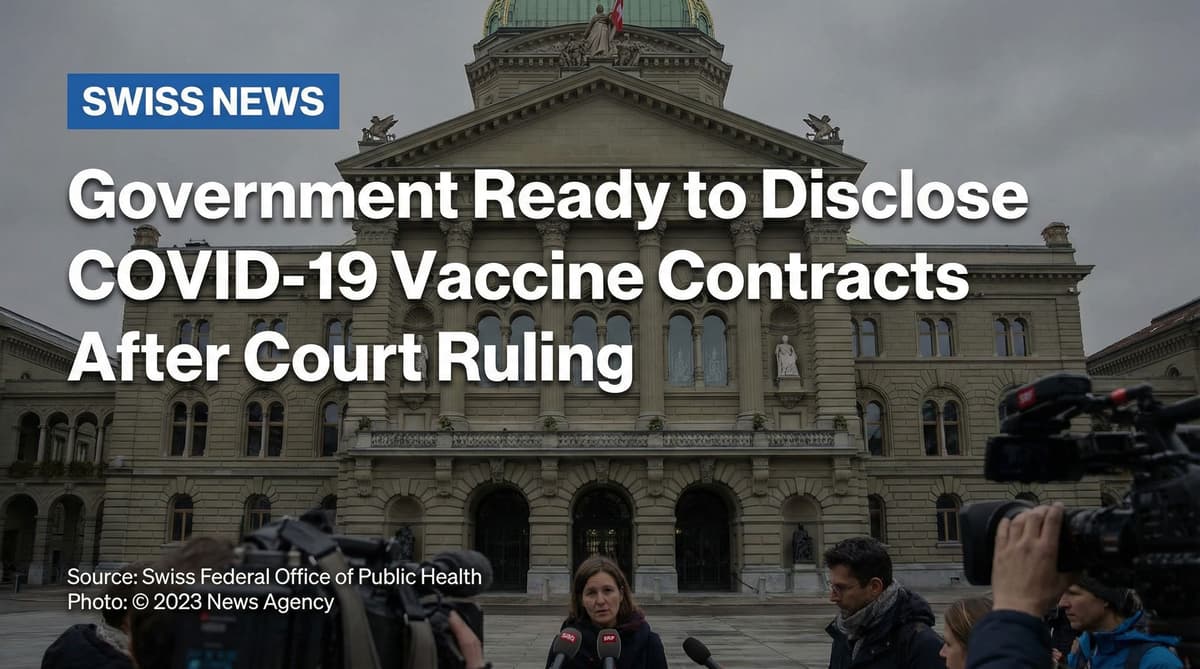
The wall of silence surrounding Switzerland's pandemic spending is finally crumbling. In a decisive move that marks a major victory for transparency, the Swiss government has officially announced it will not appeal the Federal Administrative Court's order to disclose COVID-19 vaccine purchase contracts. The Federal Office of Public Health (FOPH), which has fiercely guarded these documents since the height of the pandemic, has effectively thrown in the towel.
This decision, confirmed on Monday, signals a massive shift in Bern's approach to public accountability. For years, the narrative was one of absolute necessity for confidentiality; today, that narrative has collapsed. The government's refusal to fight the February ruling demonstrates a reluctant acceptance that the era of pandemic emergency measures—and the secrecy that accompanied them—is definitively over. However, while the state steps back, the battle for the unredacted truth is not entirely won, as the shadow of corporate intervention still looms large over the release of these critical documents.
Judicial Smackdown: No Valid Excuses
The Federal Administrative Court did not mince words in its February judgment: the government's excuses for secrecy have been dismantled. The court categorically stated that there are no exceptional grounds to deny the public access to these contracts. The FOPH's long-standing argument—that revealing price and delivery details would jeopardize Switzerland's foreign policy interests—was rejected as baseless.
This is a stinging rebuke for the administration. The court found zero evidence that transparency regarding pricing or delivery conditions would harm the nation's standing. By ruling that the standard requirements for secrecy were not met, the judiciary has prioritized the Transparency Act over bureaucratic caution. This ruling vindicates the plaintiffs who, after being stonewalled by the FOPH in late 2023, refused to accept "no" for an answer. The message from the bench is crystal clear: public interest outweighs vague governmental fears.
Pharma's Counterstrike: The Final Hurdle
While the government has exited the ring, the heavyweights of the pharmaceutical industry may yet throw a punch. The FOPH has explicitly warned that vaccine manufacturers—including giants like Moderna, Pfizer, and AstraZeneca—retain the right to appeal the disclosure decision. Their potential legal argument? The protection of professional, commercial, and manufacturing secrets.
This sets the stage for a high-stakes corporate legal battle. These companies, which secured billions in contracts during the global crisis, have a vested interest in keeping their pricing structures and liability clauses out of the public eye. If they choose to appeal, they could delay the release of information for months, if not longer. The government has stepped aside, but the corporate veil remains intact for now. The public is left waiting to see if Big Pharma will use its immense resources to keep the Swiss public in the dark regarding the specifics of the deals that defined the pandemic response.
From Redaction to Revelation
The path to this moment has been paved with black ink. In 2022, the FOPH released versions of contracts with Moderna, Novavax, Pfizer, Janssen, AstraZeneca, and CureVac that were so heavily redacted they rendered many key details invisible. At the time, officials argued that full disclosure would cripple Switzerland's ability to negotiate effectively during future pandemics—a defensive posture that has now been abandoned.
This pivot represents a critical evolution in Swiss governance. The fear of a "poor negotiating position" has been superseded by the legal mandate for transparency. As we move further from the crisis years of the early 2020s, the justification for emergency secrecy is evaporating. The unveiling of these unredacted texts will not only shed light on the financial cost of the pandemic but will also set a powerful precedent for how the Swiss government handles procurement transparency in times of crisis. The black markers are being put away; the question remains—what exactly were they hiding?