Switzerland
Swiss climate lawmakers’ industry jobs raise questions about transparency
More than half the members of a Swiss parliamentary climate and energy committee work for industries affected by the laws they oversee, an investigation has found. Many are paid for those roles, but the amounts they receive are not public.
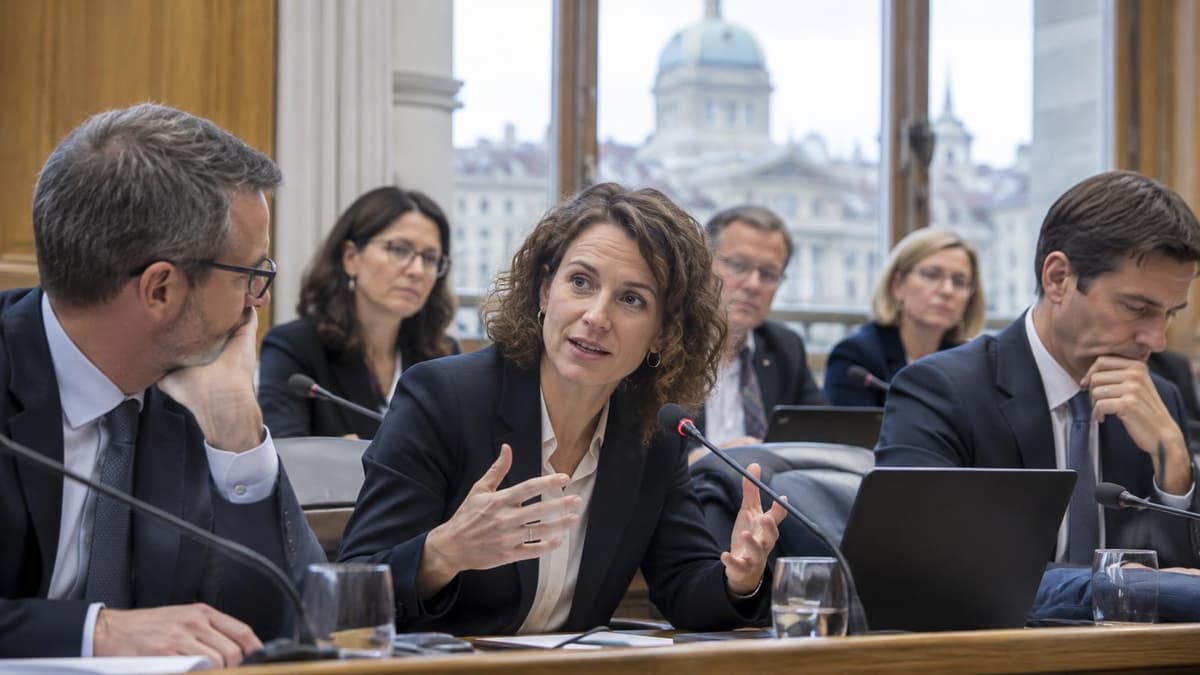
A 22-21 Senate vote put a paid industry role at the centre of a climate-policy decision. In June, Senator Thierry Burkart won support for a minimum discount on the road charge electric trucks will face from 2031, with no upper limit on the discount. The Senate’s transport committee had wanted to cap it.
Burkart is a lawyer from Aargau and the paid president of ASTAG, Switzerland’s trucking association. ASTAG had called in 2024 for discounts to be fixed in law. Burkart declared his position in writing and during the debate, as required. Swiss law permits lawmakers to propose and vote on measures affecting industries where they work or hold paid posts.
Burkart said his trucking expertise helped explain why the committee chose him as its spokesman. He argued the new rules would encourage firms to buy electric trucks rather than diesel vehicles, describing his role as “a positive benefit for climate policy”.
Map the Industry Ties
20 of the 38 lawmakers on committees drafting climate and energy laws hold posts in industries those laws affect. Their roles span power companies, gas, trucking, farming and solar associations. Parliament’s register of interests requires members to list jobs and board seats and say whether those positions are paid. Most of the declared posts among this group are paid.
The arrangement reflects Switzerland’s part-time Parliament. Lawmakers divide their time between legislative sessions and work in their home districts. Supporters say that keeps representatives close to constituents and gives them practical knowledge of the sectors under scrutiny.
That experience can inform debate, but it also makes disclosure consequential. Unlike in Germany or France, the amounts Swiss lawmakers receive for these roles remain private. Voters can see that a member has an industry position and whether it is paid, while the value of that work stays out of public view.
Follow the Party Lines
The voting record does not show members with industry roles breaking from their parties more often. Swissinfo analysed 237 climate and energy votes and found no such difference. Party alignment often overlaps with industry alignment: all five energy-committee members with posts in oil, gas, car or trucking sectors belong to the Swiss People’s Party or the Radical-Liberal Party.
On the left, Social Democratic and Green members also hold energy-sector posts, but those roles are with renewable-energy groups. The pattern complicates any simple reading of industry ties as a separate voting bloc. A lawmaker may share an industry’s position and their party’s position at the same time.
Martin Schmid, a Radical-Liberal on the Senate’s energy committee and paid president of the Swiss gas industry association, says committee size limits any one member’s power. “One person can bring in the industry’s point of view but cannot decide [by themselves], unless they have such good arguments that the majority follows,” he said.
Put Disclosure in Voters’ Hands
Voters’ ability to judge these connections depends on whether they know about them. Isabelle Stadelmann-Steffen, a University of Bern professor who studies how Swiss voters assess energy and climate policy, said people are likely unaware of lawmakers’ industry ties in many cases. Those links matter when citizens decide which representatives to support.
Switzerland’s consensus system involves cooperation between politicians and interest groups. Supporters say lawmakers’ outside work brings sector knowledge into Parliament; critics warn that weak disclosure and oversight can leave conflicts unnoticed. Odile Ammann, a University of Lausanne law professor who has studied lobbying rules since 2018, said: “Swiss democracy has its blind spots and its vulnerabilities.”
Each parliamentary committee has 13 members, while the Senate has 46. Schmid argues those numbers limit individual influence. The public register offers a way to identify members’ roles, but the private value of paid positions leaves voters with less information about the financial dimension of those ties.