Wildlife
EU deer policy could drive more sika deer into Zurich canton
An EU decision to classify Japanese sika deer as an invasive species could push more animals across the border into Zurich canton as Germany and Austria increase hunting pressure. Swiss officials are monitoring the potential impact on native deer and forests.
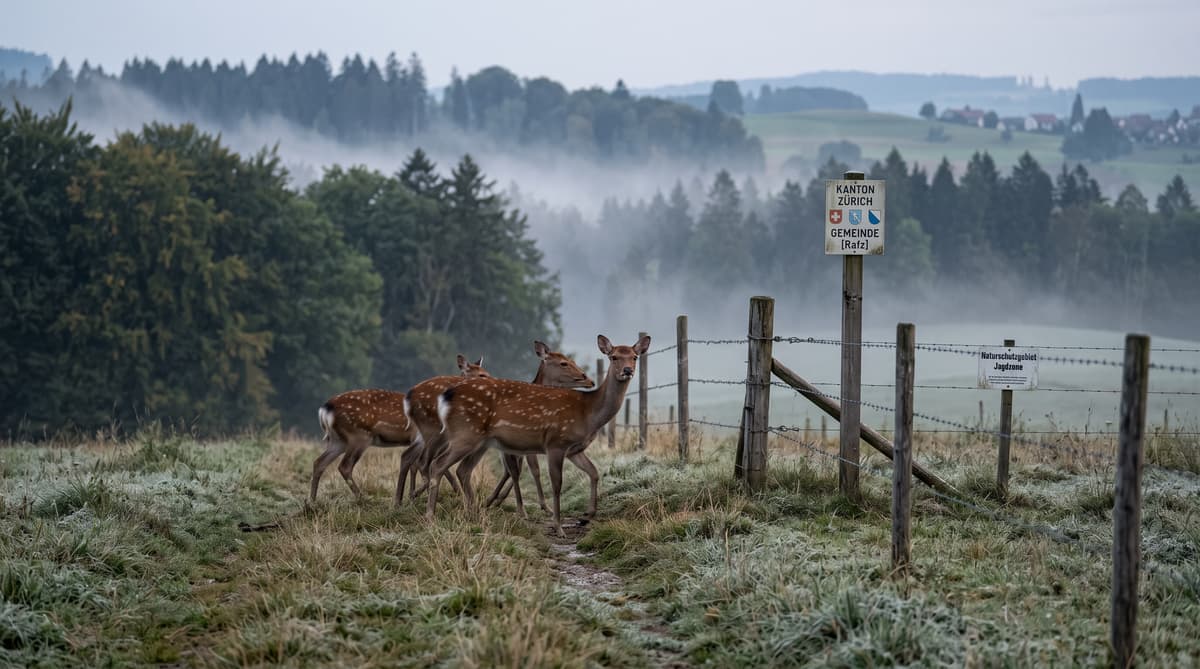
More sika deer could reach Zurich as Germany tightens the pressure on its herds. The trigger is an EU decision announced in summer 2025 that classifies Japanese sika deer as an invasive alien species. Germany and Austria are preparing tougher controls, including intensive hunting of wild populations. Zurich officials expect those measures to affect animals living across the border in Baden-Württemberg.
The canton already has a small sika population north of the Rhine, in the Rafzerfeld and neighbouring Schaffhausen. It numbers just over 40 animals and occupies an area of slightly more than 2,300 hectares. The animals have remained within their established territory, according to Reto Muggler, co-head of Zurich’s Fisheries and Hunting Administration.
Muggler said the canton will monitor the situation as hunting pressure rises in southern Germany. “We will notice the increasing hunting pressure in Baden-Württemberg,” he said. That could encourage more deer to move towards the Swiss border. Zurich’s existing management rules already allow the animals to be hunted, giving officials a direct response if their numbers increase.
EU policy raises hunting pressure
The EU’s deadline places private sika ownership under a clear timetable. Private ownership of the species in EU member states will be permitted only until August 2027. Authorities also plan to intensively hunt wild populations, citing two concerns: damage to native forests and interbreeding with indigenous red deer.
The policy has prompted strong reactions in Germany and Austria. Media reports there have described the measures as an “extermination and culling plan”, reflecting the political sensitivity around a species that has been present in European parks and forests for generations.
Sika deer originate in Southeast Asia and the Far East. They reached Europe in 1890, when animals were given to France as a gift from the Japanese Emperor. Some escaped from the grounds of Rambouillet Castle near Paris. Around 1900, people brought sika deer to Germany as part of a fashion for adding non-native species to local wildlife. Animals later escaped from parks there as well.
Germany now has five sika populations. The population linked to Zurich descends from animals established in the Black Forest in 1939, placing the Swiss herd within a much longer history of deliberate introductions and escapes.
Zurich relies on established hunting rules
Zurich already manages sika deer through routine hunting, and last year it shot 19 animals. The canton has treated the species as a management issue for years, even though the current population remains small and geographically concentrated. If additional deer cross from Germany, officials plan to deal with them under the same system.
“If more sika deer were to enter the canton of Zurich, they would continue to be hunted as part of normal management,” Muggler said. The statement signals continuity rather than a new emergency programme. Zurich’s authorities do not currently expect a major expansion across the canton.
The existing herd lives north of the Rhine in the Rafzerfeld, an area where forest cover provides suitable habitat. The canton says the animals have so far stayed within their territory. They have not crossed the Rhine by swimming, a detail that reflects how closely officials are watching the population’s movements.
The 19 deer killed last year represent nearly half the population figure cited by the canton, although annual counts and hunting totals measure different things. The figures nevertheless show that hunting already plays a substantial role in keeping the herd from spreading.
Officials assess the red deer risk
Zurich does not currently see interbreeding with red deer as an immediate threat. Sika deer are related to red deer, but they are smaller and occupy a separate local range. The canton says the two species live far enough apart that they are unlikely to meet and reproduce in the current landscape.
That assessment could change if sika deer establish new territories. The EU’s decision rests partly on concern that expanding sika populations could mix with native red deer and alter local wildlife. Forest damage is another concern, since high deer densities can affect young trees and forest regeneration.
The Swiss situation remains more contained than the broader European debate. Zurich’s sika population is limited to a small area north of the Rhine, while officials say they have seen no significant geographical spread. The canton is therefore watching movement across the border rather than announcing a new eradication campaign.
The difference in approach reflects local conditions. Zurich already hunts sika deer and has a small, known population. Germany and Austria face their own populations and policy deadlines under the EU classification. Any increase in cross-border movement will require cooperation between wildlife managers, hunters and neighbouring authorities.
Switzerland prepares for possible arrivals
The next test will come as EU hunting measures take effect before August 2027. Zurich will need to track whether animals leave Baden-Württemberg, settle in new Swiss woodland or remain in the Rafzerfeld. Officials have not forecast a significant spread, but increased pressure on the German side could change deer movements along the border.
For Swiss residents, the immediate issue is local wildlife management rather than a canton-wide invasion. Zurich has a small population, an established hunting framework and no current evidence that the animals are crossing the Rhine or meeting red deer in significant numbers. Those conditions give the canton time to monitor changes before adjusting its policy.
The sika story also fits Switzerland’s wider struggle with introduced species. Authorities have taken measures against invasive wildlife and plants, while experts continue to assess how effectively populations can be contained. The canton’s experience with sika deer shows the practical importance of early counts, habitat monitoring and cross-border information sharing.
For now, Zurich’s officials are watching the forests north of the Rhine. The number to follow is whether the current herd stays just over 40 animals, or begins to grow as hunting pressure rises across the border.