Tragedy
Three Swiss Killed by Avalanche During Heliski Tour in Canada
An avalanche during a heliskiing excursion in British Columbia, Canada, has killed three Swiss citizens and seriously injured a fourth person. The Swiss foreign ministry has confirmed the tragedy and is assisting family members.
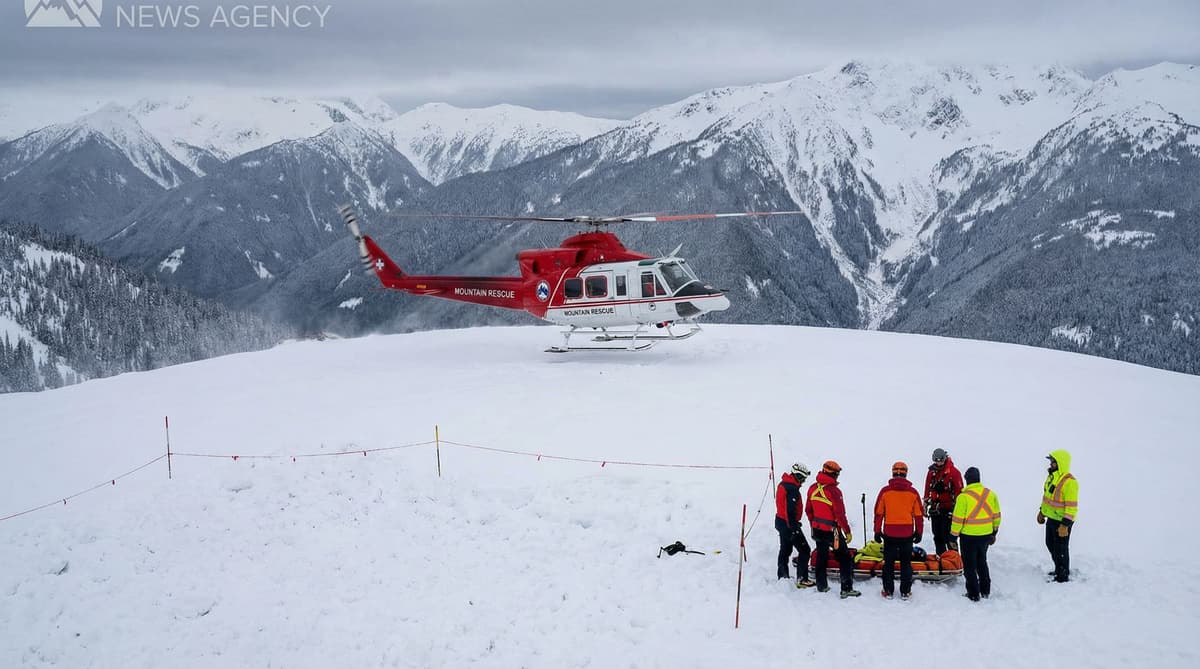
Three Swiss lives have been abruptly extinguished in the Canadian wilderness. In a devastating blow to the Swiss outdoor community, authorities confirmed on Tuesday that a heliskiing excursion in British Columbia turned fatal when a massive avalanche swept through the group. The disaster, which struck on Sunday, has left three Swiss citizens dead and a fourth individual fighting for recovery with serious injuries.
The sheer scale of the tragedy highlights the unforgiving nature of extreme winter sports. While the identities of the victims remain protected, the shockwave of this event is already being felt back home. The fourth victim was urgently airlifted to a local hospital, though the Swiss Foreign Ministry has yet to confirm if this survivor is also a Swiss national. This is not merely an accident; it is a stark reminder of the peril that accompanies the pursuit of the ultimate powder run.
A Deadly Trigger on Mount Knauss
Mount Knauss became a death trap on Sunday. Reports emerging from the Canadian winter sports platform Snowbrains, and cited by Blick, suggest a harrowing scenario: the avalanche was likely triggered by the ski mountaineers themselves. The group was navigating the treacherous terrain of British Columbia during a period of critical instability.
The conditions were primed for disaster. Heavy snowfall in the region had created a highly volatile snowpack, elevating the avalanche danger to critical levels. Heliskiing, which grants access to pristine, untouched slopes, inherently carries the risk of encountering these unstable layers. In this instance, the pursuit of fresh tracks on Mount Knauss resulted in a catastrophic slide that overwhelmed the party. The physics of such an event are terrifyingly simple—one wrong turn on an overloaded slope can bring down the mountain.
Bern Mobilizes Support
Bern has officially stepped in. The Swiss Foreign Ministry (FDFA) confirmed the fatalities to the Keystone-ATS news agency on Tuesday, ending hours of speculation. The machinery of state support is now in full motion, with the Swiss Consulate General in Vancouver actively coordinating with Canadian authorities on the ground.
"Family members are being assisted within the framework of consular protection," the ministry stated, emphasizing the government's role in this dark hour. While privacy laws prevent the release of specific personal details, the diplomatic presence ensures that the families of the victims are not navigating this nightmare alone. The priority now shifts to the repatriation of the deceased and the medical care of the survivor, as diplomats work to bridge the gap between the Swiss Alps and the Canadian Rockies.
The Lethal Allure of the Backcountry
This tragedy underscores a grim statistic: the majority of fatal ski accidents occur off-piste. The allure of heliskiing—escaping the crowded resorts for the silence of the backcountry—comes with an inherent, sometimes lethal, price tag. British Columbia is a mecca for Swiss powder enthusiasts, drawing thousands annually who seek terrain that rivals the Alps in grandeur and difficulty.
However, the wilderness does not forgive mistakes. As climate patterns shift and snowfall becomes more erratic, the predictability of snowpacks diminishes. This incident serves as a brutal wake-up call for the international freeride community. While the investigation continues, the loss of three lives on Mount Knauss stands as a permanent testament to the thin line between exhilaration and catastrophe in the high mountains.