economy
Swiss National Bank Considers Return to Negative Rates
SNB Chair Martin Schlegel announces readiness to implement negative interest rates amid economic uncertainty and strong franc concerns.
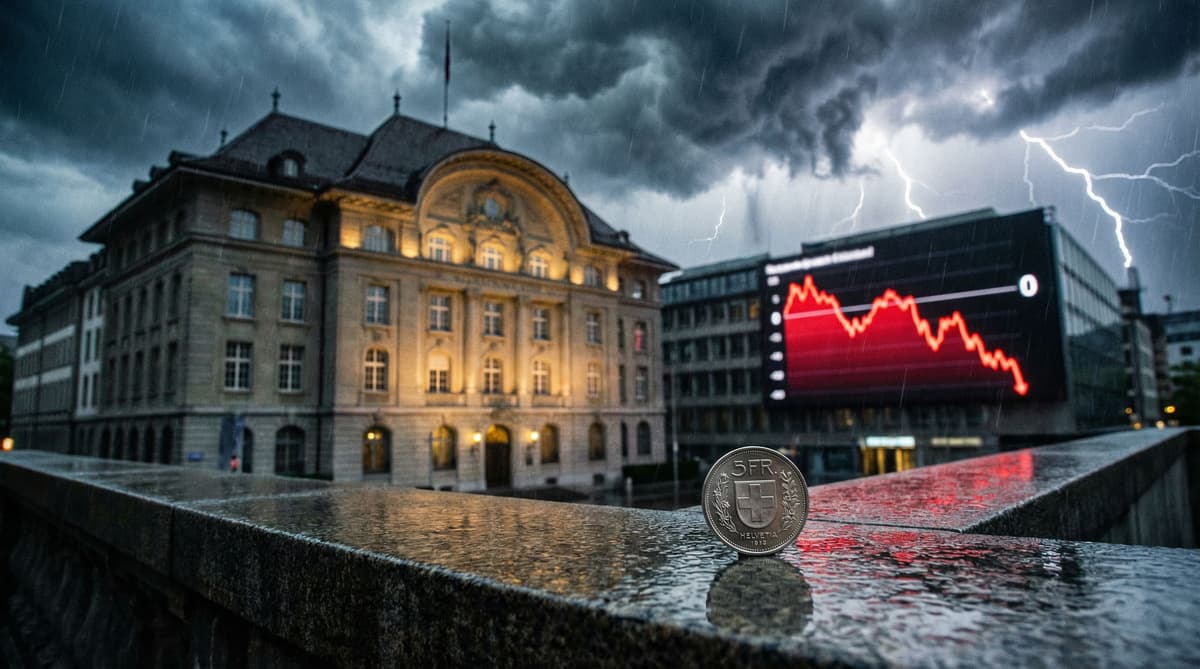
Swiss National Bank Chair Martin Schlegel has shattered market complacency, declaring explicitly that "no scenario has been ruled out" in the fight to stabilize the Swiss economy. In a bold move that underscores the severity of the current financial climate, Schlegel announced on Tuesday that the central bank is fully prepared to slash interest rates back to zero—or even plunge them into negative territory if necessary. This is not merely a precautionary whisper; it is a loud, authoritative signal to global markets that the SNB will not stand idly by.
"If necessary, we are prepared to consider reintroducing a zero interest rate, or even a negative interest rate policy," Schlegel told participants at a high-stakes meeting in Zurich. This declaration marks a critical pivot point. The greatest risk currently confronting the Swiss central bank is the prevailing uncertainty on the markets, a volatility that has exploded following the recent trade war declared by Washington. The SNB is effectively drawing a line in the sand, prioritizing economic stability over conventional monetary policy, and proving once again that it is willing to utilize every weapon in its arsenal to protect Switzerland's financial interests.
Currency Wars: The Franc's Relentless Surge
The Swiss franc is flexing its muscles to a dangerous degree, surging by a staggering 9% against the US dollar since the start of the year. This dramatic appreciation is a double-edged sword; while it cements the franc's reputation as a global safe-haven asset, it simultaneously threatens to strangle the Swiss export economy. As global investors flee uncertainty, they are pouring capital into Switzerland, driving the currency's value to alarming heights that make Swiss goods significantly more expensive abroad.
Schlegel explicitly linked this currency crisis to the "uncertainties surrounding global growth," which are having a disproportionate impact on the franc. The volatility triggered by Washington's trade war has only accelerated this flight to safety. Confronted with this relentless upward pressure, the SNB Chair stressed that the bank is prepared to intervene directly in the foreign exchange market. This is a clear warning to currency speculators: the SNB is ready to fight the franc's rise to prevent it from choking off national growth. The message is unambiguous—the strength of the franc has crossed the threshold from asset to liability.
Zero Hour: Inflation Plummets to Standstill
Inflation in Switzerland has ground to a complete halt, hitting exactly 0% in April. This critical statistic provides the SNB with the undeniable ammunition it needs to cut rates. While other nations grapple with sticky price increases, Switzerland faces the opposite problem: the ultra-strong franc is driving down the cost of imported goods so aggressively that inflation has effectively vanished. With the key interest rate currently sitting at a modest 0.25%, the room for maneuvering is tight, but the direction of travel is clear.
Most economists now expect the SNB to cut the rate to 0% at its upcoming monetary policy announcement in mid-June. This consensus is driven by the dual forces of stagnant inflation and currency appreciation. The drop to 0% inflation is not just a number; it is a signal that the economy is cooling potentially too fast. By slashing rates, the SNB aims to reignite price growth and reduce the attractiveness of the franc. The mid-June meeting is rapidly shaping up to be a defining moment for the Swiss economy in 2025.
Uncharted Waters: Returning to the Negative Zone
History threatens to repeat itself as Switzerland stares down the barrel of a return to the negative interest rate era. It was only in September 2022 that the SNB finally abandoned the negative zone, raising the rate from -0.25% to +0.50% and signaling a return to normalcy. Yet, less than three years later, the economic landscape has shifted so violently that the "unthinkable" is once again a viable strategy. A return to negative rates would charge banks for parking money with the SNB, a drastic measure designed to force capital into the economy.
While the move would be controversial, Schlegel's comments suggest that the SNB prioritizes pragmatic survival over dogmatic adherence to positive rates. The implications for Swiss savers, pension funds, and the banking sector are profound. If the global trade war intensifies and the franc continues its relentless climb, the mid-June meeting could mark the beginning of a new, aggressive chapter in Swiss monetary policy. The SNB has proven it will do whatever it takes; the question now is not if they can, but how deep into the negative they are willing to go.