Swiss army
Swiss army fitness scores decline as recruits feel fitter than ever
A Federal Office of Sport study finds that average Swiss army fitness-test scores have fallen since 2006, even as more recruits describe themselves as physically fit. The widening gap between measured performance and self-assessment raises questions about changing lifestyles, recruitment standards and military readiness.
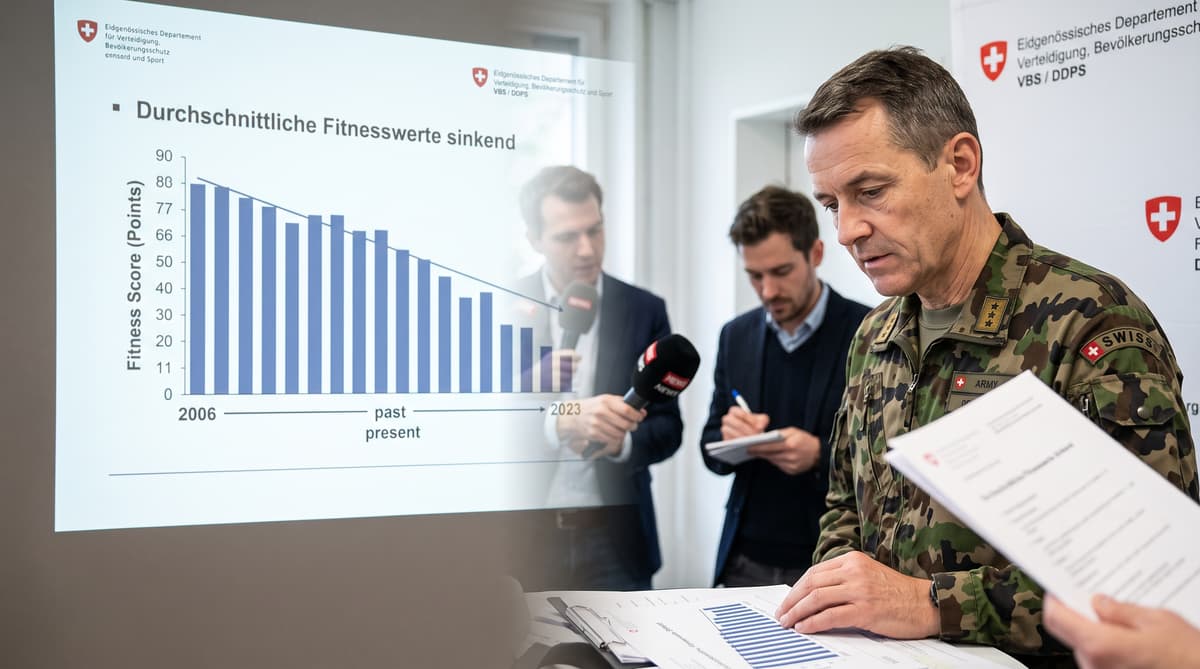
The average recruit scored 70.4 points in 2024, down from 74.2 in 2006. The decline gives Switzerland’s military and public health authorities a measurable signal about the physical condition of young adults entering national service.
The figures come from a Federal Office of Sport study covering nearly two decades of army fitness-test data. Researchers examined results from approximately 700,000 military personnel, with the Swiss Federal Institute of Sport in Magglingen, the Swiss Armed Forces and the University of Zurich contributing to the analysis.
The findings arrive as Switzerland debates the future strength of its militia system. The army has already warned about a possible shortage of personnel for refresher training, following departures from the service. Fitness is only one part of readiness, but recruits’ capacity to run, move and sustain effort affects training demands and the army’s ability to place personnel in demanding roles.
The study also records a striking change in how recruits view themselves. In 2006, 40% considered themselves physically fit. By 2024, that share had reached 56%. The divergence between the test and the answer suggests that changing perceptions of fitness may be as important for recruiters as the decline in measured performance.
Measure the Gap Between Feeling Fit and Being Fit
Self-assessed fitness rose by 16 percentage points between 2006 and 2024, even as the overall test average fell by 3.8 points. The two measures capture different things. One records performance under standardised conditions. The other reflects how recruits judge their everyday physical condition.
The Federal Office of Sport said people generally overestimate their own performance when assessing themselves. That gap can develop when daily activity feels demanding but does not build the speed, endurance, strength or coordination measured in a military test.
The office also pointed to the changing popularity of sport. Activities that attract people today may support general movement and wellbeing without developing the specific abilities required by the army’s test. A person who exercises regularly can therefore feel fit while remaining less prepared for a battery of military tasks.
The study does not establish that one lifestyle change caused the decline. It does show that confidence cannot substitute for measurement. For the armed forces, the distinction matters during recruitment, when a self-description may shape expectations before a recruit has completed the formal assessment. For public health officials, it offers a broader reminder that participation in sport and physical capacity are related, but not interchangeable.
Female Recruits Buck the Wider Decline
Female recruits improved their average score from 45.4 points in 2006 to 49.9 points in 2024. Their results move in the opposite direction from the overall average, which includes the wider recruit population and fell over the same period.
Self-assessment also increased among female recruits. The share describing themselves as fit rose from 50% to 64%. The figures indicate stronger measured performance and higher confidence in this group, although the study summary does not provide a breakdown by canton, age or individual test discipline.
That limitation matters when interpreting the national picture. Switzerland’s armed forces draw recruits from different linguistic regions, educational backgrounds and sporting habits. The available results establish a broad trend, but they do not show whether the decline is concentrated in particular places or whether individual components of the test have changed more than others.
The comparison also cautions against treating the army’s overall score as a simple measure of every recruit’s condition. Female participation and performance have developed differently in the data presented. Military planners will need detailed subgroup analysis to understand where preparation is improving, where it is weakening and which forms of training produce the strongest results before service begins.
Use the Data to Rebuild Readiness
The study covers about 700,000 personnel, giving the army a substantial record of how recruits have performed since the mid-2000s. Its scale makes the fall in the average score difficult to dismiss as a short-term fluctuation, although the published summary does not identify a single cause.
Recruitment standards, school-based physical education, leisure habits and the type of sport young people choose could all influence preparation. The Federal Office of Sport specifically noted that popular activities do not always target the skills used in the army test. That observation points towards a practical response: prospective recruits may need clearer guidance on the demands of service well before recruitment day.
The findings also sit alongside pressure on the militia model. In November 2025, the Swiss army warned that departures could create a shortage of personnel for refresher training. A smaller pool of available personnel and lower average physical performance would create different challenges, even though the study does not directly connect the two developments.
Military readiness depends on more than a score. It also relies on training quality, equipment, leadership and the ability to retain trained personnel. The fitness data give commanders one concrete indicator to monitor as Switzerland considers how to maintain a broad, capable militia force.
Turn a Warning Into Better Preparation
By 2024, 56% of soldiers said they were physically fit, while the measured average stood at 70.4 points. The next step for Swiss institutions is to explain what sits behind both figures and how recruits can prepare more effectively.
The Federal Office of Sport’s study provides a long-term baseline. The army can use it to identify the test components that have weakened most, compare results across recruit groups and refine preparation advice. Schools, sports clubs and health services could also use clearer information about the difference between general activity and the capabilities needed for military service.
Any response will need to avoid reducing young people’s health to military usefulness. The data concern a specific test and a specific institution. They do not measure every aspect of fitness, nor do they establish that recruits are less healthy in every respect than their predecessors.
They do, however, expose a planning problem. Confidence has risen faster than tested performance for the overall recruit population. Switzerland’s army now has a detailed evidence base, a widening perception gap and a practical opportunity to address both before the next generation reports for service.