Switzerland
Former Swiss banking chief faces trial in alleged Kuwaiti bribery case
Pierre Mirabaud, former president of the Swiss Bankers Association, is due to stand trial over alleged bribes linked to the management of Kuwaiti public funds. The report should explain the indictment, the alleged CHF82 million in kickbacks and what the case says about accountability in Swiss private banking.
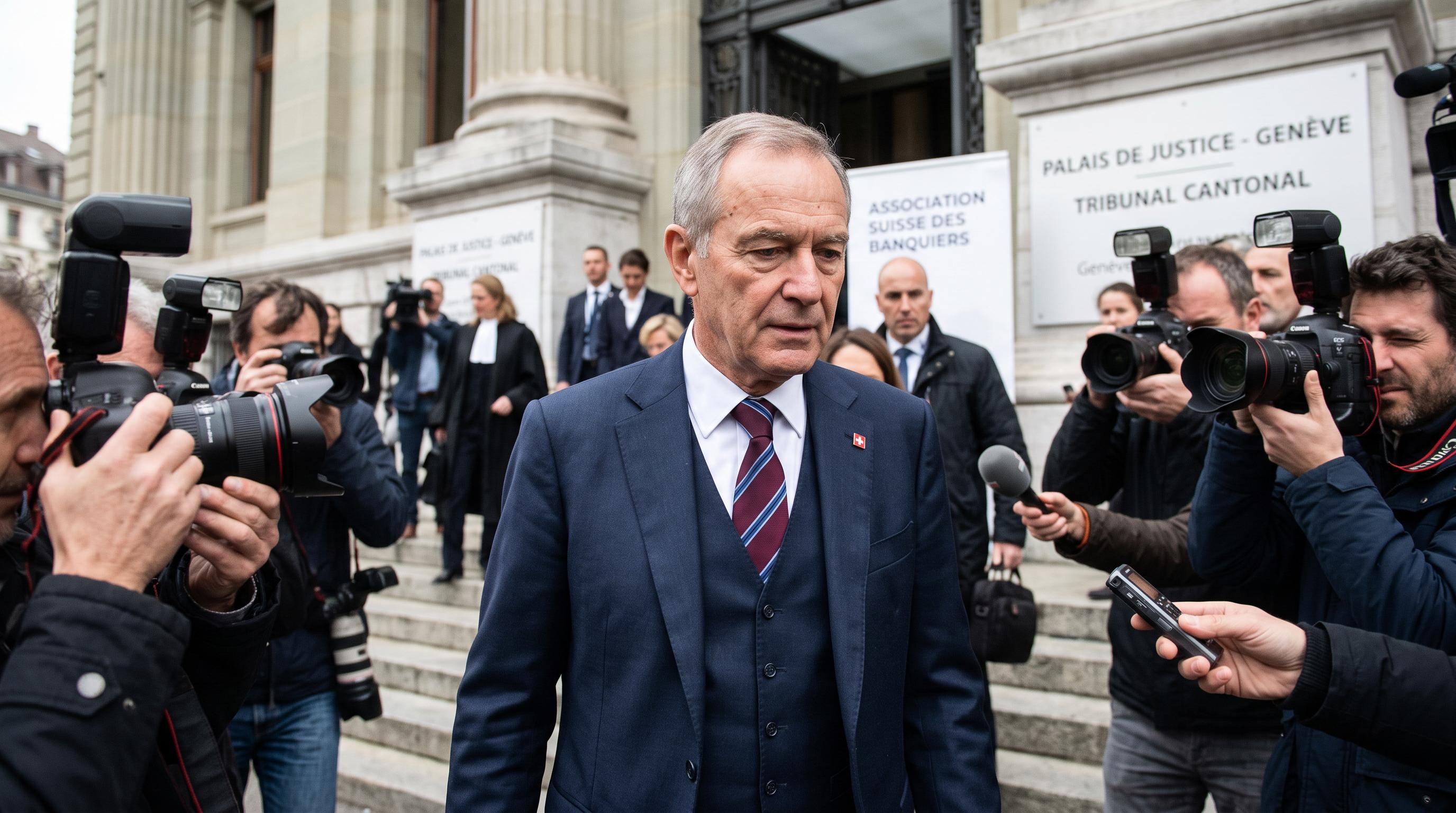
Put the Mirabaud Case Before the Court
A former voice of Swiss banking will face a corruption case in federal court in early September. Pierre Mirabaud, 77, former president of the Swiss Bankers Association, is due to appear before the Federal Criminal Court over alleged payments linked to Kuwait’s public pension institution. The case reaches beyond one banker’s conduct. It places a former industry representative at the centre of a prosecution involving public money, foreign officials and a Geneva private bank.
The Office of the Attorney General of Switzerland opened its criminal investigation in 2021. Prosecutors are examining alleged offences dating from 2000 to 2012, a period when Mirabaud was a senior figure in the banking sector and later led the association from 2003 to 2009. The indictment alleges that he promised improper payments to the chairman of Kuwait’s Public Institution for Social Security, known as PIFSS.
Mirabaud has selected a simplified procedure before a single judge and admits the charges, according to Keystone-SDA. The OAG has requested a 24-month suspended prison sentence. The court must still assess the case and determine the legal consequences. The proceedings will test how Swiss authorities handle alleged corruption involving private banking relationships formed years ago and funds belonging to a foreign public institution.
Follow the CHF 82 Million Trail
The indictment centres on CHF 82 million in alleged kickbacks and roughly CHF 400 million in Kuwaiti funds. Prosecutors allege that Mirabaud promised improper payments totalling CHF 82 million to the PIFSS chairman. In return, the Kuwaiti official allegedly entrusted Geneva-based Mirabaud with a portion of the institution’s assets, valued at $500 million, or about CHF 400 million.
Those figures describe the alleged mechanism of the case. A senior official responsible for a public institution’s funds allegedly directed assets to a Swiss private bank while expecting substantial payments. The indictment does not describe an ordinary advisory mandate or a routine client referral. It alleges a transaction built around influence over public money.
The amounts also show the commercial stakes for a private bank. The alleged kickbacks represented more than one fifth of the approximately CHF 400 million in funds at issue. The source report does not provide a full account of the alleged payment route, the identities of any intermediaries or the precise dates of individual transfers. Those details will matter as the court reviews the charges.
Mirabaud has already paid CHF 42 million to compensate PIFSS. That payment is significant to the case’s financial dimension, but it does not by itself resolve the criminal allegations. The court will examine the conduct described in the indictment and the legal responsibility attached to it.
Trace the Charges Across Borders
The case combines foreign bribery with an aggravated money-laundering charge. The OAG has charged Mirabaud with bribing foreign public officials and with aggravated money laundering. The alleged recipient was the chairman of PIFSS, Kuwait’s Public Institution for Social Security, which manages public funds. That connection gives the proceedings a direct public-interest dimension for both Kuwait and Switzerland.
Swiss law enforcement began investigating in 2021, several years after the alleged conduct ended in 2012. Long timelines are common in complex financial crime cases, where investigators may need to reconstruct transactions, ownership structures and relationships across jurisdictions. The report does not detail the investigative steps or identify other suspects. It does establish that the OAG considers the alleged conduct serious enough to bring charges before the Federal Criminal Court.
Mirabaud’s decision to use a simplified procedure changes the shape of the trial. He admits the charges, and a single judge will hear the case. The procedure can allow a court to resolve proceedings more efficiently when the accused accepts the prosecution’s account, while the judge retains responsibility for the legal decision and sentence.
The OAG’s request for a suspended 24-month prison term reflects its position, not the court’s final ruling. Until judgment, the court must determine the applicable penalties and any further financial consequences under Swiss law.
Test Switzerland’s Banking Guardrails
The defendant once helped represent the Swiss banking industry at national level. Mirabaud served as president of the Swiss Bankers Association from 2003 to 2009, making the case especially relevant to Switzerland’s financial sector. The SBA has long acted as a major industry voice in debates over regulation, market access and the reputation of Swiss banking.
The allegations concern conduct that prosecutors say occurred between 2000 and 2012, before and during Mirabaud’s time as association president. The source does not allege that the Swiss Bankers Association itself was involved, and no such conclusion should be drawn from Mirabaud’s former office. The significance lies in the public standing of the accused and the proximity of the alleged conduct to an era when Swiss banks faced sustained international pressure over secrecy, tax matters and controls on illicit funds.
The proceedings therefore bring two institutions into focus: the private bank that allegedly received Kuwaiti assets and the Swiss justice system now examining the relationship. A conviction could deepen scrutiny of how banks assessed politically exposed clients, foreign public funds and payments connected to winning mandates. An acquittal or a different legal finding would also clarify the limits of the prosecution’s case.
For Switzerland, accountability will be measured through the evidence and the judgment, not through the defendant’s former title alone.
Watch What the Verdict Sets
The court’s next decision will set the immediate measure of accountability in a case involving CHF 42 million in compensation. Mirabaud has paid that amount to PIFSS, while the OAG seeks a suspended sentence of 24 months. The Federal Criminal Court will consider the admitted charges, the alleged bribery of a foreign public official and the aggravated money-laundering allegation before issuing its ruling.
The case also leaves wider questions for Swiss private banking. Institutions compete globally for mandates from sovereign funds, pension institutions and wealthy public figures. Such business requires controls that can identify conflicts of interest, suspicious payments and attempts to influence officials. The indictment, as reported by Keystone-SDA, gives no general assessment of Mirabaud’s current compliance systems or of the bank’s broader operations. It does, however, show how a relationship formed years ago can remain a legal and reputational issue long after the money moved.
The alleged conduct ended in 2012. The investigation began in 2021, and the trial is scheduled for early September 2026. That timeline will be watched by banks, regulators and prosecutors across Switzerland. The judgment will determine Mirabaud’s criminal liability and provide a concrete measure of how Swiss courts treat corruption allegations involving foreign public assets and a prominent banking figure.
Await the Federal Court’s Answer
The Mirabaud proceedings will place a former industry leader, a Geneva bank and Kuwaiti public funds in the same legal frame. The allegations describe a relationship that ran from 2000 to 2012, involved approximately CHF 400 million in entrusted assets and included promised kickbacks of CHF 82 million. The investigation has now brought that history before Switzerland’s highest federal criminal jurisdiction.
Mirabaud’s admission of the charges and his CHF 42 million payment to PIFSS give the court a defined record to assess. The OAG has asked for a suspended 24-month sentence. The judge’s ruling will establish whether the admitted conduct meets the charged offences and what penalty Swiss law requires.
The proceedings will also reinforce the importance of institutional controls in cross-border private banking. Client acquisition, payments to intermediaries and relationships with officials who oversee public assets can expose banks to criminal and reputational risk. Switzerland’s financial centre depends on courts and regulators being able to examine those risks, even when the transactions are old and the people involved once held prominent positions.
The public record will expand when the court hears the case in September. Until then, the indictment remains the basis for understanding the allegations, and the final judgment remains outstanding.