Fuel
Fuel costs rise as transport disruptions squeeze Swiss supplies
Swiss petrol and diesel prices have risen again, while supply disruptions are also threatening aviation-fuel deliveries to Zurich Airport. Low Rhine water levels and congested rail routes are making fuel imports more expensive and less reliable.
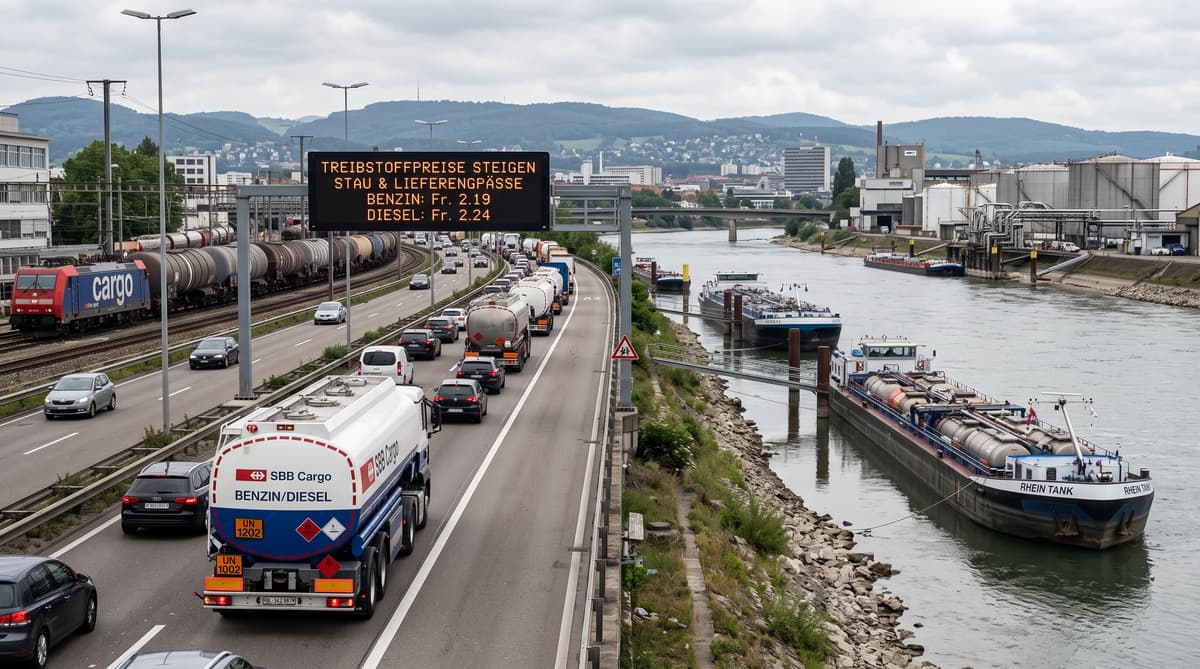
Petrol and diesel have both risen by about five centimes a litre, adding fresh pressure for Swiss motorists, logistics firms and households already facing higher energy costs. Touring Club Switzerland figures reported on 16 October put unleaded 95 at CHF 2.16 a litre, up 2.4% in a week. Unleaded 98 reached CHF 2.27, while diesel climbed 2.1% to CHF 2.45.
The price increase coincides with a supply bottleneck at Zurich Airport. The federal government has authorised withdrawals from the compulsory aviation-fuel stockpile after disruptions on freight routes from Germany delayed deliveries. Up to 30,000 cubic metres can be released between 15 October and 1 November, a volume equal to 6.5% of the current aviation-fuel reserve.
Airlines have not reported operational restrictions. Swiss and Geneva Airport said aircraft refuelling continued normally, according to Le News. The government action reflects the importance of keeping Zurich supplied while transport links remain unreliable. Switzerland imports most of the fuels it uses, leaving prices and availability exposed to problems well beyond the forecourts.
Protect Zurich’s Aviation Supply
Zurich Airport can draw up to 30,000 cubic metres of jet fuel before 1 November, giving operators a temporary buffer as deliveries struggle to reach the airport. The authorised release represents 6.5% of Switzerland’s compulsory aviation-fuel reserves. The Federal Office for National Economic Supply approved the measure on 15 October.
The immediate problem is logistical. Rail links from Germany, which feed Swiss fuel distribution, have suffered delays and cancellations. Missed deliveries cannot quickly be replaced because other freight has already moved onto the same congested routes. Aviation fuel therefore remains available in the national system, yet the normal flow into Zurich has become less dependable.
The reserve system is designed for precisely this kind of disruption. Private companies own and maintain compulsory stocks, while the federal government determines which goods must be held and in what quantities. The release does not signal that Zurich’s runways are about to close. Swiss has reported no disruption to aircraft refuelling, and Geneva Airport has faced no restrictions. It does show how quickly a transport problem can become an aviation concern in a landlocked country.
Move Freight Through a Narrower Corridor
Low water on the Rhine has made imports more expensive and less reliable. Barges operating on the river must reduce their loads, and some services have been cancelled. Fuel shipments that would normally move by water have consequently shifted towards rail, placing additional strain on routes that were already carrying heavy freight volumes.
The disruption reaches beyond Zurich. Federal figures cited by Le News show that the availability of petrol, diesel and heating oil worsened during the week, although supplies remained secure nationwide. The issue is therefore a tightening of margins rather than a confirmed national shortage.
For Switzerland, the Rhine is a crucial commercial artery. Fuel imported through European ports can travel inland by barge before reaching storage facilities and distribution networks. When water levels fall, suppliers face smaller cargoes, extra handling and higher transport costs. Rail can provide an alternative, but it cannot instantly absorb all diverted freight. Congestion on feeder lines from Germany has created precisely that problem, leaving deliveries vulnerable to delay and forcing the federal authorities to use reserves at Zurich Airport.
Track the Global Refining Squeeze
Diesel is now only one cent below its 2026 high. The average price reached CHF 2.45 a litre, compared with the annual peak of CHF 2.46 recorded in mid-September. Unleaded 95 rose to CHF 2.16 and unleaded 98 to CHF 2.27 after a short period of easing.
Swissinfo attributed the fluctuations to tense international fuel markets as well as domestic transport problems. Brent crude was trading at about $105 a barrel on Friday morning. That remains well above the roughly $72 level recorded before the war in Iran began at the end of February, although crude prices had edged lower that day.
Pump prices do not move in lockstep with crude. Refining, shipping, storage, currency movements and local distribution costs all affect the final amount paid in Switzerland. The current squeeze adds another layer through the Rhine and rail networks. International supply is also facing pressure from limited refining capacity in the Gulf and disruption affecting Russian refineries, a significant supplier of diesel and jet fuel. Those factors are feeding a market in which even a small transport delay can raise costs.
Use Reserves While Routes Recover
National fuel supplies remain secure, but the government is using its buffer earlier in the chain. The aviation reserve release covers deliveries to Zurich through 1 November, while authorities continue to monitor petrol, diesel and heating-oil availability. The intervention gives distributors time to manage delayed freight without imposing airport restrictions.
The next pressure point will be transport reliability. If Rhine water levels remain low, barges will continue carrying reduced loads. If rail congestion persists, diverted shipments may still arrive late. Fuel companies will have to balance deliveries among airports, road transport, industry and household heating before winter demand becomes a larger factor.
For drivers, the immediate effect is visible at the pump. Prices may not follow every movement in crude oil, since changes in international markets usually take time to reach Switzerland. For the federal authorities, the airport decision demonstrates the value of compulsory stocks while also showing their limits. Reserves can cover a short disruption, but they cannot replace functioning river and rail networks. The coming weeks will test whether freight routes recover before the temporary aviation-fuel authorisation expires.