Switzerland
Swiss government proposes voting rights for people with mental disabilities
The Federal Council has opened a consultation on granting federal voting rights to all adult Swiss citizens, removing the current exclusion of people under certain forms of guardianship for mental illness or incapacity. The proposal is intended to bring Swiss law closer to disability-rights standards.
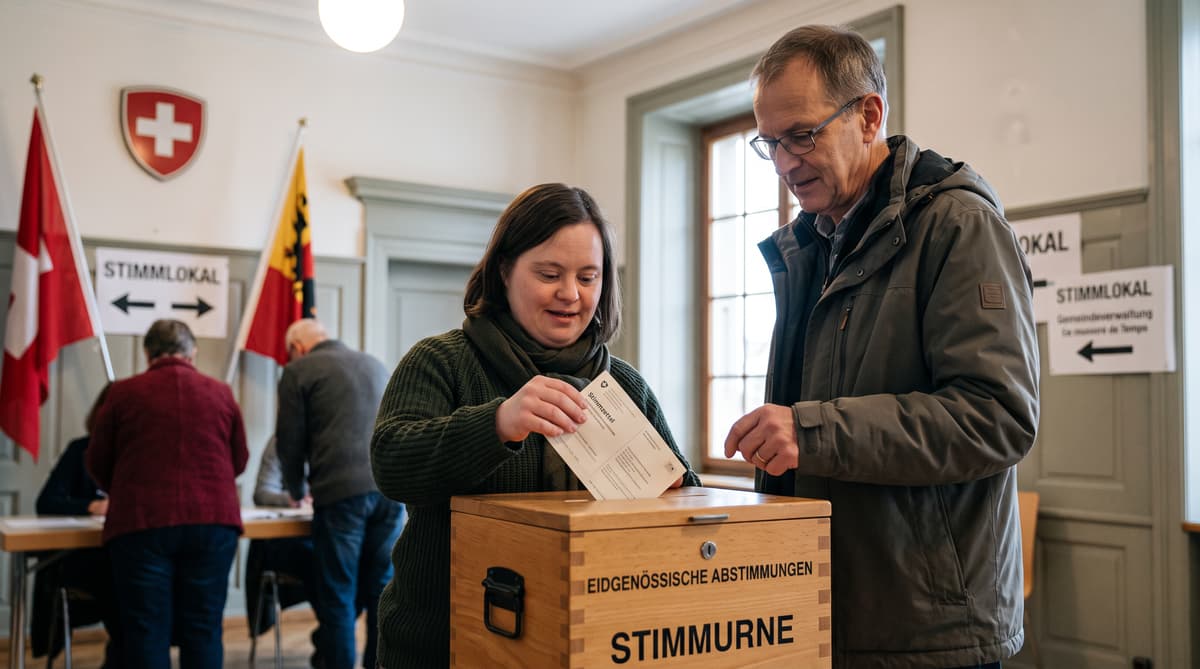
The Federal Council has put federal voting rights for people under certain forms of guardianship on the political agenda. Its draft bill would allow every Swiss citizen to vote once they have reached the age of majority, removing the current exclusion tied to a long-term lack of capacity to make sound judgements.
The government opened the consultation on 14 October 2026. The proposal applies only to political rights at federal level, covering participation in elections and votes on national issues. It does not yet change the rules governing cantonal or communal ballots.
Under the existing system, people described in the Constitution as suffering from “mental illness or mental incapacity” can lose their federal political rights if a general guardianship order or a mandate in the event of incapacity applies to them. The provision has shaped access to Switzerland’s direct democracy for decades.
The proposed change would make adulthood the sole stated condition for exercising these rights. It places Switzerland’s federal voting rules alongside a broader shift in disability policy, which increasingly focuses on equal and independent participation. The consultation gives parties, cantons, organisations and members of the public time to respond before the government decides how to proceed.
Review the Guardianship Rule
The current exclusion is linked to legal protection measures, not to a general medical diagnosis alone. Swiss federal rules apply when a person has a long-term inability to make sound judgements and is protected by a general guardianship arrangement or a mandate in the event of incapacity.
That distinction matters because guardianship can affect many areas of a person’s life, while political rights are a separate question. The existing framework treats the protective measure as evidence that the person should be excluded from federal elections and referendums. The government now proposes to remove that automatic connection.
The relevant constitutional language was clarified in legislation 50 years ago. Since then, the understanding of disability, legal capacity and supported decision-making has changed. Public authorities and disability organisations have increasingly argued for participation that is as independent and equal as possible.
The proposal would therefore establish a clear federal rule: Swiss citizenship and adulthood would determine eligibility. The source material does not specify how polling stations, ballot instructions or assistance arrangements would be redesigned. Those practical questions are likely to feature in the consultation, particularly because the reform concerns access to Switzerland’s system of frequent elections and referendums.
Build on Disability Rights
Switzerland’s disability-rights commitments have helped move the issue back into the centre of federal policy. The UN Convention on the Rights of Persons with Disabilities entered into force for Switzerland in 2014. The Federal Council identifies that convention as a particularly important influence on the proposed reform.
The convention has encouraged governments to examine whether laws and administrative practices allow people with disabilities to participate on an equal basis. In Switzerland, that discussion reaches directly into the country’s democratic institutions. Federal elections and referendums give citizens regular opportunities to shape legislation, public spending and constitutional change.
The government’s draft reflects an understanding of political participation that places greater weight on inclusion and individual rights. It also acknowledges that older legal categories may no longer fit current approaches to disability and capacity. The source material does not claim that the convention alone determines the outcome. It describes the treaty as a decisive factor in the development leading to the draft bill.
The consultation will test how broadly political support extends. Responses will help determine whether the proposal advances in its current form, whether lawmakers add safeguards or implementation measures, and how the federal government addresses concerns about accessible participation without restoring a blanket exclusion.
Follow the Consultation Through
The consultation runs until 28 January 2028, leaving more than a year for debate before the government determines its next step. The timetable gives Swiss political parties, cantons, disability organisations, legal specialists and citizens an opportunity to comment on a reform with consequences for federal elections and referendums.
The proposal is deliberately limited in scope. It addresses political rights at the federal level, rather than setting a single rule for all cantonal and municipal votes. Switzerland’s federal structure means that any broader change would require separate consideration under the relevant cantonal frameworks.
The immediate task is to assess the draft bill and its practical effects. Officials will need to consider how election authorities provide information, how voters can receive assistance while preserving their choice, and how existing guardianship arrangements interact with participation at the ballot box. The source material does not set out final procedures or a legislative timetable beyond the consultation.
For people currently excluded under the federal rule, the draft signals a possible change in status before the next stage of the lawmaking process. Parliament would still have to debate and approve any bill, and the proposal could change during that process. Until then, Switzerland’s federal voting rules remain in force.