Switzerland
Switzerland considers traffic lights to tackle motorway jams
Switzerland is considering using traffic lights and other measures to regulate motorway access as congestion worsens. Authorities are looking for ways to manage rising traffic on roads that can no longer accommodate growing demand.
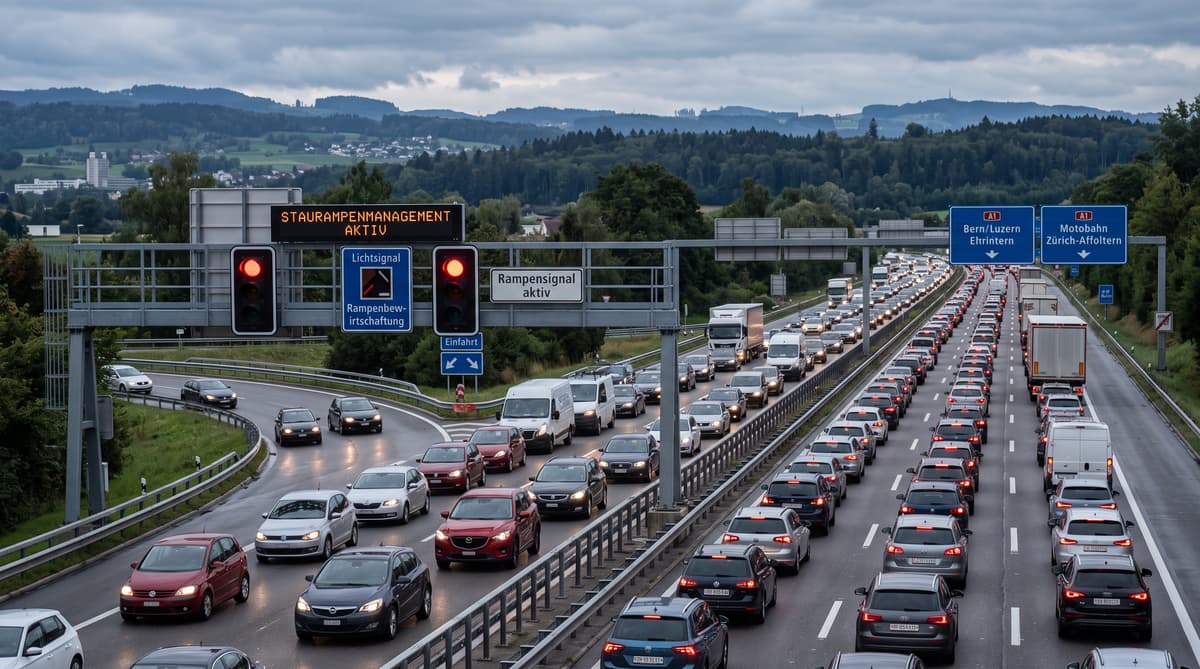
Switzerland’s motorway network is facing more traffic than its ageing road infrastructure can absorb. The federal government is examining traffic lights and other controls to reduce the pressure that produces daily queues on key routes.
The proposal would regulate vehicles before they enter a motorway. Signals at access points could release traffic in stages, preventing large groups of cars from joining a road that is already close to capacity. The approach would place more emphasis on managing demand, rather than allowing every vehicle to enter at once.
The Local reported on 12 October 2026 that the number of traffic jams has risen sharply in recent years. It linked that increase to decades old motorways and a growing number of vehicles. The report did not publish a nationwide count of jams or identify a timetable for introducing the signals.
That distinction matters. The discussion remains a policy response under consideration, not a confirmed nationwide rollout. Any system would have to account for local road design, commuting patterns, emergency access and the risk of shifting queues onto surrounding streets.
Regulate access before queues spread
Traffic lights could turn motorway entrances into controlled release points. Rather than allowing vehicles to merge continuously, a signal would pause and release cars in short intervals, creating larger gaps on the main carriageway.
Transport authorities use this kind of access control to smooth the flow of traffic. The measure can help when merging vehicles cause speeds to collapse, particularly near busy interchanges and during commuting periods. Its success depends on timing. If vehicles enter too quickly, congestion remains. If the signal holds traffic for too long, queues build on local roads and frustrate drivers before they reach the motorway.
The Swiss debate comes as authorities look for measures that can work within existing infrastructure. Building additional lanes or redesigning interchanges takes time, money and planning approval. Regulating access could offer a quicker operational tool, although it would not create extra road capacity.
The available report does not specify which motorways, entrances or cantons would be involved. It also gives no details on enforcement, signal technology or the criteria authorities would use to activate the system. Those decisions will shape whether drivers see the measure as practical traffic management or another delay.
Manage the ripple effects
The pressure reaches beyond the motorway itself. When a main route slows or stops, drivers often look for alternative roads through towns and villages. A policy that limits motorway access therefore has to consider what happens at the entrance ramp, on nearby streets and at the next interchange.
For commuters, the effect would vary by location and time. A short wait at a ramp could support smoother travel across an entire corridor if it prevents stop and go traffic. The same signal could create a local bottleneck if the motorway remains full or if drivers divert through residential areas. Bus operators, delivery companies and emergency services would also need predictable access during peak periods.
Switzerland’s transport system crosses cantonal boundaries, while motorways connect urban centres, industrial areas and Alpine routes. Coordination would be essential. Federal authorities manage the national motorway network, but cantons and municipalities oversee many of the roads that would carry diverted traffic.
The source report does not identify regional pilot schemes or provide a timetable. Before implementation, authorities would need to publish clear information on locations, operating hours and performance targets, allowing residents and road users to assess whether the controls reduce congestion or relocate it.
Test the idea before expanding it
The proposal reflects a wider shift toward managing demand on roads that cannot keep expanding at the same pace as traffic. Traffic lights may be one tool in a broader package, alongside better information for drivers and closer monitoring of motorway conditions.
The immediate attraction is flexibility. Signals can be adjusted according to traffic levels, incidents and time of day. Authorities could use them to respond to recurring congestion without waiting for major construction projects. That flexibility would require reliable data and transparent rules, especially if drivers face different access conditions at different times.
The limits are equally clear. A signal cannot remove the vehicles already on the motorway, add lanes or solve congestion caused by crashes and roadworks. It can only influence how traffic enters the system. Its value will depend on whether smoother movement on the main route outweighs waiting on feeder roads.
For now, Switzerland is at the consideration stage. The government has identified rising congestion and ageing infrastructure as a problem, while the available report provides no final decision, implementation date or national traffic figures. The next phase will determine whether traffic lights remain a proposal or become part of everyday motorway travel.