Switzerland
Swiss pools call for ban on camera-equipped smart glasses
Swiss swimming-pool and sauna associations are calling for camera-equipped smart glasses to be banned across pool premises. They say the devices are difficult to distinguish from ordinary glasses and create serious privacy risks in changing rooms and around pools.
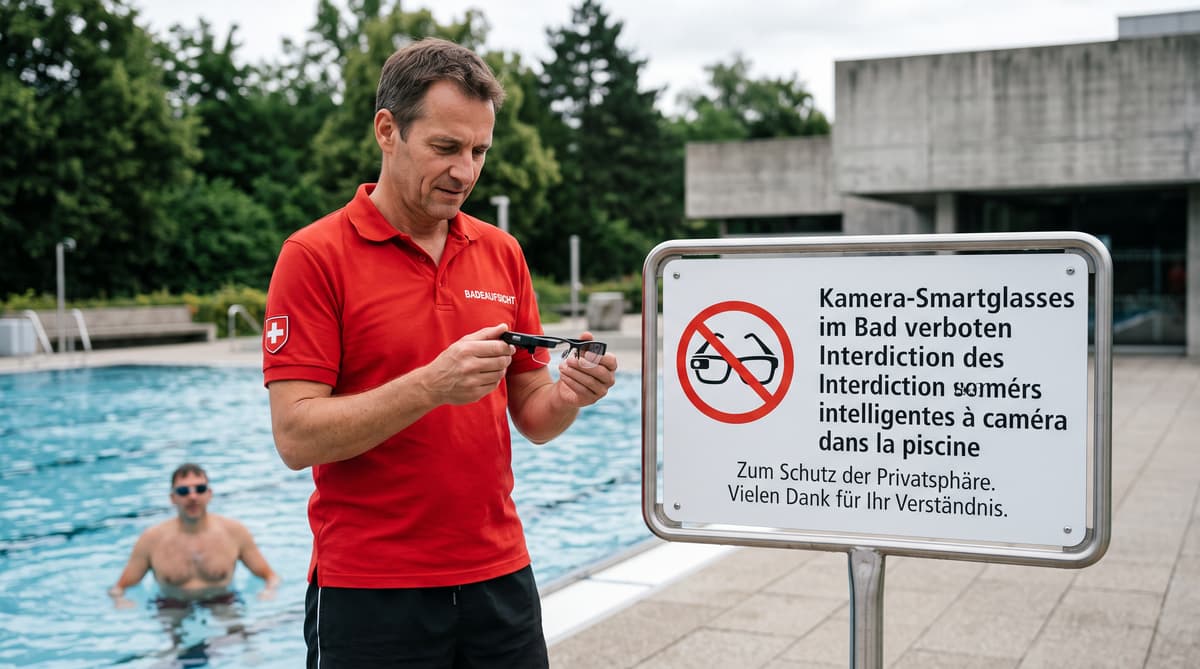
Swiss pool operators want municipalities to act before camera-equipped eyewear becomes harder to police. On Monday, October 12, 2026, swimming instructors, pool representatives and sauna organisations in German-speaking Switzerland called for local rules banning glasses with built-in recording functions throughout pool premises.
The demand covers more than the water itself. Changing rooms, showers, saunas and surrounding areas all pose privacy concerns, the associations said in a joint statement. Staff may struggle to identify whether a pair of glasses contains a camera, particularly when the frames resemble conventional prescription or sports eyewear.
The organisations warned that people could be photographed or recorded without their knowledge. Their proposed response is straightforward: municipalities should amend their regulations and prohibit optical devices capable of recording. The groups have prepared a guide for pool staff and an information poster for bathers.
The campaign arrives as Swiss cities debate how public facilities should handle consumer technology that can capture images discreetly. Motions have already been submitted in Bern, Zurich and other cities, extending the debate beyond individual pool managers and into municipal policymaking.
Make Hidden Cameras Visible
The difficulty lies in recognising the device, not in explaining the rule. Ordinary glasses and smart glasses can share similar frames, while the camera may be small enough to escape notice in a busy pool environment. That creates an enforcement problem for reception staff and lifeguards, who must protect privacy without turning routine checks into intrusive searches.
The associations’ proposed wording focuses on function rather than brand or appearance. Any optical device with a recording function would fall under the ban. That approach could give local operators a clearer basis for asking a visitor to remove the glasses or leave them outside the facility.
Pool premises also contain spaces where people have a heightened expectation of privacy. Visitors change clothes, shower and use saunas in close proximity to strangers. A recording made in one of these areas could expose people without their consent and could be difficult to detect or stop after the fact.
The staff guide and poster are intended to standardise the response. The source does not specify penalties or a common enforcement procedure, leaving municipalities to decide how their local regulations will operate.
Watch the Cantons Move Differently
The response is moving at different speeds across Switzerland. In German-speaking Switzerland, the Swiss association of swimming instructors, the association of swimming pools and the Swiss sauna federation have jointly urged towns and local authorities to change their rules. Bern, Zurich and other cities have also seen political motions calling for bans in municipal pools and sports facilities.
The situation is more cautious in French-speaking Switzerland and Ticino. APRT, the association representing pools in those regions, told Keystone-SDA that it is not taking specific measures for the time being. It said it had received no reports directly linked to the relatively new phenomenon of smart glasses.
That does not mean the issue is absent from the region. APRT said staff have been trained and made aware of the potential problem. The difference is one of response: German-speaking associations are pushing for explicit local prohibitions, while APRT is relying for now on awareness and staff preparedness.
Switzerland’s decentralised pool system means visitors may encounter different rules from one municipality to the next. Any broader policy will therefore depend on local councils and facility operators adopting compatible regulations.
Put Local Rules to the Test
Municipalities now face a practical choice: write a clear rule before complaints arrive, or rely on case-by-case intervention. The associations’ guidance gives local authorities a model for addressing camera-equipped glasses, but the source does not indicate that Switzerland has adopted a national ban for all pools and saunas.
For visitors, the likely change will be visible at the entrance. Facilities may add notices, update house rules and ask guests to store recording-capable eyewear with other personal belongings. Operators will also need to explain how the rule applies to prescription glasses, accessibility needs and devices that combine vision correction with other functions. The associations have not published a detailed national enforcement standard in the material available.
The debate reflects a wider pressure on public facilities to keep pace with consumer technology. Smartphones are recognisable and often covered by existing no-filming rules. Smart glasses can be worn continuously and may look ordinary, making staff awareness central to enforcement.
The next decisions will come from towns and cities. Bern, Zurich and other municipalities will determine whether motions become binding pool regulations, while operators in French-speaking Switzerland and Ticino will continue monitoring whether concrete incidents emerge.