Swiss National Bank
Swiss central bank keeps policy rate at zero
The Swiss National Bank has kept its policy rate at zero, maintaining the world’s lowest central-bank rate while monitoring subdued but rising inflation.
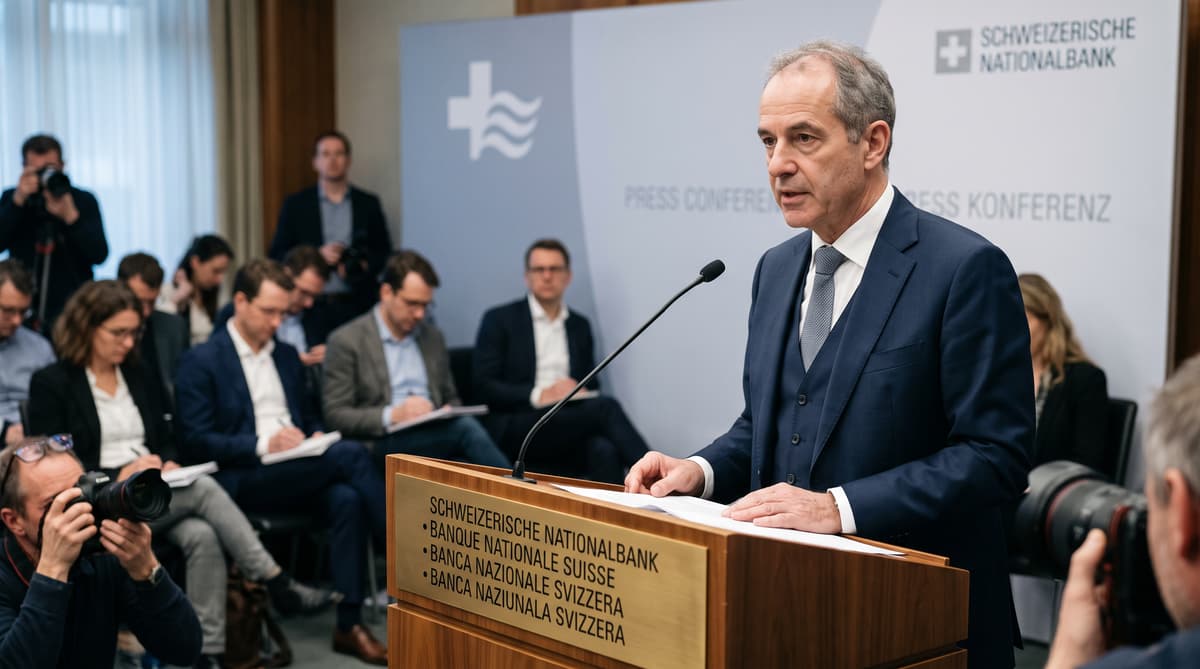
The SNB is holding the world’s lowest central-bank rate at 0%. The Swiss National Bank left its policy rate unchanged on Thursday, a decision economists had widely expected even as the European Central Bank and the US Federal Reserve have recently raised borrowing costs.
The pause keeps Switzerland’s monetary settings unusually easy while the bank watches a modest rise in prices. Swiss inflation reached 0.8% in August, up from 0.4% in July, according to the SNB. Energy costs, particularly oil products, accounted for much of the increase. Inflation remains inside the SNB’s price-stability range of zero to 2%.
SNB Chairman Martin Schlegel said the current policy was “appropriate to keep inflation within the range consistent with price stability and supports economic development”. The bank raised its short-term inflation forecasts, but described the increase in medium-term pressure as limited.
For households, companies and investors, the decision preserves the current financial landscape: cheap borrowing, limited returns on cash and continued attention to the franc. The SNB has held the rate at zero since June 2025, after years of negative rates designed partly to prevent excessive appreciation of Switzerland’s currency.
Track Inflation Without Chasing Oil
Inflation is rising, but the SNB sees no broad domestic price surge. The August reading of 0.8% remains low by European standards and sits comfortably within the central bank’s definition of price stability. The recent acceleration has been concentrated largely in oil products, a factor monetary policy cannot directly remove.
The SNB expects inflation to reach 1.2% in the fourth quarter, driven mainly by higher oil prices, before easing during 2027. Its updated annual forecasts put inflation at 0.7% in 2026, 0.8% in 2027 and 0.8% in 2028. The bank’s longer-range projection allows inflation to reach as much as 0.9% in 2029.
That outlook gives policymakers room to wait. A rate increase would make mortgages, corporate credit and investment more expensive, while doing little to lower prices at the petrol pump or reduce the cost of imported energy. The decision also reflects Switzerland’s subdued domestic demand and relatively contained wage and price pressures.
Schlegel cautioned that the outlook remains exposed to energy markets and international developments. A sharper oil shock could push inflation higher, while weaker global growth could restrain Swiss exports. The SNB therefore kept its options open rather than committing to a fixed path.
Let Exporters Carry More Weight
Swiss GDP growth has improved enough for the SNB to raise its forecast to 1.5% to 2% this year. The upgrade follows a 1.5% jump in second-quarter GDP, driven mainly by exports from the pharmaceutical sector. The bank expects growth of around 1.5% in 2027.
The performance gives policymakers a stronger reason to leave rates unchanged. Export demand, the current monetary stance and the franc’s recent decline should provide support in the coming quarters. Switzerland’s pharmaceutical companies, precision manufacturers and other globally exposed businesses benefit when foreign demand holds up and the franc does not strengthen sharply against the euro and other major currencies.
The outlook remains dependent on events outside Switzerland. Trade policy, weaker global activity and renewed geopolitical tensions could reduce orders for Swiss exporters. A deterioration in the Middle East could also affect energy prices and international confidence.
The SNB’s position reflects the balance in the data. Growth is healthier than previously forecast, but it is not strong enough to demand aggressive tightening. The bank wants to preserve economic momentum while watching whether higher energy costs spread into broader domestic inflation. That leaves the next move dependent on incoming data rather than on the actions of Frankfurt or Washington.