Red Cross
Red Cross warns of mounting civilian toll in Saudi Arabia and Yemen
The International Committee of the Red Cross has warned of a devastating civilian toll from recent attacks in Saudi Arabia and Yemen. ICRC President Mirjana Spoljaric said more than 210,000 people have been displaced by violence in Yemen in the past month and urged all sides to protect civilians.
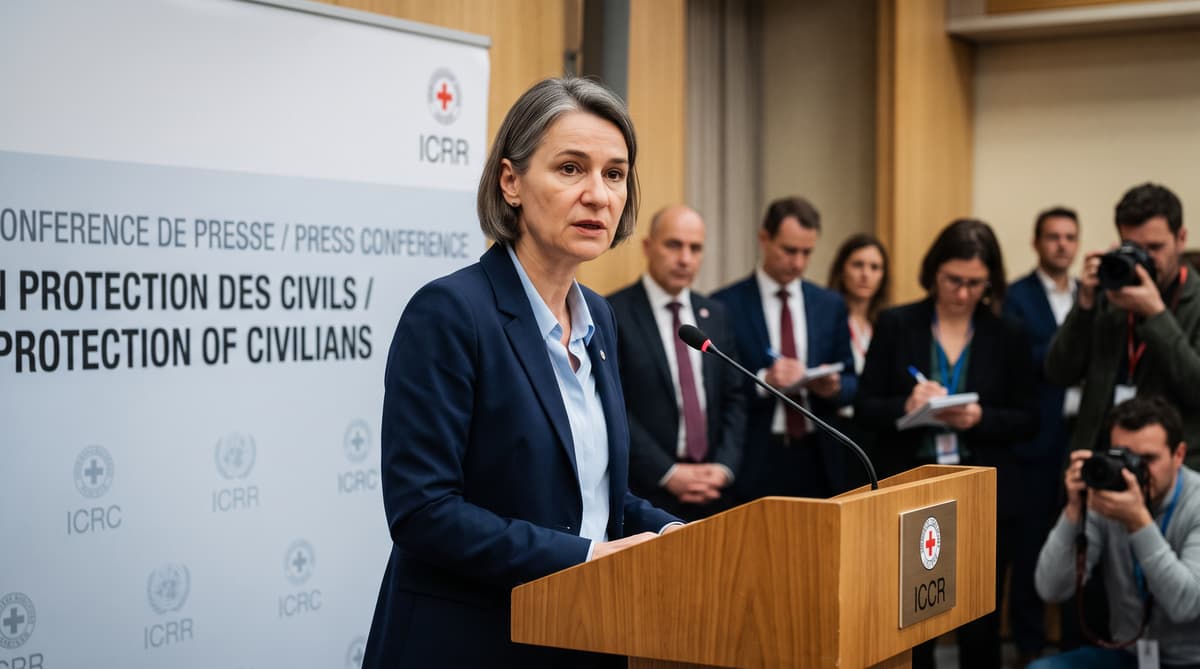
Thirteen people died at Riyadh airport on Saturday, bringing the civilian consequences of the latest regional attacks into sharp focus. Speaking in Geneva on Tuesday, October 13, International Committee of the Red Cross President Mirjana Spoljaric condemned the impact of the violence in Saudi Arabia and Yemen and called on all parties to protect civilians.
The attacks near the Saudi capital were attributed in the source report to Yemeni Houthi rebels. The incident added to a deteriorating humanitarian picture in Yemen, where the ICRC says deaths, injuries and damage to infrastructure are increasing at an alarming rate.
Spoljaric’s intervention carries particular weight in Switzerland, where the ICRC maintains its headquarters and conducts much of its diplomatic engagement on the laws of war. Her warning placed the latest strikes within the framework of international humanitarian law, which requires parties to distinguish between military targets and civilian people or sites.
The ICRC did not present the Riyadh airport deaths as an isolated security incident. It linked them to a broader regional risk, with civilians facing consequences as fighting intensifies across borders. The organisation’s appeal came as displacement in Yemen accelerated and essential infrastructure sustained further damage.
Track Yemen’s Rapid Displacement
More than 210,000 people have been displaced in Yemen in one month, according to the ICRC. The figure captures the speed at which the current violence is uprooting communities, even though the source report gives no regional breakdown of where those people have gone.
Displacement brings immediate practical pressures. Families forced to leave their homes may need shelter, food, medical care and safe access to water. Damage to infrastructure adds to those demands by disrupting the services that civilians depend on during and after attacks. The ICRC said the number of people killed and injured, along with destruction to infrastructure, is rising at an alarming rate.
The organisation’s statement did not provide a total death toll for Yemen or identify individual damaged facilities. It did, however, describe a rapidly worsening humanitarian situation and warn that an expansion of fighting could affect tens of millions of people.
For humanitarian agencies, the pace of displacement matters as much as the overall total. New arrivals can quickly overwhelm local services and complicate efforts to trace missing relatives, restore family contact and deliver assistance. The ICRC’s warning points to a crisis developing across civilian communities, not only around the front lines.
Defend Civilians Under the Laws of War
The ICRC says civilian deaths, injuries and infrastructure damage in Yemen are rising at an alarming rate. Its warning comes after the attack at Riyadh airport, where 13 people were killed on Saturday. Together, the developments show how violence affecting Saudi Arabia and Yemen can produce consequences far beyond the location of an individual strike.
Spoljaric urged the parties to the conflict not to target civilians or civilian sites. That obligation is set out in international humanitarian law, which governs the conduct of hostilities and requires precautions to limit harm to people who are not taking part in the fighting.
The source report does not detail the weapons used in the Riyadh attack, identify the victims or specify which infrastructure in Yemen has been damaged. Those limits matter. They leave the ICRC’s broad assessment as the clearest available account in the statement, while underscoring the need for verified information from the affected areas.
For civilians, the distinction between military objectives and public infrastructure is decisive. Airports, roads, health facilities, water systems and homes can support daily life even when fighting is taking place nearby. Damage to those sites can extend the impact of an attack well beyond the immediate casualties.
Keep Geneva’s Humanitarian Pressure On
Mirjana Spoljaric warned that an escalation could affect tens of millions of people. Her statement in Geneva placed the immediate events in a wider regional context, with violence in Yemen and an attack near Riyadh unfolding as part of a conflict with the potential to widen further.
The ICRC’s message was directed at all parties. It called for civilian protection and compliance with international humanitarian law rather than assigning responsibility for the wider humanitarian consequences to one side alone. The organisation also highlighted the rising toll in Yemen, where more than 210,000 people have been displaced over the past month.
Switzerland’s role is closely tied to this appeal. Geneva hosts the ICRC, the institution created to promote humanitarian protection and assist people affected by armed conflict. Statements issued there are intended to reach governments, armed groups and diplomatic actors engaged in efforts to limit suffering.
The source report does not announce a new Swiss aid package, mediation initiative or evacuation programme. For people in Switzerland, the immediate significance lies in the country’s humanitarian institutions and in the scale of the crisis being described from Geneva. The ICRC’s next challenge will be to translate its warning into access, protection and assistance for civilians caught in the violence.