Business
Migros members to decide on merger of regional cooperatives
Migros is considering merging its ten regional cooperatives as financial pressure and uneven performance drive a restructuring. Members will have the final say on the proposed changes.
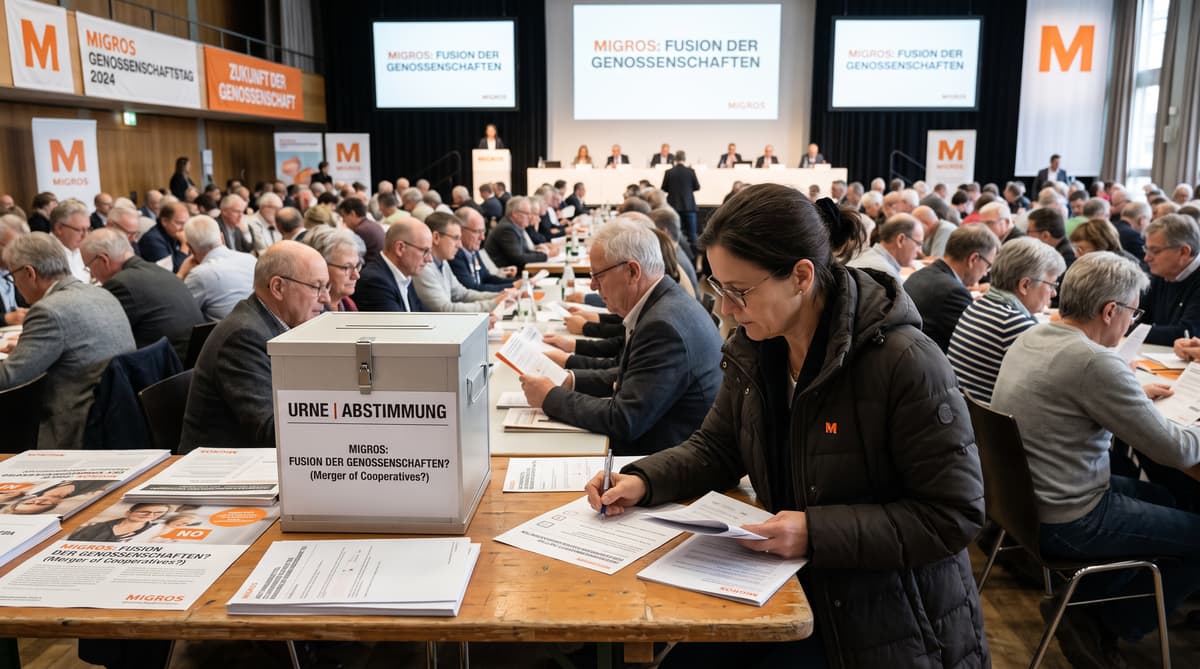
Migros’s ten regional cooperatives are backing a merger as mounting financial strain tests the group’s decentralised structure. The proposal would bring the cooperatives under a unified arrangement, following years of uneven performance and governance concerns. Members, not regional leaders, will decide whether it goes ahead.
The pressure is visible in Zurich. Its cooperative lost CHF 180 million last year, with the costly German venture Tegut among the factors weighing on its finances. Competition is also tightening in Switzerland: Aldi and Lidl are challenging Migros, while stores in Ticino, Basel and Geneva face competition from retailers across the border.
Migros’s regions have their own management, boards and accounts, and publish separate annual reports. That autonomy has given regional leaders considerable power. The proposed overhaul aims to respond to the strain and the weaknesses exposed by decisions made across a decentralised group. All ten cooperatives say they support the merger, but the membership vote will determine its fate.
Trace the cost of expansion
A costly German bet has become a test of how much regional autonomy Migros can sustain. Migros Zurich bought organic supermarket chain Tegut in 2013. The investment has cost several hundred million francs, and the business is now being sold. The Zurich cooperative’s CHF 180 million loss last year underlines the consequences of a major expansion handled within the regional structure.
The strain is not confined to Zurich. Aldi and Lidl have intensified competition in Switzerland, while Migros supermarkets in Ticino, Basel and Geneva also contend with shops just across the border. Ticino’s cooperative is losing money, and it is the smallest of the ten.
The regions operate with separate management teams, boards and accounts. That structure can leave substantial influence in the hands of local leaders. Migros’s proposed consolidation follows a period in which cooperatives have faced markedly different commercial pressures, from Zurich’s German investment to border competition in the south and west. Their leaders have united behind the merger proposal, but members still hold the deciding vote.
Confront governance and regional disparities
A past cooperative scandal exposed the risks of giving regional leaders broad control. At the Neuchâtel-Fribourg cooperative, a long-running dispute reached a climax seven years ago when its president was accused of fraud and embezzlement. Migros headquarters in Zurich tried to remove him. About 50,000 members took part in the ensuing vote, which was marred by falsified ballots.
The episode raised questions about how the decentralised group could oversee its regional organisations. Each cooperative maintains its own management, board and accounts, and issues a separate annual report. The arrangement gives the regions independence, but it also makes governance a central concern in the merger debate.
The cooperatives vary sharply in scale. Zurich is the biggest by sales, with annual turnover of about CHF 4 billion. Eastern Switzerland employs the most people, with 8,466 staff, while Ticino is the smallest cooperative. Bringing such different organisations together would reshape a group whose regions have long operated with distinct leadership and resources.
Put the decision to members
Migros’s 2.3 million cooperative members will decide whether the restructuring proceeds. The vote requires at least 25% of members to participate, and two-thirds of those voting must support the proposal. Regional leadership backing alone cannot secure approval.
Membership is available online, and ballots can be cast electronically, opening the vote to a broad pool of participants. The decision comes as Migros continues to reduce and reshape its businesses. Since 2018, the group has cut or outsourced almost 15,000 jobs and sold businesses including Hotelplan, Globus, Melectronics, SportX, Micasa and Mibelle.
Tegut’s sale will transfer more than 7,000 employees to its new owner this year. The merger vote will determine whether Migros also changes how its ten regional cooperatives are organised. For members across Switzerland, the choice is a direct decision on the future structure of one of the country’s largest retail groups.