Climate
Heatwave causes fourfold rise in Swiss rail track warping
Swiss Federal Railways recorded 97 cases of track warping and compression-related deformation during the exceptionally hot summer, nearly four times last year’s total. SBB says safety was not affected, but an ETH Zurich expert has warned that extreme heat can increase derailment risks.
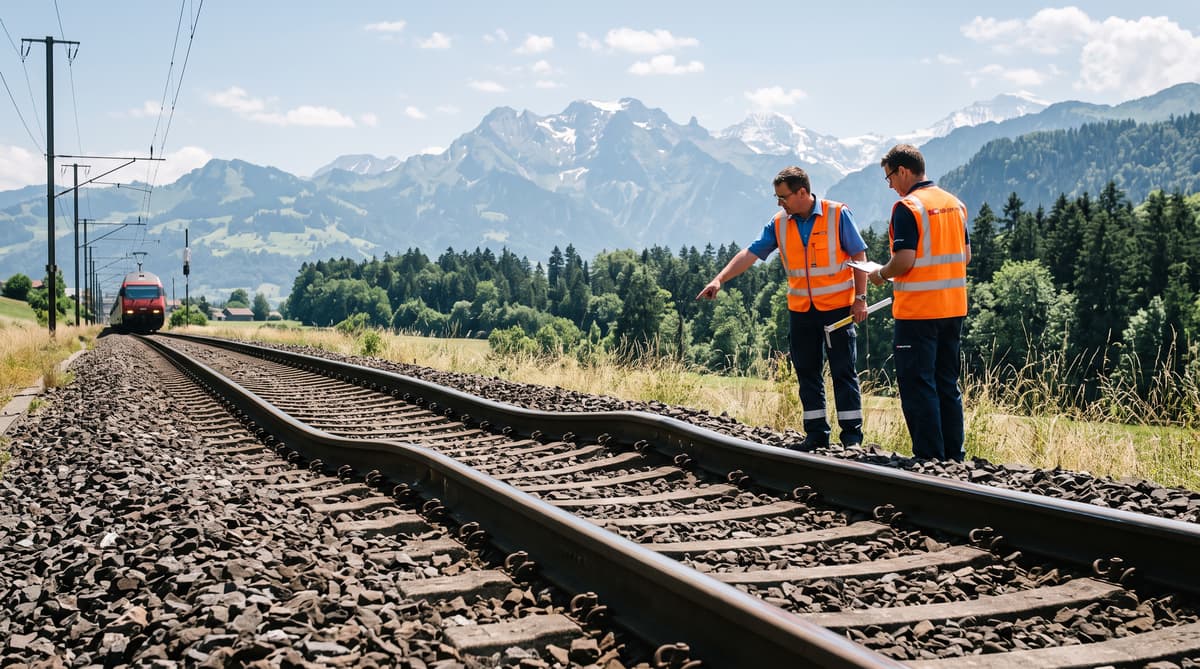
SBB recorded 97 cases of track warping and compression related deformation during summer 2026. The figure, confirmed by Swiss Federal Railways after being reported by SonntagsZeitung, is nearly four times the previous year's total.
The damage appeared during an exceptionally hot summer, when steel rails and the track structures supporting them faced prolonged thermal stress. Warping can disrupt the alignment of a rail, while compression related deformation can cause sections of track to settle or shift. Both conditions require inspection and, where necessary, repair before trains continue at normal speeds.
SBB said the rise in reported cases did not affect safety. The company regularly checks its network with measurement and diagnostic vehicles, allowing it to identify changes in track condition and act on them.
The scale of the increase has nevertheless prompted a formal response. SBB has established a working group to assess whether additional measures are needed after the summer heat. The group will examine how the railway can adapt its infrastructure and operating practices as high temperatures put greater pressure on tracks across Switzerland.
Track damage climbs
The reported total rose from roughly 25 cases to 97 in one year. That comparison captures the sharp change in the condition of the network during the hot summer, although SBB has not linked the cases to any reported safety incident.
The railway company treats warping, deformation and settlement as conditions to be detected through inspection and managed through maintenance. Its measurement and diagnostic vehicles regularly survey the tracks, checking geometry and other indicators that can reveal problems before they become operational hazards.
SBB's reassurance has been direct: the increase in deformation did not compromise safety. Trains continued to operate under the company's inspection and maintenance regime, with interventions available when a section of track required attention.
The data also show why a single summer can matter for a national transport system. Swiss railways carry passengers through dense urban corridors, alpine routes and heavily used intercity links. A localised defect may require a repair, a temporary speed restriction or other operational action. The source material does not identify individual routes, cantons or service disruptions linked to the 97 cases. It does establish a clear national signal: heat related track problems became far more frequent in 2026.
Experts flag derailment risk
ETH Zurich expert Patrick Braess warned that extreme heat can increase derailment risks. His assessment adds a safety dimension to the figures, even as SBB says the reported deformation did not affect safety on its network.
Rails are fixed within a track system designed to hold its shape under changing conditions. Exceptional heat can place additional stress on that system, especially when the rail and its supporting components expand or lose alignment. The source does not attribute a derailment to any of the 97 cases. Braess's warning concerns the potential risk if heat related deformation is not detected and managed.
That distinction matters for passengers. A rise in track defects does not automatically mean trains are unsafe, because inspections, maintenance and operating controls can intervene before a defect becomes dangerous. It does mean that the margin for error deserves close attention during periods of sustained heat.
SBB's own assessment recognises that protection cannot be absolute. The company says its priority is to develop targeted, effective long term measures while continuing to monitor the network. The working group created after the 2026 summer will help determine where those measures should be applied and how they can strengthen the existing inspection system.
SBB targets the infrastructure
SBB is prioritising concrete sleepers and higher rail neutralisation temperatures. Concrete sleepers provide greater stability than wooden sleepers, according to the company, while changing the temperature used when welding rails can help the track tolerate higher ambient temperatures.
The neutralisation temperature is important because rails are installed and welded to perform within expected thermal conditions. Raising it can give the rails more resilience when temperatures rise, reducing stress within the track. SBB has presented the measure as part of a broader, targeted programme rather than a single fix for the entire network.
The choice of sleepers also reflects the long time scale of railway infrastructure. Replacing components requires planning, access to the track and sustained investment. It can be incorporated into scheduled renewal work, limiting the need for separate interventions.
SBB's working group will identify where such measures are most useful after the exceptional heat of 2026. The source does not specify a budget, a completion date or the routes that will receive priority. It does show that the company is considering physical changes to the railway, alongside its established inspection programme, as Swiss summers put more pressure on track stability.
White paint shows promise, with limits
White paint cooled the rails by about 4.5 degrees Celsius at first, but the benefit fell by roughly half after two years. SBB tested the coating as a way to reduce heat absorption and is still assessing whether it could work in selected locations.
The trial exposed a practical limitation. Dirt accumulated on the painted surface, reducing its cooling effect. Traffic accelerated that deterioration, so the coating lost effectiveness more quickly on busier lines. Any wider use would therefore need to account for cleaning, renewal and local traffic levels.
SBB has not abandoned the idea. The company is examining whether white coatings could be suitable in specific cases, where the potential cooling effect justifies the maintenance required. The approach could complement, rather than replace, more structural measures such as concrete sleepers, revised welding temperatures and regular diagnostic surveys.
For passengers and railway operators, the next phase will involve decisions about where adaptation delivers the greatest benefit. The 97 cases recorded in 2026 have given SBB a larger evidence base for that work. Switzerland's rail network will continue to rely on routine inspection, targeted engineering and decisions shaped by how heat affects individual stretches of track.